
Why High Technology Stadium LED Display Screens Are Essential for Next-Generation Sports Venues

High-technology LED display screens are essential for next-generation sports venues because they fundamentally transform the spectator experience, provide powerful new commercial opportunities for teams and sponsors, and offer unparalleled operational flexibility.
What is the purpose of the LED display?
The purpose of an LED display is to create bright, high-quality, and dynamic visual content (text, images, videos) for communication, advertising, and entertainment, by using grids of tiny light-emitting diodes, offering superior brightness, energy efficiency, durability, and versatility for both indoor and outdoor use where traditional displays struggle. They function as billboards, digital signage, information boards, and large video walls in sports arenas, transport hubs, concerts, and homes, replacing older technologies like LCDs due to their self-emissive light and vivid colors.
Reasons why stadium led display screens are essential for high technology stadium
Stadium LED screens are essential for high-tech stadiums as they supercharge fan engagement with replays and interactive content, create significant revenue streams through dynamic advertising, improve safety and navigation with real-time info, and enhance the venue’s modern aesthetic, transforming the event into an immersive, multifunctional entertainment hub. They provide consistent, high-definition visuals for all fans, boost operational efficiency, and offer unmatched flexibility for content delivery, making them vital for both spectator satisfaction and commercial success.
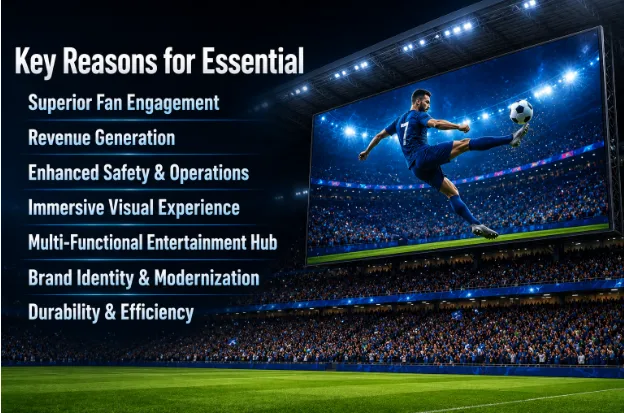
Key Reasons for Essential Status:
-
- Superior Fan Engagement: Deliver instant replays, live stats, fan-generated content, and interactive games, making fans feel part of the action and creating an electrifying atmosphere.
- Revenue Generation: Offer lucrative, dynamic advertising space for sponsors, with high-impact visuals and targeted ads that increase ROI and attract major brands.
- Enhanced Safety & Operations: Provide clear wayfinding, emergency alerts, crowd management messages, and event schedules, improving safety and operational flow.
- Immersive Visual Experience: Ensure bright, clear, uniform visuals for everyone, from courtside to the upper decks, with seamless motion and rich colors, says Top One Touch.
- Multi-Functional Entertainment Hub: Turn stadiums into versatile venues for concerts and corporate events with customizable lighting, effects, and dynamic content, says Hikvision Commercial Displays.
- Brand Identity & Modernization: Elevate the venue’s sleek architectural appeal and technological sophistication, attracting more visitors and keeping the venue competitive.
- Durability & Efficiency: Built to withstand harsh weather, modern LED screens are energy-efficient and offer easier maintenance, reducing operational costs and downtime.
How LED Display Screens Have Become the Digital Backbone of Smart Stadiums
LED display screens have become the digital backbone of smart stadiums by transforming the venue experience, enabling dynamic content delivery, and providing platforms for fan engagement and commercial operations.
Enhanced Fan Experience and Engagement
-
- Immersive Viewing: Large, high-resolution LED screens, including massive center-hung scoreboards and ribbon boards, provide instant replays, live statistics, and engaging graphics that immerse fans in the action from every seat.
-
- Personalized Content: Advanced systems can deliver tailored content, such as targeted promotions or statistics relevant to a fan’s location or preferences, enhancing the personal connection to the game.
-
- Interactive Opportunities: Digital displays facilitate interactive experiences, such as real-time polls, social media integration, and crowd-participation games, making attendees feel like active participants rather than just spectators.
Operational Efficiency and Commercial Value
-
- Dynamic Information Delivery: Stadium operators use LEDs for a variety of practical applications, including displaying real-time updates, emergency notifications, and directional information, which helps manage crowd flow and ensures safety.
-
- Monetization Opportunities: The screens are powerful commercial assets, allowing for dynamic pricing and instant updates of advertising and sponsorship content. This flexibility enables stadiums to maximize advertising revenue and provide valuable exposure for their partners.
-
- Integration with IoT and Data Analytics: LEDs serve as the visual output for complex stadium management systems that collect data from Internet of Things (IoT) sensors. This data integration allows operators to monitor everything from concession lines to energy usage, optimizing facility management in real-time.
Adaptability and Future-Proofing
Unlike traditional signage, LED displays offer unparalleled flexibility. They can be instantly reconfigured to support different sports, concerts, or events with minimal effort. This adaptability ensures that the infrastructure remains relevant and maximizes the stadium’s utilization throughout the year, solidifying the role of LED screens as the essential digital infrastructure for modern sports and entertainment venues.
Creating Immersive Fan Experiences in Modern Sports Venues
Creating immersive fan experiences in modern sports venues relies heavily on integrating technology (AR/VR, mobile apps, AI, large LEDs) for real-time data, interactive games, and personalized content, alongside enhancing physical comfort with premium amenities, diverse food, and efficient services; all unified by dynamic audio-visuals and seamless digital/physical touchpoints to deepen engagement and make fans feel closer to the action.
Key Strategies for Immersive Experiences:
-
- Augmented & Virtual Reality (AR/VR):
-
- In-Stadium AR: Overlay stats, replays, and player info onto the live view via phone apps.
-
- VR Lounges: Offer virtual pitchside/trackside views or historical museum experiences.
-
- Player-Perspective VR: Let fans experience the game from an athlete’s viewpoint.
-
- Augmented & Virtual Reality (AR/VR):
-
- Digital Engagement & Mobile Apps:
-
- Mobile Apps: Provide digital tickets, maps, instant replays, and notifications.
-
- Interactive Content: Polls, trivia, Q&As with players/commentators keep fans engaged during breaks.
-
- Social Integration: Platforms for real-time sharing and connecting with other fans.
-
- Digital Engagement & Mobile Apps:
-
- Advanced Visuals & Audio:
-
- Large-Scale LED Screens: High-def displays for unified viewing and dynamic graphics.
-
- Projection Mapping: Dramatic visuals on surfaces for pre-game and halftime shows.
-
- Immersive Soundscapes: Dynamic audio synced with lighting to elevate energy and emotion.
-
- Advanced Visuals & Audio:
-
- Smart Stadium Technology:
-
- High-Speed Wi-Fi: Essential for connectivity and social sharing.
-
- AI & IoT: Optimize operations, manage crowds, and provide insights.
-
- Contactless Systems: Streamline payments and ticketing for convenience.
-
- Smart Stadium Technology:
-
- Enhanced Physical Comfort & Amenities:
-
- Premium Seating: Suites, club seats offering luxury.
-
- Quality Facilities: Clean, accessible restrooms, diverse food/beverage options.
-
- Climate Control: Shaded areas, heaters for comfort.
-
- Enhanced Physical Comfort & Amenities:
-
- Interactive Physical Spaces:
-
- Digital Walls: Interactive displays for playful fan engagement (e.g., Lite Brite-style walls).
-
- Interactive Physical Spaces:
Why LED Display Planning Is Critical in Next-Generation Stadium Projects
LED display planning is critical in next-generation stadium projects because it transforms venues into immersive entertainment hubs rather than just viewing spots, driving both attendee engagement and operational revenue.
Key reasons for strategic planning include:
-
- Elevated Fan Experience: High-definition, properly positioned, and, at times, 360-degree, or curved, LED screens ensure all seats have optimal views, reducing blind spots and keeping spectators connected to the live action, replays, and real-time stats.
-
- Revenue Generation (ROI): Unlike static banners, dynamic digital, perimeter, and ribbon LED displays allow for flexible, multiple, and targeted advertising, which drastically increases sponsorship value and revenue per event.
-
- Multi-Purpose Adaptability: Modern stadiums host concerts, conventions, and diverse sports. Proper LED planning enables quick configuration changes for different events, enhancing the venue’s versatility and year-round usability.
-
- Safety and Operations: Large LED systems are crucial for conveying real-time information, crowd management, emergency evacuation instructions, and weather alerts.
-
- Sustainability and Cost Control: Advanced LED technology offers better energy efficiency, reducing operational costs and supporting green initiatives, making the stadium more attractive to stakeholders.