Smart Lighting and LED Display Solutions for Next-Generation Stadiums

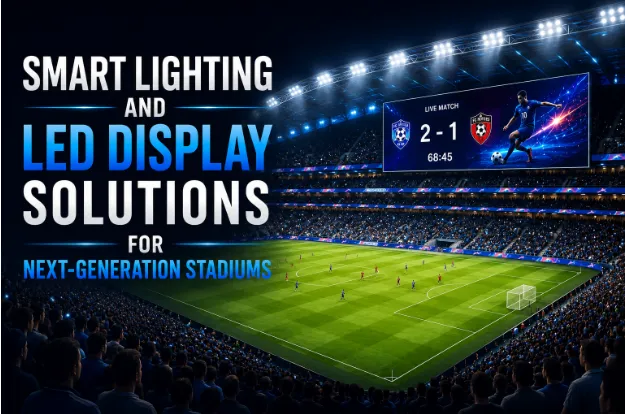
Next-generation stadiums are transforming into “smart” multifunctional venues, leveraging advanced, connected, and energy-efficient LED technologies to enhance fan engagement, improve operational efficiency, and increase revenue. Key solutions include high-definition 360-degree LED video boards, AI-driven lighting, dynamic perimeter displays, and sustainable, maintenance-friendly systems.
The Role of Smart Technology in Modern Stadium Infrastructure
Smart technology is revolutionizing modern stadium infrastructure, transforming traditional arenas from static, single-purpose structures into dynamic, data-driven “smart venues.” By integrating Internet of Things (IoT) sensors, 5G/Wi-Fi 6 connectivity, and Artificial Intelligence (AI), stadiums are enhancing the fan experience, optimizing operational efficiency, strengthening security, and promoting sustainability.
Key roles of smart technology include:
-
- Elevating Fan Experience: High-speed 5G/Wi-Fi 6 connectivity, mobile apps, AR, and in-seat ordering (food/merchandise) provide a seamless, personalized, and engaging atmosphere.
-
- Operational Optimization: IoT sensors and AI-driven analytics monitor crowd flow in real-time, allowing staff to manage bottlenecks, optimize staffing, and perform predictive maintenance on facilities.
-
- Safety & Security: Advanced surveillance, facial recognition, and AI-powered monitoring ensure rapid incident detection and safer environments for large crowds.
-
- Sustainability & Cost Reduction: Smart grids, LED lighting, and AI-controlled HVAC systems reduce energy consumption, lowering operational costs and carbon footprints.
-
- Revenue Generation: Technologies like geofencing enable targeted, real-time marketing, while cashierless retail options increase concession efficiency and sales.
Advantages of Smart Lighting and LED Display
Smart lighting and LED displays offer significant advantages over traditional lighting and display technologies, primarily driven by energy efficiency, advanced control, and enhanced visual performance. These systems are transforming both residential and commercial spaces by providing automation, customization, and improved sustainability.
Key Advantages of Smart Lighting
-
- Energy Efficiency & Cost Savings: Smart LED lighting can reduce energy consumption by up to 75% compared to incandescent bulbs. Features like automated scheduling, motion sensors, and daylight harvesting ensure lights are used only when necessary, resulting in significantly lower electricity bills.
-
- Remote Control & Convenience: Users can control lights via smartphone apps or voice assistants (Alexa, Google Assistant, Siri), allowing them to turn lights on/off, dim them, or change colors from anywhere.
-
- Enhanced Security: Smart lights can be scheduled to turn on and off at specific times, simulating occupancy to deter intruders while homeowners are away.
-
- Customization & Ambiance: Smart systems offer 16 million+ color options, adjustable color temperatures (warm to cool), and “scenes” to match moods, activities, or circadian rhythms.
-
- Longevity: Smart LEDs have a lifespan of 15,000 to 50,000 hours, significantly reducing maintenance costs and waste.
-
- Data-Driven Insights: In commercial environments, smart lighting generates data on occupancy patterns and usage, helping optimize space utilization and energy management.
Key Advantages of LED Displays
-
- Vibrant & Customizable Visuals: LED displays offer high-quality, bright, and color-accurate visuals (high color rendering index) that are customizable for various applications like advertising or home decor.
-
- Durability & Flexibility: Modern LED displays are built to be robust, often waterproof, and capable of operating in various temperatures. They can be flexible, allowing for creative, curved, or shaped installations.
-
- High Efficiency & Performance: These displays provide high luminous efficiency (100 lm/w), offering bright displays while remaining energy-efficient.
-
- Smart Integration: LED panels can be integrated with app control and, in the case of gaming, sync with music or on-screen content for an immersive experience.
Key Features of LED Stadium Lights and Smart Lighting
LED stadium lights feature superior energy efficiency (up to 75% less energy), ultra-long lifespans (50,000+ hours), instant on/off, excellent high CRI (true colors), and customizable brightness/color, while Smart Lighting integrates these features with advanced control systems for dynamic effects, dimming, scheduling, and interactivity, transforming games into immersive fan experiences with programmed light shows and real-time responsiveness to game events.
Key Features of LED Stadium Lights
-
- Energy Efficiency: Consume significantly less energy than traditional metal halides, leading to substantial cost savings.
-
- Long Lifespan: Last 50,000 to 100,000+ hours, reducing maintenance and replacement costs.
-
- Instant On/Off: Full brightness immediately, with no warm-up time, and quick reactivation after outages.
-
- Superior Light Quality: High Color Rendering Index (CRI) ensures true, vibrant colors for players, judges, and cameras (better for broadcasts).
-
- Uniform & Customizable Light: Adjustable optics provide even coverage with precise beam angles, preventing glare and ensuring consistent illumination.
-
- Durability: Heavy-duty construction with cooling fins and surge protection for reliable performance.
Key Features of Smart Lighting (Integrated with LEDs)
-
- Dynamic Control: Precise, digital control over intensity (dimming), color (tunable white to RGB), and timing.
-
- Choreographed Light Shows: Ability to sync lights with music, ceremonies, and events for immersive fan engagement (e.g., flashing lights for goals).
-
- Event-Specific Ambiance: Quick changes to color temperature (e.g., cooler for intense games, warmer for concerts).
-
- Total Light Control (TLC): Systems that allow complex sequences and real-time adjustments.
-
- Enhanced Safety: Instantaneous response during power failures or for signaling, improving spectator safety.
-
- Remote Management: Centralized control for scheduling, monitoring, and updates.
Why Stadiums Need LED Displays and Smart Lighting
Modern stadiums in 2026 rely on LED displays and smart lighting to transform from simple sporting venues into multi-purpose entertainment hubs that prioritize the fan experience, athlete safety, and operational efficiency.
Why Stadiums Need LED Displays
LED displays are essential infrastructure for modernizing the spectator experience and unlocking new revenue streams.
-
- Immersive Fan Experience: High-resolution screens ensure every seat has a “front-row” view with instant replays from multiple angles, live statistics, and close-up shots of key moments.
-
- Dynamic Monetization: Unlike static signs, LED perimeter and ribbon boards allow for rotating advertisements, enabling stadiums to host multiple sponsors in a single event and synchronize ads with high-impact game moments (e.g., goals or touchdowns).
-
- Real-Time Interaction: Interactive displays can run fan polls, social media feeds, and crowd-wide games during intermissions, keeping the audience engaged even during pauses in the action.
-
- Safety and Information: Large-scale displays are critical for crowd management, providing clear emergency alerts, evacuation routes, and wayfinding directions to gates and seating
Why Stadiums Need Smart LED Lighting
Smart lighting systems go beyond basic illumination, offering technical and financial benefits that traditional metal halide systems cannot match.
-
- Broadcast Excellence: LED lights provide flicker-free, high-quality illumination essential for 4K and HD broadcasting. They have a high Color Rendering Index (CRI), ensuring that colors appear vivid and accurate on screen and for slow-motion replays.
-
- Athlete Performance & Safety: Uniform light distribution eliminates dark spots and glare, allowing players to react faster and judge distances more accurately.
-
- Operational Efficiency: Smart systems offer instant on/off capabilities, eliminating the 15–20 minute warm-up time required by older bulbs. They can also be dimmed remotely based on real-time needs, such as practice sessions vs. professional matches.
-
- Entertainment and Drama: Connected lighting platforms (like Signify’s Interact Sports) allow stadiums to create synchronized light shows that pulse with team colors when a goal is scored or during pre-game ceremonies.
-
- Sustainability: Modern LED systems consume up to 70% less energy than traditional lighting and last significantly longer (50,000+ hours), drastically reducing both utility bills and maintenance costs.
Enhancing Safety and Security with Connected Lighting
Connected lighting enhances safety and security by using smart controls, motion sensors, and strategic placement to deter intruders, improve visibility, and create automated routines that mimic occupancy, reducing accidents and increasing peace of mind in homes, businesses, and cities through integrated systems that offer remote monitoring and immediate alerts.
Key Strategies for Safety & Security
-
- Strategic Placement: Illuminate entry points (doors, windows, garages), walkways, and dark corners to eliminate hiding spots and guide navigation.
-
- Motion Sensors: Activate lights instantly when movement is detected, startling intruders and providing clear footage for cameras.
-
- Simulated Occupancy: Use smart controls and timers to schedule lights to turn on and off, making it appear as if someone is home when you’re away.
-
- Remote Control: Manage lighting from anywhere via apps, allowing for immediate adjustments and alerts.
-
- Integration: Connect lighting with security cameras and alarms for a multi-layered defense, triggering recordings or alerts upon motion detection.
Benefits of Connected Lighting
-
- Deters Crime: Well-lit areas are less attractive to criminals, reducing theft and break-ins.
-
- Improves Visibility: Brighter, more efficient LED lighting reduces accidents and injuries by eliminating shadows and dark spots.
-
- Enhances Surveillance: Clear illumination helps security cameras capture better evidence.
-
- Increases Efficiency: Smart systems conserve energy by only lighting areas when needed.
Future-Proofing Venues with Durable, Low-Maintenance LED Systems
Future-proofing venues involve adopting durable, low-maintenance LED systems that offer high energy efficiency, long-term durability, and advanced functionality, such as smart brightness sensors and remote diagnostics. These systems, including, but not limited to, COB technology and IP65/66-rated outdoor panels, are designed to withstand harsh weather conditions and provide, on average, a 60-70% reduction in energy consumption compared to traditional lighting, which ensures a faster return on investment and lower,, more predictable maintenance costs.
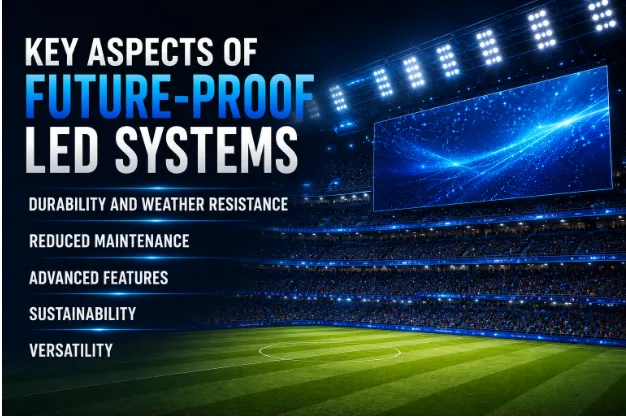
Key Aspects of Future-Proof LED Systems
-
- Durability and Weather Resistance: Modern LED systems are engineered to withstand extreme temperatures, moisture, and high winds, with many featuring IP65 or IP66 ratings, ensuring high reliability in outdoor environments.
-
- Reduced Maintenance: LED systems offer a 25 times longer lifespan compared to traditional lighting, significantly reducing the need for frequent replacements and lowering operational, maintenance-related costs.
-
- Advanced Features: Future-proofed venues utilize smart technology, such as remote monitoring for proactive maintenance, adaptive brightness, and, in some cases, solar-powered systems to increase energy efficiency.
-
- Sustainability: The shift toward, for example, flip-chip COB technology, which can reduce energy consumption by up to 45% and lower operating temperatures, supports sustainability goals.
-
- Versatility: LED solutions are adaptable for various applications, including, for instance, indoor/outdoor digital advertising, and high-definition, immersive experiences.