
Precision irrigation for sports turf (health + water use)

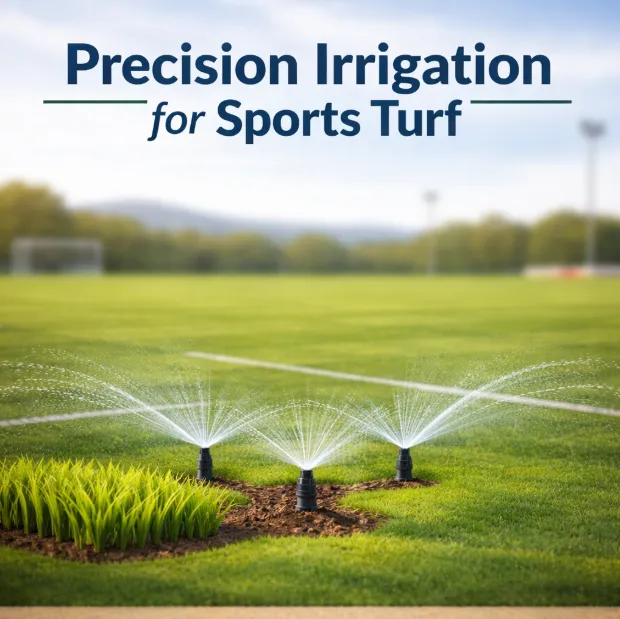
Precision irrigation for sports turf uses smart tech (sensors, weather data, valve-in-head sprinklers) to deliver exact water amounts where/when needed, boosting turf health (better roots, resilience) and dramatically cutting water use (saving money, sustainability) by preventing over/under-watering, creating playable, durable surfaces efficiently.
What Is Precision Irrigation and Why It Matters for Sports Turf Health
Precision irrigation is an advanced water management strategy for sports turf that uses data-driven technology to apply the precise amount of water exactly where and when it is needed. This method moves beyond traditional, uniform watering by considering the unique needs of different zones within a playing field, leading to significant improvements in turf health, playability, and resource conservation.
Why It Matters for Sports Turf Health
Precision irrigation is critical for maintaining high-performance surfaces that must withstand heavy traffic and meet strict aesthetic standards.
-
- Optimized Root Zone Health: Turf health begins at the roots. Precision ensures moisture stays within an optimal range; too little causes brittle, thinning grass, while too much displaces oxygen, leading to disease and decay.
-
- Increased Surface Resilience: Balanced moisture enhances cellular strength (turgor pressure), helping grass resist wear and tear from athletes. It also encourages deep rooting rather than shallow growth, creating a more robust sward.
-
- Improved Safety and Playability: Over-watered fields become soft and unstable, increasing the risk of slips or divots. Precision irrigation ensures a consistent, stable surface for better athlete performance.
-
- Faster Recovery After Wear: Following events, precise rehydration promotes rapid regrowth and nutrient uptake, flushing away surface contaminants like sweat or dust that can inhibit recovery.
-
- Water and Resource Conservation: Precision systems can reduce water consumption by 30–50% compared to traditional methods. They also allow for “fertigation” the precise application of fertilizers which minimizes nutrient leaching and runoff.
The Benefits for Turf Health & Water Use
Precision irrigation has become the standard for high-performance sports turf, offering dual benefits: superior plant health and substantial resource conservation. By shifting from traditional broad-zone watering to data-driven, site-specific applications, managers can maintain elite playing surfaces while meeting modern sustainability goals.
Benefits for Turf Health
Precision systems manage the root zone with pinpoint accuracy to ensure optimal growing conditions.
-
- Deep Root Development: Consistent, measured moisture encourages roots to grow deeper into the soil profile, creating a more stable and resilient sward.
-
- Disease Prevention: By avoiding over-saturation, these systems maintain proper soil aeration, which prevents root rot and discourages the development of foliar diseases and fungi that thrive in excessive wetness.
-
- Enhanced Playability and Safety: Uniform moisture across the field eliminates “soft spots” or dry patches, ensuring consistent traction and ball bounce. This stability directly reduces the risk of athlete injuries like slips and divots.
-
- Rapid Recovery: Following heavy use, precision rehydration flushes away surface contaminants (e.g., sweat, fertilizer) and promotes faster regrowth by delivering nutrients directly to stressed areas through fertigation.

Benefits for Water Use
Modern precision technology can reduce water consumption by 30–50% compared to traditional methods.
-
- Elimination of Waste: Advanced sensors and weather-integrated controllers ensure water is applied only when needed, preventing losses from runoff, deep percolation, and evaporation.
-
- 95% Application Efficiency: Pressure-compensated emitters and individual head control allow systems to achieve up to 95% efficiency, compared to just 60–80% for standard systems.
-
- Weather-Responsive Automation: Systems automatically adjust or skip cycles based on real-time data from weather stations or soil moisture probes, ensuring no water is wasted before or during rain events.
-
- Reduced Pumping Costs: Less water use translates to decreased energy consumption, with some facilities reporting a 20–40% reduction in electricity costs for irrigation pumps.
More Than Just Green: How Precision Irrigation is Revolutionizing Sports Turf Water Management
Precision irrigation is a transformative solution in sports turf management, allowing groundskeepers to apply the exact amount of water needed, at the right time and place. This practice moves beyond simple water conservation and revolutionizes turf care by improving playing surface quality, reducing costs, and minimizing environmental impact.
Key benefits of precision irrigation include:
-
- Optimal Turf Health and Playing Conditions: By providing uniform and consistent water coverage, precision irrigation systems eliminate overly wet or dry spots. This consistency promotes a healthier, deeper root structure and a more resilient playing surface, enhancing player safety and the overall experience.
-
- Significant Water Conservation: Advanced systems use weather data, soil moisture sensors, and real-time feedback to apply water only when necessary, which can significantly reduce water usage by 30% to 50% compared to traditional methods.
-
- Reduced Operational Costs: Minimizing water consumption directly translates to lower utility bills. Furthermore, healthier turf requires fewer inputs like fertilizers and pesticides, leading to long-term cost savings in maintenance and labor.
-
- Environmental Stewardship: Reduced water runoff prevents the leaching of chemicals into local waterways, protecting nearby ecosystems. Efficient energy use is also a byproduct of optimized pumping schedules.
The technology behind this revolution often involves:
-
- Centralized Control Systems: Cloud-based systems use data from various sources (weather stations, soil sensors) to create precise irrigation schedules.
-
- High-Efficiency Sprinklers: Advanced sprinklers offer high uniformity and can be individually controlled for flow, arc, and pressure to meet specific zone requirements.
-
- Data Analytics and AI: Predictive analytics help groundskeepers anticipate watering needs based on upcoming weather and turf stress models.
How Precision Irrigation Improves Sports Turf Health While Reducing Water Consumption
Precision irrigation in 2025 leverages smart technologies to optimize sports turf health while achieving water savings of 30% to 60% compared to traditional methods. By moving away from uniform, schedule-based watering toward data-driven, site-specific delivery, sports field managers can maintain superior playability and aesthetics with significantly fewer resources.
Improving Sports Turf Health
Precision irrigation addresses the unique biological and structural requirements of high-traffic sports surfaces:
-
- Optimal Root Zone Management: Maintaining moisture within a precise range prevents roots from retracting in dry conditions and avoids oxygen displacement which leads to disease and decay when overwatered.
-
- Enhanced Resilience and Stability: Measured, deep-penetrating watering encourages deeper root growth rather than shallow matting, creating a denser sward that resists player wear and tearing.
-
- Accelerated Recovery: Automated systems can rehydrate high-use or stressed areas immediately after events, flushing away contaminants like sweat and salts to speed regrowth and restore surface density.
-
- Disease and Weed Control: Targeted delivery, especially via subsurface or drip methods, keeps moisture away from foliage and non-target areas, reducing the risk of fungal infections and weed growth.
Reducing Water Consumption
By delivering the “right amount of water at the right time and place,” precision systems eliminate the primary causes of waste:
-
- Evaporation and Runoff Prevention: Drip and micro-sprinkler systems deliver water directly to the soil, minimizing losses from wind drift and surface evaporation—factors that can waste 10–30% of water in overhead systems.
-
- Smart Scheduling via AI and IoT: Systems integrated with soil moisture sensors, weather stations, and evapotranspiration (ET) calculators adjust irrigation in real-time, postponing cycles if rain is forecast or soil moisture is sufficient.
-
- Variable Rate Irrigation (VRI): Individual “valve-in-head” sprinklers or targeted drip lines allow managers to apply different amounts of water across a single field based on soil type (sandy vs. clay) or specific usage patterns.
-
- Advanced Monitoring: Emerging 2025 technologies, such as satellite-guided stress mapping and machine learning-based controllers, have been shown to reduce runoff by an average of 74% while maintaining high green cover.
Economic and Sustainability Benefits for 2025
-
- Cost Efficiency: While initial hardware costs are higher, the investment is often recouped through lower water and energy bills, as well as reduced manual labor requirements.
-
- Resource Conservation: These systems support the use of alternative water sources, such as recycled or stormwater, ensuring compliance with increasingly strict environmental regulations.
-
- Fertigation Integration: Precision systems often combine watering with nutrient delivery (fertigation), increasing fertilizer efficiency by up to 30% and preventing nutrient leaching into groundwater.
Delivering Healthier Sports Turf and Smarter Water Use with JMR InfraSolutions
JMR InfraSolutions helps sports facilities achieve the perfect balance between turf health and water efficiency through precision-engineered irrigation solutions. Our approach combines intelligent system design, uniform water distribution, soil and climate responsiveness, and advanced control technologies to ensure strong root development, consistent playability, and reduced water waste. From stadiums and training grounds to multi-sport complexes, JMR delivers end-to-end irrigation solutions that support sustainable operations, lower lifecycle costs, and high-performance sports environments built to last.
How JMR InfraSolutions Designs Precision Irrigation for Healthier, Longer-Lasting Turf
In 2025, JMR InfraSolutions designs precision irrigation systems as a core component of its turnkey sports infrastructure, focusing on maximizing turf longevity and minimizing resource waste. Their approach integrates advanced IoT technologies with sustainable water sourcing to maintain high-performance playing surfaces.
Data-Driven Design Methodology
JMR InfraSolutions employs a specialized design process to ensure each system is tailored to the specific environment:
-
- Comprehensive Site Assessment: They conduct thorough analyses of soil composition, climate conditions, and specific turf types to determine exact water requirements.
-
- Custom Hydraulic Planning: Experts create detailed plans for drip and sprinkler layouts that ensure full, uniform coverage while targeting the root zone directly.
-
- Technological Integration: Systems are embedded with IoT-enabled sensors that monitor soil moisture, local weather, and real-time water usage to automate adjustments.
Key Features for Healthier Turf
The precision systems are engineered to improve turf health through consistent, optimized delivery:
-
- Root-Zone Targeting: By delivering water directly to the roots, the systems minimize surface runoff and evaporation, preventing the shallow rooting that often leads to turf failure.
-
- Smart Automation: Integration with AI and real-time weather data ensures that irrigation only occurs when necessary, preventing over-watering that can lead to disease and soil compaction.
-
- Sustainability Integration: JMR incorporates rainwater harvesting and recycling technologies into their irrigation networks to reduce reliance on primary water sources.
Longevity and Performance Benefits
-
- Durable Infrastructure: Systems are designed with low-maintenance, durable components to withstand heavy usage in sports environments.
-
- Uniform Playability: Precise watering ensures consistent surface density and visual appeal across the entire field, regardless of varying terrain.
-
- Eco-Friendly Operations: By combining recyclable artificial turf with these efficient irrigation systems, JMR promotes a long-lasting, sustainable lifecycle for modern sports facilities.