
Padel court flooring options for hot climates (UAE)

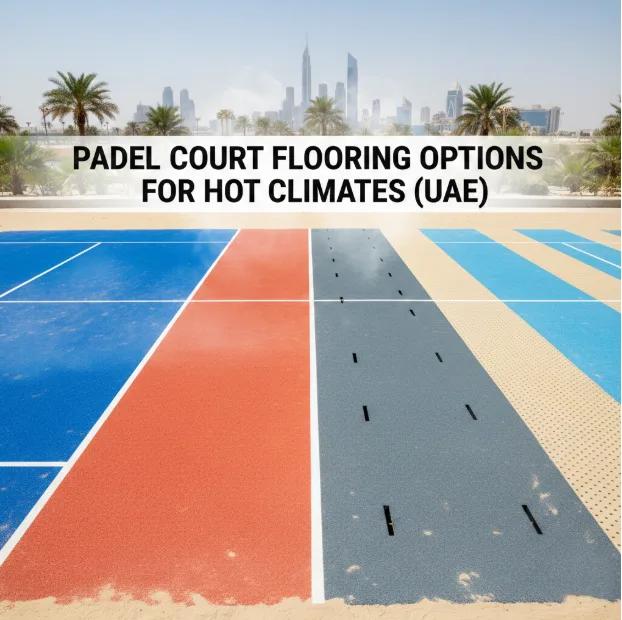
In the UAE’s hot climate, padel court flooring must withstand extreme UV exposure and high temperatures while maintaining player comfort and ball performance. Textured artificial turf is the professional standard for both durability and heat management in the GCC region.
Understanding Padel Court Flooring
Padel court flooring is a multi-layered system designed to balance ball bounce, player traction, and injury prevention. While various materials like concrete or resin are used, artificial turf with silica sand infill is the global standard for professional and recreational play.
1. Primary Surface Materials
The choice of surface significantly impacts the speed and physical demand of the game.
Artificial Turf (Most Common): Typically 10–15 mm in height, it offers the best cushioning and a controlled, medium-paced game. It is usually made of polyethylene or polypropylene fibers.
Synthetic Resin: Often used for indoor professional tournaments, providing a very uniform bounce and a sleeker aesthetic.
Porous Concrete/Cement: A harder surface that results in a much faster ball speed and higher bounce. It is extremely durable but can be taxing on players’ joints.
Modular Tiles: Interlocking plastic tiles are an emerging choice for portable or temporary courts due to their ease of installation and excellent drainage.
2. The Role of Silica Sand Infill
For turf courts, silica sand is not just a filler; it is critical for performance.
Stability: It weighs down the turf carpet, keeping it flat and preventing wrinkles.
Traction & Slide: It allows players to pivot and slide safely, similar to clay in tennis, reducing the risk of sudden-stop injuries.
Consistent Bounce: Proper sand distribution ensures the ball reacts predictably across the entire court surface.
3. Foundation and Sub-Base
The playing surface must rest on a perfectly level, rigid foundation.
Concrete Slab: Usually 15–25 cm thick. Porous concrete is highly recommended for outdoor courts as it allows water to drain directly through the surface.
Perimeter Ring Beam: A reinforced concrete beam often runs beneath the walls to support the heavy glass panels (which can weigh over 3 tons) and the steel frame.
4. Technical Standards & Maintenance
FIP Standards: The International Padel Federation mandates a standard court size of 20m x 10m. Lines must be 5 cm wide and in a contrasting color to the floor.
Maintenance: Turf requires regular brushing to redistribute sand and prevent the fibers from flattening. Outdoor courts need treatments to prevent moss and fungus growth.
Common Padel Court Flooring Options
Padel court flooring options primarily include artificial turf (synthetic grass), the most common choice for its balance of ball bounce, comfort, and grip, often with silica sand infill; concrete/cement surfaces, sometimes coated with acrylic or synthetic materials for faster play; and less commonly, polyurethane, PP (polypropylene) tiles, or even natural grass, with choices depending on desired speed, maintenance, and whether the court is indoor/outdoor.
Common Flooring Types
-
- Artificial Turf (Synthetic Grass): The standard for professional play, offering excellent ball control, cushioning, and traction, usually with added silica sand for consistent bounce.
-
- Concrete/Cement (with Coatings): A durable base, often finished with synthetic materials like acrylic or EPDM granules, providing a faster game and lower maintenance.
-
- Polypropylene (PP) Tiles: Modular, interlocking hard plastic tiles that are quick to install and offer good drainage, popular for both indoor and outdoor courts.
-
- Acrylic/Polyurethane Coatings: Applied over concrete or asphalt, these provide a seamless, shock-absorbing surface, ideal for indoor courts.
Factors to Consider
-
- Ball Speed: Turf offers a medium-paced game, while coated concrete/acrylic is faster.
-
- Player Comfort: Turf provides cushioning, reducing impact on joints.
-
- Maintenance: Synthetic turf needs brushing and infill, while coated surfaces are lower maintenance.
-
- Environment: Turf is great outdoors, while seamless options like polyurethane suit indoor courts.
Customization and Aesthetics
Padel court flooring offers extensive customization and aesthetic options, allowing for a wide range of colors, finishes, custom line markings, and the incorporation of branded logos to align with a facility’s theme or enhance the playing experience.
Color Options
The most popular and International Padel Federation (FIP) approved colors are blue, green, and earth-toned (terracotta). Other colors are gaining popularity for private and indoor courts.
-
- Blue: The most common choice, as it offers a modern, professional look and provides excellent contrast with the yellow padel ball, reducing eye strain.
-
- Green: A traditional option that evokes natural grass courts and blends well with outdoor environments, offering good visibility for the ball.
-
- Earth-toned (Terracotta/Red Clay): Provides a classic, unique look but may show dirt more easily and require more maintenance.
-
- Black/Dark Gray: These sleek, sophisticated options are increasingly popular for indoor courts as they enhance ball visibility under artificial lights and create a modern aesthetic. Black is generally not recommended for outdoor use due to heat absorption.
-
- Vibrant Colors (Pink, Orange, Purple): For private courts or specific branding, custom, vibrant colors are available to create a unique and energetic atmosphere.
Customization Features
Beyond solid colors, various other elements can be customized to achieve a desired aesthetic or functional goal.
-
- Surface Finish: Surfaces can have different finishes, such as a matte finish to reduce glare under bright lights, or an anti-slip texture for enhanced safety.
-
- Line Markings: The court’s white lines must contrast with the main playing surface, and their precise pre-woven application is a key feature of some artificial turf systems.
-
- Logos and Branding: Custom logos or graphics can be printed directly onto the artificial turf or applied within acrylic/polyurethane coatings, which is ideal for clubs, events, or branding purposes.
-
- Infill Color (for Artificial Turf): The sand infill is available in matching or contrasting colors (blue, red, green, black) to enhance the overall aesthetic and ensure a clean, visually blended playing surface.
-
- Court Structure Coordination: The color of the court’s metal structure and net posts can be powder-coated in a wide range of custom colors to harmonize with the flooring or overall facility theme.
-
- Glass Walls: Tempered glass walls offer customization through tinting (e.g., clear, smoked gray, light blue) to match the court’s color scheme and manage glare.
Installation and Maintenance Considerations
Installation of padel court flooring requires a precise, multi-layer process starting with a stable foundation, while long-term maintenance focuses on surface cleanliness and infill management.
Installation Steps
The installation of a professional padel court typically follows this sequence:
-
- Site Preparation: The ground is leveled, compacted, and cleared of obstacles to ensure stability.
-
- Foundation: A concrete or asphalt slab (typically 10–15 cm thick) is poured. For outdoor courts, the slab should be slightly higher than the surrounding ground or include a built-in drainage system to prevent water accumulation.
-
- Perimeter & Structure: A concrete ring beam is installed to anchor the galvanized steel frame, glass walls, and fencing.
-
- Surface Laying:
-
- Artificial Turf: Rolled out, precisely cut, and secured to the base using specialized adhesives.
-
- Acrylic: Multiple layers of primer, sealer, and pigmented acrylic coating are applied sequentially and allowed to cure.
-
- Surface Laying:
-
- Sand Infill (Turf Only): High-quality silica sand (approx. 850–1,000 kg per court) is evenly spread and brushed into the fibers to stabilize the turf and ensure consistent ball bounce.
Maintenance Requirements
Regular upkeep is essential to maximize the 5–10 year lifespan of most court surfaces.
-
- Routine Cleaning: Remove debris such as leaves, dirt, and dust weekly using a soft brush or leaf blower to maintain traction and prevent mold growth.
-
- Turf Brushing: Artificial turf requires regular brushing (every 2–3 weeks) to keep fibers upright and redistribute sand infill that migrates during play.
-
- Sand Management: Replenish silica sand every 3–6 months to address “bare spots” and prevent the surface from becoming too fast or slippery.
-
- Structural Checks: Regularly inspect and tighten bolts, check the tension of the net, and ensure glass panels are free of chips or cracks that could cause shattering under impact.
-
- Extraordinary Maintenance: Schedule annual deep cleaning or decompaction of the sand infill to restore drainage and performance.
Environmental Considerations
Environmental considerations for padel court flooring focus on sustainable materials, waste reduction, and efficient resource management.
Sustainable Material Options
-
- Recycled Components: Manufacturers are increasingly using recycled plastics and rubber for court surfaces. Some advanced modular interlocking tiles and artificial turf backings are now engineered to be 100% recyclable in a closed-loop system at the end of their life cycle.
-
- Eco-Friendly Artificial Turf: New generations of turf utilize latex-free and polyurethane-free backings, making them easier to recycle compared to traditional multi-material systems.
-
- Low-VOC Coatings: Modern acrylic and polyurethane surfaces prioritize indoor air quality by using water-soluble resins that emit zero or very low Volatile Organic Compounds (VOCs).
Resource Efficiency
-
- Water Conservation: Unlike natural grass, artificial turf requires no regular watering, saving significant volumes of water. For maintenance, water is only used for occasional cleaning rather than survival.
-
- Reduced Carbon Footprint:
-
- Modular Foundations: Using “floating” foundations or modular designs can reduce the need for extensive excavation and heavy concrete pouring, which are major contributors to construction-related CO2 emissions.
-
- Local Sourcing: Choosing locally manufactured materials reduces transport-related emissions.
-
- Reduced Carbon Footprint:
Urban and Ecological Impact
-
- Heat Island Effect: Lighter-colored acrylic surfaces can help mitigate the Urban Heat Island effect by reflecting sunlight rather than absorbing it, which can also reduce air conditioning demands for nearby or indoor facilities.
-
- Permeability and Drainage: Well-designed flooring systems allow for efficient rainwater drainage, helping to manage runoff and prevent local flooding.
-
- Biodiversity Protection: Facility designs in 2025 often include “buffer zones” to minimize the impact of construction on local flora and fauna.
Why Climate Matters When Selecting Padel Court Flooring in the UAE
In the UAE, selecting padel court flooring requires addressing extreme heat, high UV radiation, and seasonal humidity to ensure player safety and surface longevity.
Impact of Extreme Heat and Sun
-
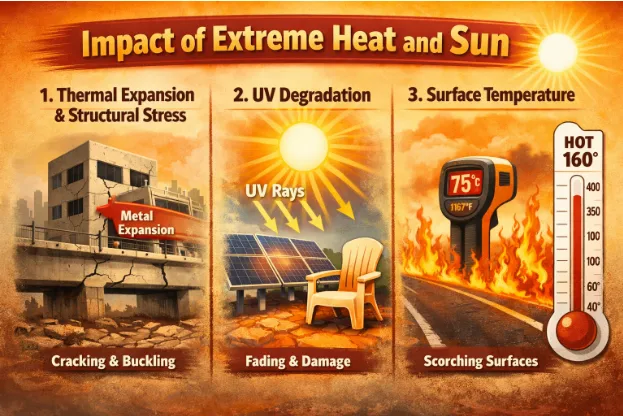
- Thermal Expansion & Structural Stress: Outdoor courts in the GCC face significant thermal expansion. Without specialized materials, heat can cause structural stress on the frame and base.
-
- UV Degradation: Constant solar exposure is the primary cause of fiber deterioration. Quality flooring for the UAE must incorporate UV-stabilized fibers (typically polyethylene) and anti-UV additives during extrusion to prevent color fading and fiber breakage.
-
- Surface Temperature: Standard synthetic turf can reach temperatures high enough to be uncomfortable or unsafe. Advanced options in 2025 use heat-reflective fibers or specialized infills (e.g., thermoplastic elastomers) to reduce heat retention compared to traditional black rubber infills.

- Surface Temperature: Standard synthetic turf can reach temperatures high enough to be uncomfortable or unsafe. Advanced options in 2025 use heat-reflective fibers or specialized infills (e.g., thermoplastic elastomers) to reduce heat retention compared to traditional black rubber infills.
Humidity and Sand Management
-
- Infill Stabilization: Intense heat can cause silica sand to dry out completely, making it prone to blowing away during sandstorms or sticking to players in high humidity. High-quality texturized monofilament turf is often preferred in the UAE because its curly fibers better “lock” the sand in place.
-
- Mold & Drainage: Coastal humidity in areas like Dubai can lead to mold or mildew growth if the court lacks proper drainage. UAE-specific installations prioritize high-permeability backings and vertical drainage holes.
Indoor vs. Outdoor Considerations
-
- Indoor (Controlled Environment): Due to the harsh summer (May–September), many UAE facilities opt for indoor courts. These require low-VOC (Volatile Organic Compound) polyurethane or acrylic coatings to ensure healthy indoor air quality.
-
- Outdoor (Extreme Resistance): For outdoor projects, the use of galvanized steel frames with anti-rust coatings is mandatory to withstand humidity and prevent corrosion.
Ready to Build a High-Performance Padel Court for the UAE Climate?
Hot, high-UV environments like the UAE demand padel court flooring engineered for extreme heat, sand exposure, and intensive play. At JMR InfraSolutions, we design and deliver climate-resilient padel court surfaces that maintain traction, player comfort, and long-term durability without warping, fading, or performance loss.
From UV-stable synthetic turf and heat-reflective base systems to optimized drainage and shock-absorption layers, our end-to-end turnkey approach ensures your padel courts perform consistently in temperatures exceeding 45°C.
Partner with JMR InfraSolutions to:
-
- Reduce surface overheating and glare
-
- Ensure player safety and comfort year-round
-
- Minimize maintenance and lifecycle costs
-
- Achieve international play standards for padel courts
Build padel courts that withstand the UAE climate and elevate the playing experience with JMR InfraSolutions as your trusted infrastructure partner.