
What are the Low Maintenance Seating Materials for Stadiums?

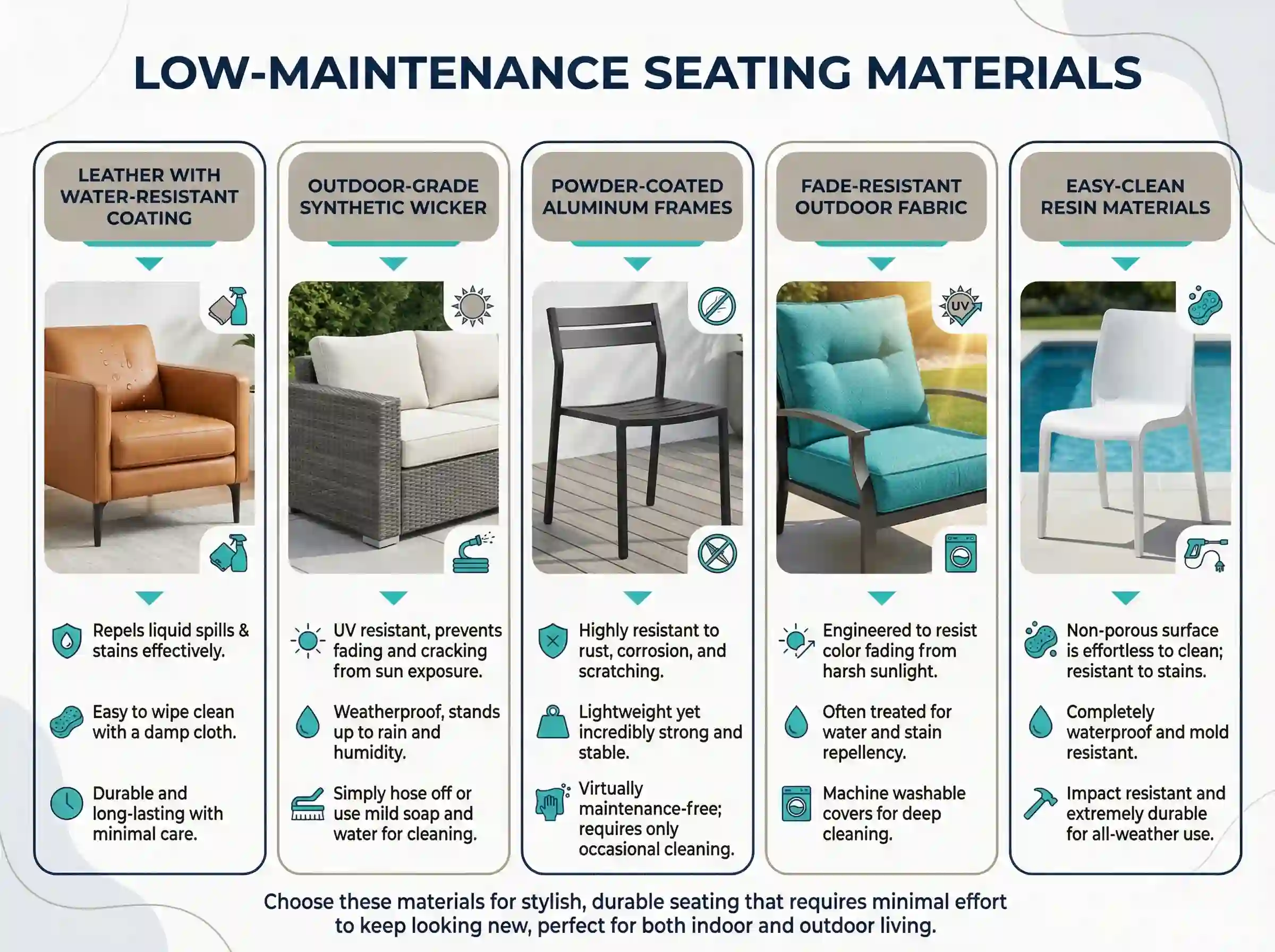
Low-maintenance stadium seating materials include high-density polyethylene (HDPE) and other durable plastics like polypropylene, which are resistant to UV and corrosion. Treated aluminum and steel are also low-maintenance options because they are corrosion-resistant and durable. These materials minimize replacement costs and require less cleaning compared to older materials like wood.
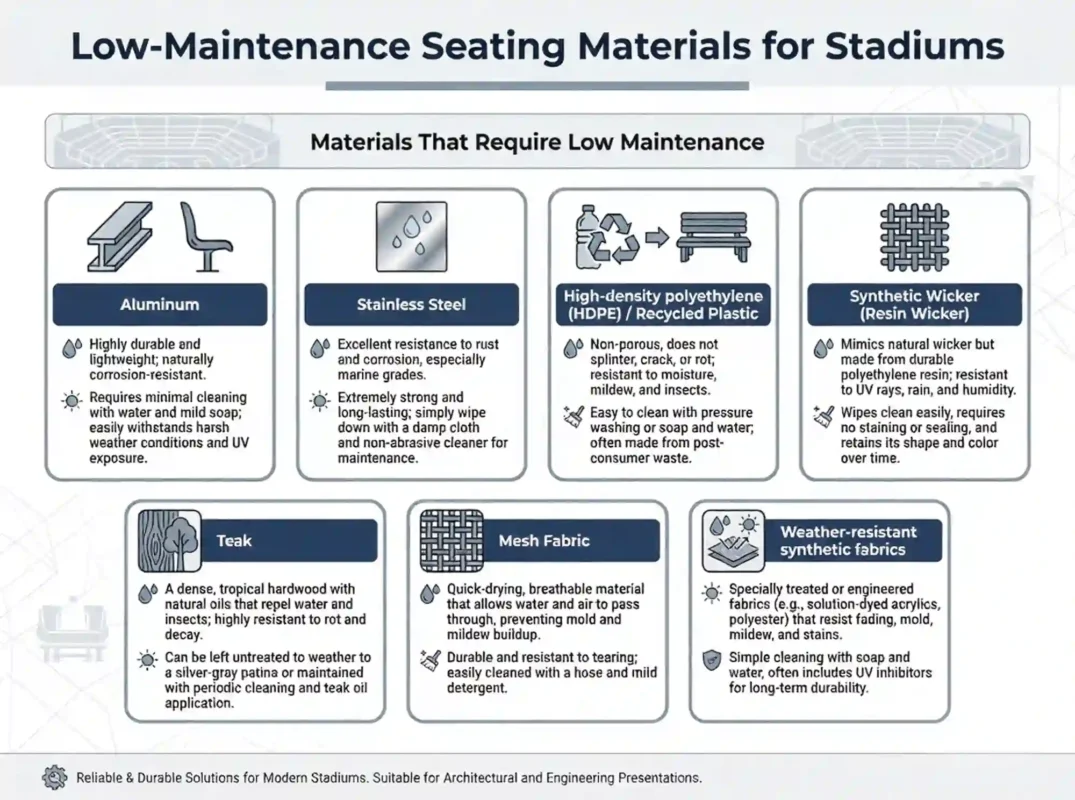
Materials that require low maintenance
-
- Aluminum: Lightweight and rust-proof, it is durable and resistant to the elements.
-
- Stainless steel: Very durable and weather-resistant, though some finishes may require an occasional cleaning.
-
- High-density polyethylene (HDPE) / Recycled Plastic: Extremely strong, resistant to moisture, cracking, and stains, and can withstand extreme temperatures.
-
- Synthetic wicker (Resin Wicker): More durable than natural wicker, and high-end versions are UV-resistant to prevent fading and cracking.
-
- Teak: While it requires a medium maintenance level, it’s naturally resistant to water, rot, and insects and develops a protective, silvery-grey patina over time, which means it doesn’t need sealing to be durable.
-
- Mesh fabric: Offers a balance of comfort, breathability, and durability against outdoor conditions.
-
- Weather-resistant synthetic fabrics: Found in cushions and other applications, these can withstand harsh weather.
What are the Durable low maintenance seating materials?
Durable and low-maintenance seating materials include teak wood, aluminum, stainless steel, wrought iron, and synthetic materials like high-density polyethylene (HDPE) or resin wicker. These materials resist weather, rot, and rust, often only needing a simple cleaning with soap and water to stay in good condition.
Natural materials
-
- Teak wood: This dense hardwood is naturally resistant to rot, insects, and weather. It can be left untreated to develop a silvery-gray patina or oiled to maintain its golden-brown color.
-
- Stone and concrete: These are extremely durable and can withstand various weather conditions, though they are heavy.
Metals
-
- Aluminum: It is lightweight, rust-resistant, and strong. It’s an excellent choice for moist or salty environments, but might not be suitable for very windy locations unless weighted down.
-
- Stainless steel and wrought iron: These metals are very durable and strong. Stainless steel is rust-resistant, while wrought iron can also be used for a long time, especially with a protective coating like powder coating.
Synthetic and composite materials
-
- Recycled plastic and polyethylene: These are budget-friendly options that are resistant to mildew, fading, and water damage.
-
- Resin wicker: Made from plastic, this is a highly durable and weather-resistant alternative to natural wicker. It is often made from HDPE and is UV and fade-resistant.
What are the benefits of low maintenance seating materials?
Low-maintenance seating materials offer significant advantages, including reduced time and effort for upkeep, enhanced durability, and long-term cost savings. These materials are designed to resist common issues like weather damage, stains, and wear and tear.
Key Benefits
-
- Minimal Upkeep: The primary benefit is convenience. Most low-maintenance materials only require occasional cleaning with mild soap and water, eliminating the need for time-consuming tasks such as sanding, staining, oiling, or polishing required by some natural materials like wood.
-
- Enhanced Durability and Longevity: These materials are built to last.
-
- They resist common environmental damage like rust (metals), rot (wood), cracking, or peeling.
-
- Many are UV-resistant, preventing fading or becoming brittle when exposed to sunlight.
-
- They are often weather-hardened, able to withstand rain, humidity, and temperature fluctuations without deteriorating.
-
- Enhanced Durability and Longevity: These materials are built to last.
-
- Cost-Effectiveness Over Time: While the initial investment might vary, the long-term costs are often lower. Reduced maintenance expenses and the infrequent need for repairs or replacements result in significant savings over the lifespan of the furniture.
-
- Hygiene and Ease of Cleaning: The non-porous nature of many low-maintenance materials means they do not absorb liquids, making spills easy to wipe up. This makes them more hygienic and easier to sanitize in shared environments like offices or public spaces.
-
- Versatility and Aesthetic Appeal: Modern low-maintenance materials like high-density polyethylene (HDPE) or aluminum come in a variety of styles, colors, and finishes. They can mimic the look of traditional materials without the associated maintenance headaches, fitting a wide range of indoor and outdoor decors.
-
- Increased Enjoyment and Usability: With less time spent on maintenance, users have more time for relaxation, entertainment, or work. This also increases the likelihood of using outdoor spaces regularly, enhancing overall quality of life.