
What is Ergonomic Stadium Seating?

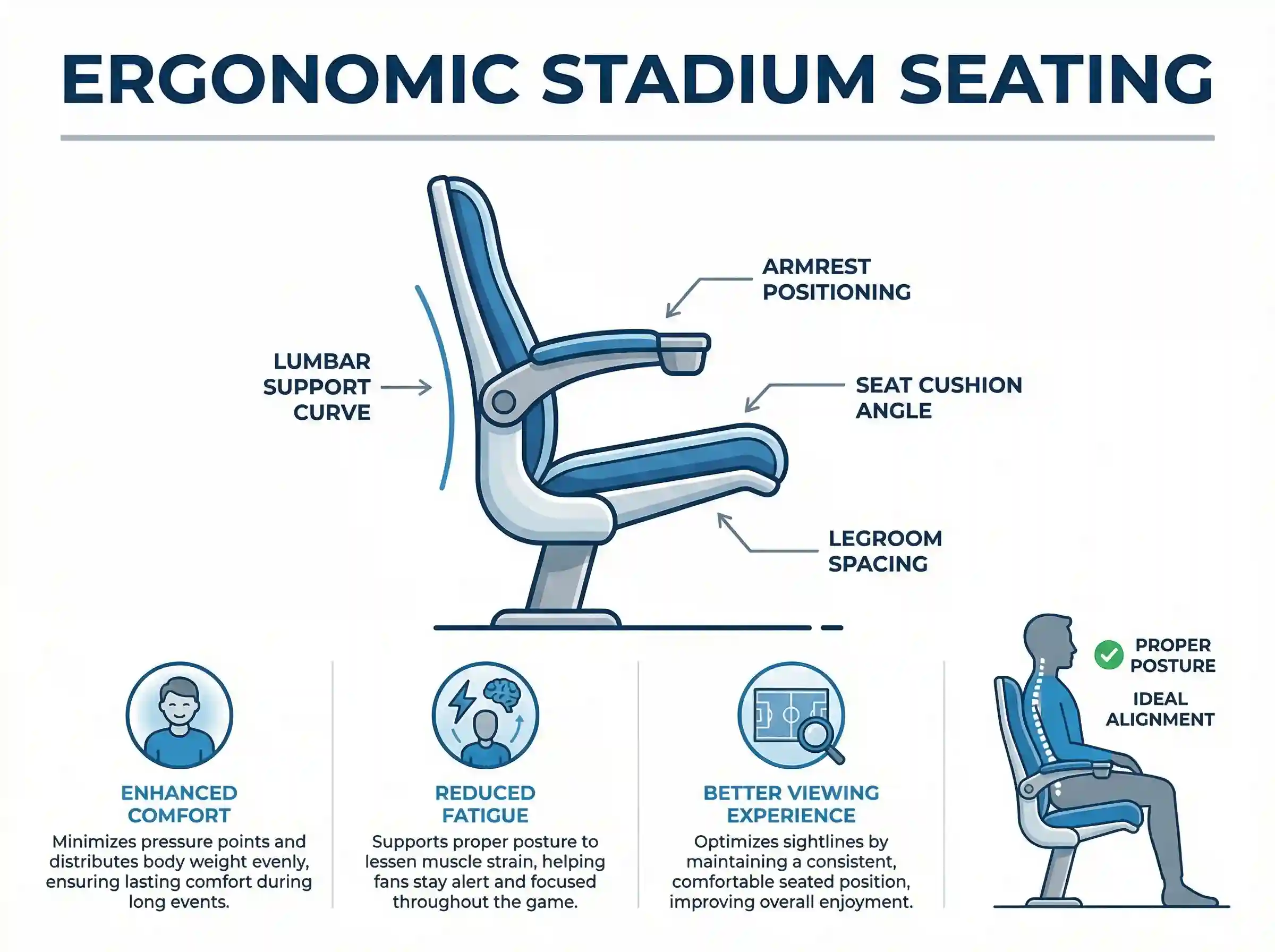
Ergonomic stadium seating is designed with human comfort and well-being in mind, using principles of ergonomics to enhance the spectator experience during long events. It features contoured shapes for better posture, specialized cushioning, and strategic backrest angles to reduce strain and fatigue, as well as materials that allow for better air circulation. This type of seating also considers proper dimensions, including adequate width, depth, and legroom, to accommodate a wider range of body types.
What are the Benefits of Ergonomic Stadium Seating?
Ergonomic stadium seating benefits include enhanced spectator comfort and engagement, reduced physical strain and injury risk, and improved venue reputation. These seats are designed to support natural posture, minimize pressure points, and allow for greater enjoyment of events by preventing discomfort and distractions from poor seating. This can lead to increased attendance, spending, and a higher return on investment for the venue.
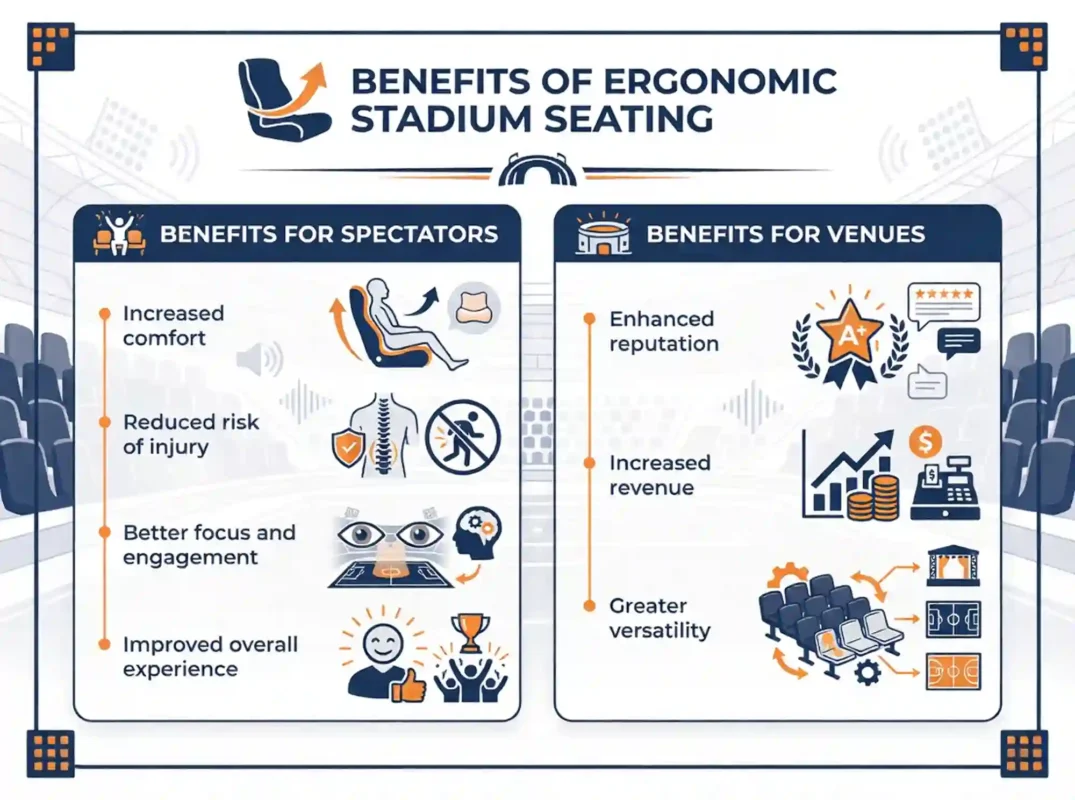
Benefits for spectators
-
- Increased comfort: Ergonomic seats reduce pressure on the back, neck, and legs by supporting natural body posture, which is crucial for enjoying long events.
-
- Reduced risk of injury: Designed to minimize strain on joints and muscles, these seats help prevent discomfort and reduce the risk of musculoskeletal issues during and after events.
-
- Better focus and engagement: When spectators are physically comfortable, they can better concentrate on the game or performance, leading to a more immersive and enjoyable experience.
-
- Improved overall experience: Comfortable seating encourages positive feelings about the venue, increasing the likelihood of repeat visits and positive word-of-mouth.
Benefits for venues
-
- Enhanced reputation: A venue known for comfortable and high-quality seating can attract more spectators and be chosen to host major events.
-
- Increased revenue: Improved fan experience can lead to increased attendance and higher spending on concessions and merchandise.
-
- Greater versatility: Ergonomic and sometimes foldable seating systems can make a venue suitable for a wider variety of events, such as concerts, conferences, and performances, increasing its earning potential.
What are the key Specifications for ergonomic stadium seating?
Key specifications for ergonomic stadium seating include seat dimensions (width, depth, backrest height), adequate legroom between rows, contoured and padded materials for comfort, and durable construction. Other important features are weather resistance, UV protection, and safety aspects like rounded edges and clear seat numbering.
Seat dimensions and spacing
-
- Seat width and depth: Typical adult seats should be between 40-50 cm wide and 35-45 cm deep for adequate space and support.
-
- Backrest height: The backrest should be 30-40 cm high to provide effective spinal support.
-
- Legroom (row spacing): The distance between the backrest of one row and the backrest of the row in front should be approximately 85 cm to prevent knees from pressing against the seat in front and allow for easy movement.
-
- Seat height: For portable seats, an ideal height is 18-22 inches above the ground.
Comfort and support
-
- Padding and contouring: Seats should have padding or contoured designs to reduce pressure points and support natural posture.
-
- Resilient foam: Use high-density foam (at least 1.8 lb/cu ft) that maintains its thickness and hardness over time.
-
- Ventilation: The seat material should be breathable to prevent heat buildup and discomfort, especially during long events.
Durability and materials
-
- Frame: Frames are typically made of strong, durable materials like steel or aluminum.
-
- Upholstery: Covers should be made of durable, UV-resistant, and water-repellent fabric to withstand the elements.
-
- Weather resistance: Materials must be resistant to sun, rain, and wear and tear to ensure a long lifespan.
-
- Safety: Seats must be fireproof, and edges should be rounded to minimize injury risk.
What are the Core Principles of Ergonomic stadium seating?
The core principles of ergonomic stadium seating are to promote proper posture, ensure comfort for long periods, and enhance spectator focus through thoughtful design. Key factors include providing adequate lumbar support and backrest geometry, ensuring sufficient seat width and legroom, and using materials that are durable and comfortable. These principles aim to reduce discomfort and fatigue, allowing fans to fully enjoy the event.
Posture and support
-
- Spinal and lumbar support: Seats are designed with the correct backrest height and contour to support the spine and reduce pressure points.
-
- Proper alignment: Features like a proper back angle help users maintain a neutral, healthy sitting posture.
Physical space and dimensions
-
- Seat dimensions: Adequate seat width, depth, and height are crucial to accommodate a wide range of body types.
-
- Legroom and row spacing: Sufficient legroom and adequate spacing between rows allow for movement and prevent discomfort.
Comfort and user experience
-
- Cushioning and materials: The use of comfortable, durable materials, along with proper cushioning, reduces fatigue during long events.
-
- Adjustability: Some designs may include features like armrests or foldable options to accommodate different preferences and needs.
-
- Thermal comfort: Materials and design are also considered for thermal comfort, such as using breathable fabrics or materials that don’t get too hot or cold.
Accessibility and safety
-
- Accessibility: Ergonomic design includes considering the needs of a diverse audience, ensuring accessibility for all users.
-
- Durability and safety: Seats must be constructed from high-quality materials that are both safe and can withstand heavy use over time.
How Materials and Durability Matters in Ergonomic Stadium Seating?
Materials and durability are crucial in ergonomic stadium seating because they must balance long-term structural integrity against the need for comfort, support, and a positive spectator experience. High-quality, durable materials ensure the ergonomic features (like lumbar support, proper dimensions, and cushioning) remain effective over many years of heavy use and varying weather conditions.
How Materials Matter in Ergonomics
The choice of material directly affects the comfort and ergonomic support provided to the spectator during long events.
-
- Cushioning and Pressure Distribution:
-
- High-density foam and memory foam provide superior cushioning that distributes body weight more evenly, reducing peak pressure points on the body (especially the lower back and backside) which can cause pain and fatigue.
-
- Softer materials generally increase the contact area between the body and the seat, which helps in dispersing weight effectively.
-
- Cushioning technologies, sometimes inspired by athletic footwear innovations, are integrated to enhance shock absorption and overall comfort.
-
- Cushioning and Pressure Distribution:
-
- Posture Support:
-
- The structural material of the seat (e.g., rigid plastic or metal frame) provides the necessary support structure for ergonomic design features like contoured backrests and optimal seat angles.
-
- Materials must be rigid enough to maintain the designed shape that promotes natural spinal alignment, preventing slumping, but also be compatible with supportive padding for comfort.
-
- Posture Support:
-
- Thermal Comfort:
-
- Breathable fabrics and perforated plastic designs improve air circulation, preventing heat buildup during long events and in warm weather.
-
- Some modern designs even use climate-responsive materials and coatings that manage heat absorption from the sun, keeping seats cooler.
-
- Thermal Comfort:
How Durability Matters
Durability ensures that the initial ergonomic benefits and safety features of the seat are sustained throughout its lifespan, which can exceed 10 years.
-
- Weather Resistance: For outdoor stadiums, materials must be able to withstand sun, rain, wind, and extreme temperatures.
-
- UV-stabilized plastics prevent fading, brittleness, and degradation from sun exposure.
-
- Powder-coated steel frames and rust-resistant aluminum prevent corrosion, which is especially important in coastal or high-humidity regions.
-
- Weather Resistance: For outdoor stadiums, materials must be able to withstand sun, rain, wind, and extreme temperatures.
-
- Structural Integrity and Safety: Durable materials like high-impact polypropylene copolymer and reinforced steel or aluminum frames ensure the seats can withstand heavy use, high capacity events, and even enthusiastic fan behavior without failure. This is critical for public safety and minimizing injury risks.
-
- Cost Efficiency: Investing in durable materials reduces the need for frequent maintenance, repairs, and premature replacements, leading to significant long-term cost savings for the venue operators.
-
- Hygiene and Maintenance: Durable materials, especially plastics and easy-to-clean coated metals/fabrics, can withstand regular cleaning with mild solutions without damage, helping maintain a hygienic and visually appealing environment.
What are the Innovations in Modern Ergonomic Stadium Seating?
Innovations in modern ergonomic stadium seating include contoured backrests and advanced cushioning for better posture, high-performance, breathable fabrics, and smart features like integrated phone charging and navigation. Many modern seats are also wider, offer more legroom, and include optional amenities like armrests and cup holders to improve the spectator experience. Additionally, sustainable practices are being integrated through the use of recycled materials and eco-friendly systems.
Comfort and support
-
- Advanced back and seat design: Contoured backrests are engineered to support the natural spine, while features like memory foam and gel inserts improve lumbar support and pressure distribution.
-
- Optimized dimensions: Wider seats with more legroom are becoming standard to accommodate diverse body types and allow for greater freedom of movement.
-
- High-performance fabrics: Breathable and moisture-wicking materials are used to manage heat and humidity, significantly enhancing comfort during long events and in various climates.
Smart technology
-
- On-demand power: Many modern seats now include USB ports to charge phones and other devices, often with a 45W USB-PD output.
-
- Mobile-guided navigation: Integrated features like Bluetooth beacons can guide fans to their seats with a high degree of accuracy.
-
- Context-aware services: NFC-enabled armrests can be used to deliver targeted information, such as concession offers, directly to a fan’s device.
Sustainability
-
- Eco-friendly materials: Seats are increasingly made from recycled materials to reduce environmental impact.
-
- Energy-efficient systems: Some stadiums incorporate energy-efficient lighting and other systems to further enhance sustainability.
Amenities and customization
-
- Integrated features: Optional amenities like armrests, cup holders, and padding are now commonly integrated into the seating design.
-
- Customization: Options for color and design allow venues to match their branding and create a cohesive aesthetic.
-
- Modular and accessible seating: Some modern designs allow for modular and removable seating to accommodate different event types. Accessible seating systems are also a key feature.
The Impact of Stadium Seat Ergonomics on Fan Experience and Engagement?
Ergonomic stadium seats significantly enhance fan experience and engagement by improving comfort, which leads to longer attendance, increased spending, and higher repeat attendance. Proper lumbar support, cushioning, and adequate legroom allow fans to stay engaged without discomfort, while factors like heat dissipation and unobstructed sightlines further contribute to satisfaction, ultimately fostering a more positive and electric atmosphere.
Impact on fan experience and engagement
-
- Improved comfort: Ergonomic seats with proper lumbar support, cushioning, and adequate legroom prevent restlessness and pain during long events, allowing fans to focus on the game.
-
- Increased duration of attendance: Fans with comfortable seating are less likely to leave their seats early to find relief, ensuring they don’t miss critical moments and contribute more energy to the crowd.
-
- Higher concession spending: When fans are more comfortable and engaged, they are more likely to stay for longer periods and participate in stadium rituals, which can lead to a 22% increase in concession spending per capita.
-
- Greater repeat attendance: Venues with modern, ergonomic seating have reported a 34% increase in repeat attendance compared to those with standard seating, as positive experiences lead to a higher likelihood of return.
-
- Enhanced immersion and atmosphere: A comfortable fan is a more engaged fan. When physically comfortable, fans can better immerse themselves in the event, leading to a more passionate and electric atmosphere.
Factors of ergonomic seating
-
- Lumbar support: Provides a stable and supportive base for the lower back to reduce fatigue over long periods.
-
- Cushioning: Offers a more pleasant and comfortable sitting experience than hard bleachers.
-
- Legroom: Prevents discomfort and allows for more natural body positioning during the event.
-
- Heat dissipation: Features in the seat can help manage temperature for better overall thermal comfort.
-
- Unobstructed sightlines: In addition to the seat itself, the overall design ensures an unobstructed view of the game, which is crucial for a complete experience.