Artificial Turf Field Replacement: A Complete Guide to Modern Sports Facility Upgrades

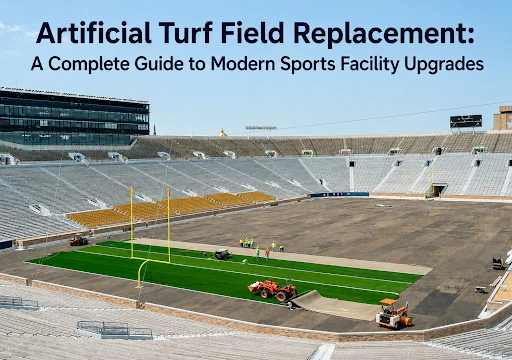
Artificial Turf Field Replacement plays an important role in keeping sports facilities safe, reliable, and ready for regular use. Over time, continuous foot traffic, weather exposure, and material aging can affect turf performance, drainage, shock absorption, and player comfort.
Replacing an old field is not only about installing a new surface. It also gives facility owners an opportunity to upgrade outdated systems, improve playing conditions, reduce maintenance issues, and increase long-term field usability.
Understanding the Importance of Artificial Turf Field Replacement
Even high-quality artificial turf eventually shows signs of wear. Regular maintenance can extend its service life, but once the surface starts affecting safety or performance, replacement may become the more practical option.
Modern replacement projects can introduce improvements such as better turf fibers, enhanced drainage, improved shock absorption, and more durable materials.
Key benefits include:
- Improved player safety
- Better playing performance
- More effective drainage
- Reduced maintenance concerns
- Improved field appearance
- Increased facility utilization
JMR InfraSolutions supports clients in assessing existing field conditions and identifying suitable replacement strategies based on usage, performance requirements, and the condition of supporting infrastructure.
Common Signs That Indicate a Turf Field Needs Replacement
Even high-quality artificial turf eventually shows signs of wear. Regular maintenance can extend its service life, but once the surface starts affecting safety or performance, replacement may become the more practical option.
Modern replacement projects can introduce improvements such as better turf fibers, enhanced drainage, improved shock absorption, and more durable materials.
Key benefits include:
- Improved player safety
- Better playing performance
- More effective drainage
- Reduced maintenance concerns
- Improved field appearance
- Increased facility utilization
JMR InfraSolutions supports clients in assessing existing field conditions and identifying suitable replacement strategies based on usage, performance requirements, and the condition of supporting infrastructure.
Drainage Issues and Their Impact on Sports Facilities
Efficient drainage is essential for keeping sports fields usable after rainfall. As a turf system ages, problems with the surface, infill, drainage layers, or underlying base can affect how quickly water leaves the field.
Common drainage warning signs include:
- Standing water after rainfall
- Slow water movement
- Uneven moisture levels
- Water collecting in specific areas
- Increased maintenance requirements
During a replacement project, JMR evaluates the wider field system to identify potential drainage concerns. Upgrading the drainage structure along with the turf can help reduce weather-related downtime and improve field availability.
Why Player Safety Should Drive Replacement Decisions
Player safety should always be a priority when deciding whether an artificial turf field needs replacement. An aging surface may look acceptable while still developing issues beneath the surface.
Over time, infill compaction, material degradation, and surface hardening can affect impact absorption and athlete comfort. Professional field assessments can help identify areas that may no longer provide suitable performance.
A replacement project can also help create more consistent playing conditions by addressing uneven surfaces, worn areas, and outdated shock absorption systems. JMR helps clients select turf solutions that balance safety, durability, comfort, and performance.
Modern Artificial Turf Field Replacement Solutions
Today’s replacement projects offer more than simply removing old turf and installing new material. They provide an opportunity to modernize the wider sports facility and improve its long-term performance.
Depending on project requirements, upgrades may include:
- Advanced artificial turf systems
- Improved shock pads
- Enhanced drainage networks
- Sustainable materials
- Sports lighting upgrades
- Smart irrigation systems
- LED displays and scoreboards
- Stadium seating improvements
A coordinated upgrade strategy can help facilities address multiple improvement needs within a single project.
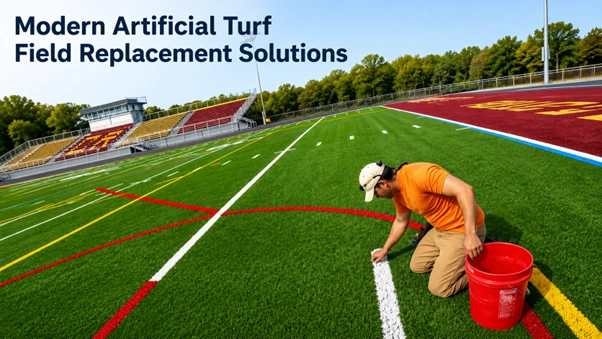
The Artificial Turf Field Replacement Process
A successful replacement requires proper planning and professional execution. The process generally begins with a detailed evaluation of the existing field and its supporting infrastructure.
Key stages include:
1. Site Evaluation: Reviewing turf condition, drainage, base stability, usage patterns, and maintenance history.
2. Design and Material Selection: Choosing the right turf system based on the sports played, usage intensity, climate, budget, and performance requirements.
3. Installation and Quality Assurance: Preparing the surface, checking the base, installing turf and infill, applying field markings, and completing final performance checks.
Careful execution at each stage helps ensure the new field delivers reliable performance and long-term durability.
How JMR Supports Artificial Turf Field Replacement Projects
Artificial turf replacement often forms part of a larger sports infrastructure upgrade. JMR InfraSolutions provides integrated support to help clients manage different elements of facility development through a coordinated approach.
Its capabilities include:
- Artificial turf field replacement
- Sports infrastructure development
- Stadium and sports complex construction
- Athletic track systems
- Sports flooring solutions
- Sports lighting
- Stadium seating
- LED scoreboards and displays
- Smart irrigation solutions
- Turnkey project management
This integrated approach can reduce coordination challenges and help maintain quality throughout the project.
Benefits of Upgrading Sports Infrastructure During Turf Replacement
Replacing an artificial turf field is an ideal time to review other parts of the facility. Combining multiple improvements can reduce future disruptions and create a more complete modernization plan.
Potential upgrades include:
- Energy-efficient sports lighting
- Improved spectator seating
- Digital scoreboards
- Enhanced drainage
- Accessibility improvements
- Multi-sport configurations
- Smart facility management systems
These upgrades can improve athlete experience, spectator engagement, facility efficiency, and long-term return on investment.
Future Trends in Artificial Turf Field Replacement
The sports infrastructure industry continues to move toward solutions that combine performance with sustainability and smarter facility management.
Emerging trends include:
- Sustainable and recyclable turf components
- Smart monitoring technologies
- Advanced player safety systems
- Improved shock absorption
- Data-driven maintenance
- Environmentally responsible construction
As facility owners look for more efficient and sustainable solutions, modern replacement projects are increasingly focused on creating sports surfaces that deliver value for years to come.
Conclusion
Artificial Turf Field Replacement is an important investment for maintaining player safety, consistent performance, and long-term facility value. It also provides an opportunity to address drainage, lighting, seating, and other infrastructure requirements as part of a wider upgrade.
With its turnkey approach and sports infrastructure expertise, JMR InfraSolutions helps clients develop modern, durable, and high-performance sports facilities designed to meet evolving needs.
Frequently Asked Questions
1. When should an artificial turf field be replaced?
Replacement may be needed when a field develops widespread fiber wear, drainage problems, seam damage, hard surfaces, or reduced performance. JMR can assess the field and recommend replacement or renovation.
2. How can JMR help with artificial turf field replacement?
JMR supports the complete process, including site assessment, planning, turf selection, installation, infrastructure upgrades, and project management.
3. What are the common signs that a turf field needs replacement?
Flattened fibers, damaged seams, poor drainage, surface hardness, fading markings, and inconsistent performance are common warning signs.
4. Does replacing a turf field require rebuilding the entire facility?
Not necessarily. The existing base and infrastructure may remain usable. A professional assessment can determine which components need replacement or upgrading.
5. Can JMR upgrade sports lighting during turf replacement?
Yes. Sports lighting can be integrated into a broader facility upgrade, allowing multiple improvements to be coordinated within one project.
6. How does JMR improve player safety during replacement projects?
JMR helps clients select suitable modern turf systems and supporting components designed to provide reliable shock absorption, surface consistency, and safe playing conditions.
7. Can sports academies benefit from artificial turf field replacement?
Yes. High-use academies can benefit from improved field performance, reduced maintenance issues, and better training conditions through timely turf replacement.
8. Does JMR provide turnkey sports infrastructure solutions?
Yes. JMR offers integrated solutions covering artificial turf, sports flooring, athletic tracks, lighting, seating, LED displays, irrigation, and wider sports facility development.
9. What additional upgrades can be completed during field replacement?
Facilities can consider upgrading lighting, seating, scoreboards, drainage, accessibility features, and other spectator or operational infrastructure.
10. Why choose JMR for artificial turf field replacement projects?
JMR combines sports infrastructure expertise with turnkey project execution, helping clients manage turf replacement and related facility upgrades with a focus on quality, safety, performance, and long-term value.