
How to Choose a High Quality Stadium LED Display Screen for Large Sports Facilities


To choose a high-quality stadium LED screen, focus on pixel pitch for viewing distance, high refresh rate (3000Hz+) for smooth video, high brightness (5000+ nits for outdoor) for sunlight visibility, wide viewing angles for all seats, and robust IP65 rating for weatherproofing (dust/water). Also consider energy efficiency, modularity for scalability, and a reliable control system for dynamic content management (ads, replays) to ensure clarity, durability, and performance for any event.
What Is a Stadium LED Display
A stadium LED display is a large, high-brightness digital screen system made of modular LED panels, installed in sports venues to show live video, replays, scores, stats, and dynamic ads, providing a vibrant, clear view for fans and generating revenue through sponsorships, with features like high resolution, weather resistance, and wide viewing angles for an enhanced fan experience.
What are the types of stadium LED screen
Stadium LED screens vary by function and placement, including large Main Video Walls (Jumbotrons) for replays, narrow Perimeter/Ribbon Displays for ads around the field, specialized Scoreboards for game data, Funnel-shaped displays for indoor arenas, and innovative options like Flexible, Transparent, or Floor LED screens for unique fan experiences, all designed with high brightness and durability for different environments.
Here are the types :
-
- Main LED Video Walls (Jumbotrons): Huge screens, often hanging from the ceiling or mounted on stands, showing live action, replays, and close-ups to engage the entire crowd.
- Stadium Perimeter Displays (Ribbon Boards): Long, narrow LED strips that line the edges of the field, used for scrolling advertisements, scores, and team stats.
- Scoreboards: Dedicated screens (often integrated into video walls or as separate units) displaying real-time scores, game clocks, and player statistics.
- Indoor Arena Scoreboards/Funnel Displays: Hanging above the court or ice, these multi-sided displays show scores and replays from all angles, common in basketball or hockey.
- Wall-Mounted Displays: LED screens installed on the walls at one end of an arena for event info.
- Flexible & Creative LED Screens: Designed to curve around columns, wrap structures, or even be used as LED “ribbons” for unique shapes.
- LED Floor Displays: Installed on the ground, these create immersive 3D effects and interactive experiences for the audience.
- Transparent LED Screens: Semi-transparent panels used for modern architectural features or to allow views through them while displaying content.
Defining What “High Quality” Means in Stadium LED Displays
“High quality” in stadium LED displays is defined by key technical specifications and practical performance that together ensure exceptional visibility, fan safety, durability, and a seamless broadcast experience.
Advantages of Stadium LED Displays
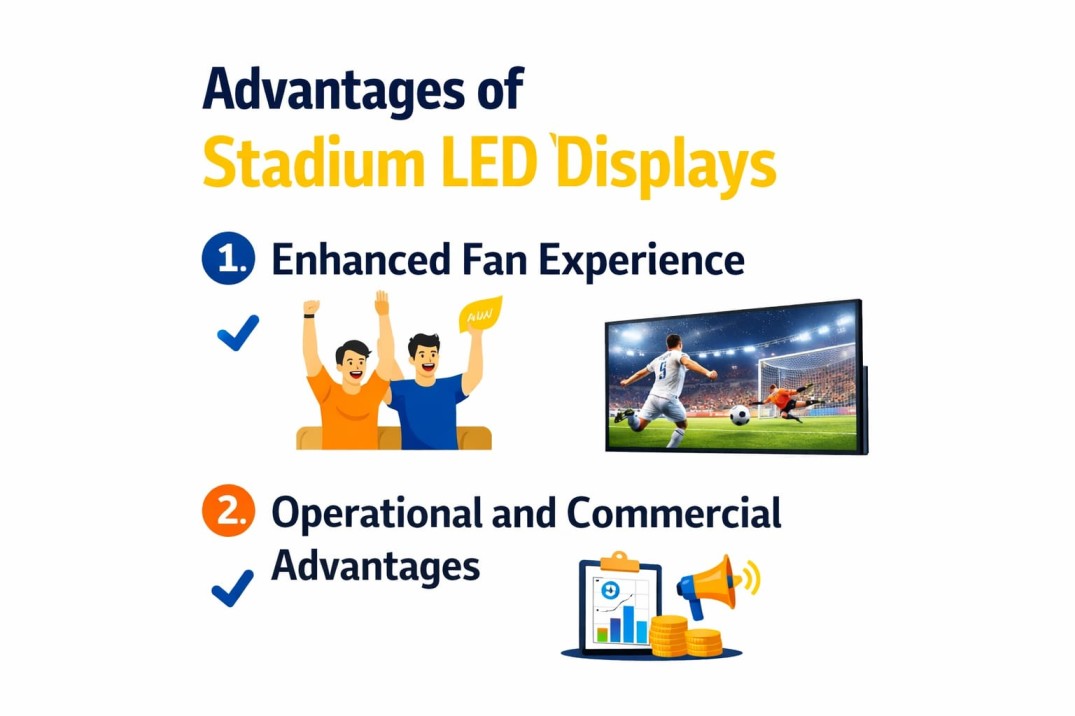
Stadium LED displays offer significant benefits, primarily enhancing the fan experience and boosting operational and commercial value for venue operators. They transform a venue into a dynamic, multi-purpose entertainment hub.
Enhanced Fan Experience
-
- Immersive Visuals: High-resolution screens with superior brightness and contrast ensure clear, vibrant visuals visible from any seat, even in direct sunlight.
-
- Instant Replays and Live Action: Fans can watch live game footage, close-ups, and slow-motion replays of key moments and crucial referee decisions, ensuring no action is missed.
-
- Real-Time Information: Displays provide immediate updates on scores, player statistics, and game time, keeping fans informed and engaged with the progress of the match.
-
- Interactive Engagement: Stadiums can integrate interactive features like “kiss cams,” fan polls, social media walls, and in-game challenges, making the audience feel more involved and creating memorable moments.
-
- Dynamic Atmosphere: Dynamic content, animations, and coordinated light shows amplify the excitement and energy within the stadium, especially during crucial game moments or celebrations.
Operational and Commercial Advantages
-
- Revenue Generation: LED displays create lucrative advertising opportunities for sponsors, as multiple dynamic ads and promotional videos can be rotated on the same screen, maximizing brand exposure to a large, captive audience.
-
- Multi-Purpose Versatility: The systems can adapt to various events beyond sports, such as concerts, corporate events, and community gatherings, thereby increasing venue utilization and year-round revenue potential.
-
- Energy Efficiency and Longevity: LED technology consumes significantly less power than traditional lighting systems and boasts a much longer lifespan, leading to reduced operational costs and lower maintenance needs.
-
- Improved Communication and Safety: Strategically placed screens can display important information such as emergency alerts, safety messages, and wayfinding information, aiding crowd control and enhancing overall safety.
-
- Enhanced Broadcast Quality: The crisp, clear illumination and high color rendering of LEDs make for more professional-looking television broadcasts, attracting more media attention and a wider home audience.
Choosing a Partner with Proven Stadium Experience
Partner with JMR InfraSolutions for end-to-end delivery of high quality stadium LED display screens from design and installation to long-term support.