
Landscape Irrigation Design for Urban Parks and Venues

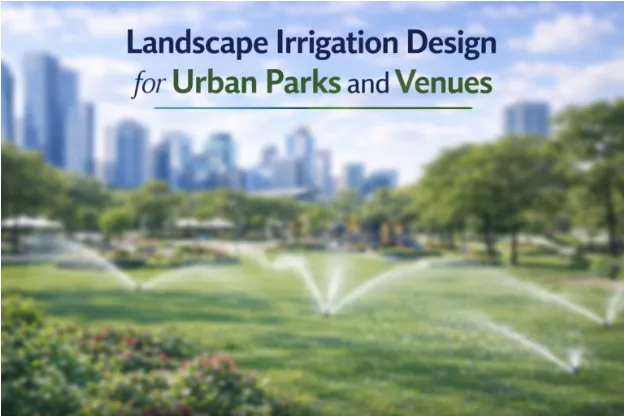
Effective landscape irrigation design for urban parks and venues focuses on water use efficiency, sustainability, and plant health while catering to diverse functional zones.
The Principles of urban parks and venues for irrigation design
In 2025, the design of irrigation for urban parks and venues is guided by three core pillars: water-use efficiency, environmental sustainability, and social well-being. Modern design principles prioritize integrated water-sensitive urban design (WSUD) to manage resources holistically across the landscape.
Core Design Principles
-
- Hydrozoning: Divide landscapes into separate zones based on the specific water requirements of different plant types (e.g., high-water-use lawns vs. drought-tolerant native shrubs).
-
- Uniformity & Precision: Systems are designed to provide homogeneous water distribution to avoid waste from overspray or ponding in specific areas.
-
- Native & Climate-Adaptive Selection: Prioritize local, drought-resistant plant species that naturally require less supplemental water and thrive in the existing soil.
-
- Alternative Water Sourcing: Design for the reuse of non-potable water, including harvested rainwater, greywater recycling, or treated wastewater, to reduce demand on municipal drinking water supplies.
Smart Technology Integration
By 2026, “smart” systems are standard for optimizing performance.
-
- Weather-Based Controllers: Adjust watering schedules automatically based on real-time local weather data, such as temperature, humidity, and wind speed.
-
- Soil Moisture Sensors: Directly measure the moisture level in the root zone to prevent over-irrigation.
-
- Remote Management: Mobile app-based controls allow managers to receive leak alerts and adjust schedules instantly from anywhere.
Efficiency Standards for Systems
Different zones require specific irrigation methods to maximize efficiency:
-
- Drip & Subsurface Irrigation: The gold standard for precision; delivers water directly to roots with 90-95% efficiency, significantly reducing evaporation loss.
-
- Low-Trajectory Sprinklers: Used for large turf areas like sports fields, designed with adjustable heads to minimize wind drift and overspray onto pavement.
-
- Micro-Sprinklers: Targeted solution for potted plants or decorative flower beds.
Operational & Social Principles
-
- Holistic Management: Align irrigation with broader park functions, such as flood mitigation through bioswales and permeable surfaces that recharge groundwater.
-
- Human-Centric Timing: Schedule irrigation during early morning or late evening to minimize evaporation and avoid interfering with park visitors.
-
- Public Education: Use visible irrigation features (like rain gardens) and interpretive signage to educate the community on sustainable water stewardship.
Key Challenges in Implementing Irrigation Systems for Urban Parks and Venues
Implementing irrigation systems for urban parks and venues involves navigating significant financial, infrastructural, and environmental barriers. The key challenges are:-
-
- Economic and Financial Barriers: Budget constraints are the most frequently reported challenge for urban irrigation. Approximately 73% of cities lack financial incentives to promote water-efficient technologies, and many projects face high initial capital costs for equipment and installation.
-
- Infrastructure and Physical Limitations: Urban environments present unique physical hurdles, including limited space, existing land use, and the need to navigate dense underground utilities like building foundations and utility lines. Aging infrastructure in many cities also results in inconsistent water pressure and significant leakage.
-
- Water Scarcity and Sourcing: Securing sustainable water sources is a major hurdle, with 58% of cities still relying on potable municipal supplies. Despite the potential for sustainability, 80% of cities do not use recycled wastewater for park irrigation, often due to high treatment costs or a lack of distribution infrastructure.
-
- Technical and Design Flaws: Systems often suffer from poor design execution, such as inadequate trenching (pipes not deep enough) or a lack of “head-to-head” sprinkler coverage, which leads to uneven water distribution and dry patches.
-
- Management and Monitoring Gaps: There is a widespread lack of data-driven management; 55% of cities have no water usage monitoring systems in place. This makes it difficult to detect leaks or optimize watering schedules based on actual plant needs.
-
- Maintenance Demands: Urban systems require constant care to prevent emitter clogging from debris, sediment, or mineral deposits. Many municipalities lack the dedicated human or financial resources to maintain these systems effectively over the long term.
-
- Environmental and Climate Pressures: Rising temperatures and the urban heat island effect increase evaporative demand, forcing systems to work harder to maintain plant health. Additionally, over-irrigation can lead to soil salinization and waterlogging, degrading the park’s soil quality.
-
- Technological Complexity: The adoption of “smart” irrigation (using AI and IoT) is slowed by a shortage of skilled professionals and the high technical complexity of integrating these advanced systems with traditional park infrastructure.
How Smart Irrigation Design Enhances Urban Parks and Event Venues
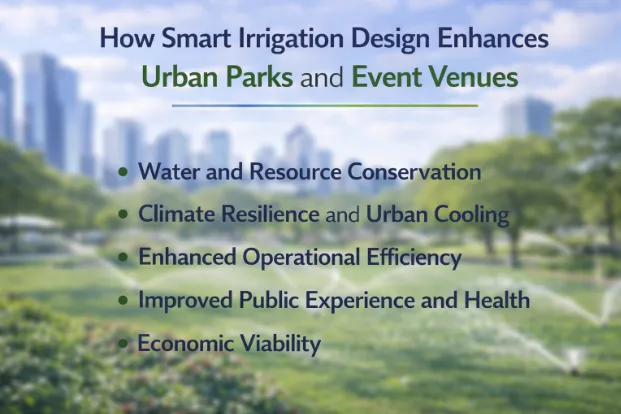
Smart irrigation design enhances urban parks and event venues by transforming them into data-driven, resilient ecosystems. In 2026, these systems move beyond basic automation to provide environmental, economic, and operational advantages.
1. Water and Resource Conservation
-
- Precision Scheduling: Smart controllers use real-time weather forecasts and soil moisture sensors to ensure plants receive exactly the water they need.
-
- Waste Reduction: These systems eliminate unnecessary watering during rain, high winds, or freezing temperatures, reducing outdoor water waste by 30% to 60%.
-
- Sustainable Sourcing: Advanced designs often integrate alternative water sources, such as harvested rainwater or recycled wastewater, reducing the strain on municipal potable water supplies.
2. Climate Resilience and Urban Cooling
-
- Heat Island Mitigation: By maintaining optimal plant health and soil moisture, smart irrigation supports lush green canopies that naturally cool urban environments.
-
- Adaptive Strategies: During extreme heat, systems can be programmed for multiple short daytime irrigations to maximize evaporative cooling without increasing total water usage.
3. Enhanced Operational Efficiency
-
- Remote Management: Staff can monitor and adjust irrigation for multiple parks or large event venues via smartphone apps or centralized cloud platforms, reducing the need for on-site manual checks.
-
- Leak and Fault Detection: Integrated flow sensors provide real-time alerts for broken pipes or stuck valves, preventing massive water loss and costly damage to infrastructure.
-
- Automated Diagnostics: Advanced systems can self-diagnose electrical issues and notify technicians immediately, streamlining maintenance and reducing labor costs by up to 50% to 75%.
4. Improved Public Experience and Health
-
- Customized Microclimates: Systems can be zoned to provide specific hydration for different areas (e.g., high-traffic lawn areas vs. delicate flower beds), ensuring the venue remains aesthetic and functional.
-
- Social and Mental Well-being: By ensuring parks remain vibrant and green, smart irrigation supports spaces that reduce stress and improve mental health for urban residents.
-
- Event Readiness: For event venues, smart irrigation allows for “hold” periods to ensure turf is dry and firm for visitors while automatically resuming optimal schedules immediately after the event ends.
5. Economic Viability
-
- Rapid ROI: Due to significant savings in water and energy bills, smart irrigation systems typically pay for themselves within two to three years.
-
- Protection of Hardscaping: Proper water management prevents overwatering that can cause structural damage to surrounding pavements, foundations, and park furniture.

- Protection of Hardscaping: Proper water management prevents overwatering that can cause structural damage to surrounding pavements, foundations, and park furniture.
What are the Advanced Technologies and Sustainability for urban parks and venues
In 2025, advanced technologies for urban parks and event venues prioritize autonomous operation, resource circularity, and climate adaptation to create more resilient urban green spaces.
1. Advanced IoT and AI Integration
-
- Predictive Analytics: AI-driven systems analyze massive datasets including hyperlocal weather forecasts, plant phenological stages, and historical soil data—to anticipate droughts or heavy rains, adjusting schedules up to 24 hours in advance.
-
- Autonomous Robotics: Drones and ground-based robots (like the “Oscar” system) navigate large parks daily, using thermal imaging and LiDAR to map subsurface soil moisture and deliver precise water doses exactly where needed.
-
- Digital Twins: City planners use AI-powered virtual simulations to model how irrigation strategies will perform under extreme climate stress, such as 2025 heatwaves, before physical implementation.
2. Sustainable Sourcing and Circular Systems
-
- Rainwater Harvesting and SUDS: Sustainable Urban Drainage Systems (SUDS) including permeable pavements, bio-retention basins, and green roofs capture stormwater runoff to supplement irrigation and mitigate local flooding.
-
- Wastewater Reuse: On-site membrane bioreactors and UV disinfection units treat greywater (from sinks/showers) and treated municipal wastewater, turning it into a reliable, nutrient-rich supply for non-potable irrigation.
-
- Circular Nutrients: Advanced systems recover phosphorus and nitrogen from treated wastewater (struvite precipitation) to serve as slow-release natural fertilizers, reducing the need for synthetic chemicals.
3. Renewable Energy and Efficiency
-
- Solar-Powered Solutions: Off-grid solar irrigation kits now use high-efficiency PV panels and battery storage (BESS) to power pumps and IoT controllers without relying on the municipal electrical grid.
-
- Precision Hardware: Expansion of subsurface drip irrigation (SDI) systems, which use buried tubing to deliver water directly to roots, eliminates evaporation loss and maintains dry surface areas ideal for high-traffic event venues.
-
- Material Innovation: Modern infrastructure increasingly utilizes biodegradable hydrogels that improve soil water retention and pipes made from recycled polyethylene to reduce the overall carbon footprint of the project.
4. Environmental Stewardship and Design
-
- Hydrozoning: Planners group plants with similar water needs together to ensure high-efficiency delivery and allow certain “low-priority” areas to go brown during extreme droughts without harming structural vegetation.
-
- Biodiversity Enhancement: Advanced park designs prioritize the selection of native plant species and the creation of “environmental corridors” that support local wildlife while requiring minimal supplemental water.
-
- Urban Cooling: Strategic placement of green spaces, guided by thermal sensors, is used specifically to combat the urban heat island effect, lowering local temperatures through optimized evapotranspiration.
Resources and tools for landscape irrigation design and management for urban parks and venues
Effective landscape irrigation design and management for urban parks relies on specialized software, smart technology, and adherence to industry best practices to ensure water efficiency and plant health.
Software and Design Tools
Professional software and Geographic Information Systems (GIS) tools help designers and managers create efficient systems, perform hydraulic calculations, and analyze data.
-
- IrriRT (by Irriworks): This advanced software is designed specifically for landscape, park, garden, and sports field irrigation systems, offering features like automatic device selection, pipe sizing, and integrated Google Maps for terrain surveys and slope analysis. It evaluates irrigation quality and system function to provide accurate results for professional projects.
-
- QGIS (Quantum Geographic Information System): A powerful open-source GIS software used for spatial data analysis, mapping, and data integration (climate, soil, water resources). It can help identify areas with high resource usage and is part of a decision support system for evidence-based management.
-
- Simplified Irrigation Design (Book): A detailed guide by Pete Melby that explains irrigation design and related hydraulics for professional designers and installers, including measurements in both Imperial (US) and Metric units.
Management Tools and Technology
Smart technologies are crucial for efficient daily operations, allowing managers to monitor systems in real-time and adjust to changing conditions.
-
- Smart Irrigation Controllers (e.g., WeatherTRAK, Hydrawise): These controllers use local weather data (evapotranspiration rates) or soil moisture data to automatically adjust irrigation schedules, preventing overwatering and optimizing water use. Some systems offer web-based oversight and smartphone apps for remote management.
-
- Sensors: Various sensors provide real-time data for automated decision-making.
-
- Soil Moisture Sensors: Measure the actual moisture content in the soil to determine if and how much water is needed.
-
- Weather Stations/Sensors: Monitor temperature, humidity, rainfall, and wind to tailor watering schedules to current climate conditions.
-
- Flow Sensors: Detect leaks, broken pipes, or stuck valves in real-time, sending alerts to the central control system and potentially shutting down the problem zone.
-
- Sensors: Various sensors provide real-time data for automated decision-making.
-
- Remote Monitoring Systems: IoT sensors and cameras provide real-time data on environmental conditions, helping identify maintenance needs promptly.
-
- Data Analytics Platforms: These platforms process data from sensors and weather reports to provide insights into landscape performance, enabling data-driven decisions for maintenance and future design improvements.
Best Practices and Guidelines
Adhering to Best Management Practices (BMPs) improves water efficiency and ensures sustainable landscape maintenance.
-
- Hydrozoning: Grouping plants with similar water needs, soil types, and sun exposure into separate irrigation zones ensures each area receives the appropriate amount of water.
-
- Water Audits: Regular, in-depth assessments (every three years is recommended) of the system’s efficiency and distribution uniformity help identify areas for improvement.
-
- Optimal Watering Times: Schedule irrigation during the early morning hours to minimize water loss from evaporation and wind.
-
- Deep, Infrequent Watering: Encourage deep root growth and healthier plants by watering deeply and less frequently.
-
- Regular Maintenance: Periodically monitor the system for misaligned or broken heads, manage water pressure, and repair leaks to maintain efficiency.
Transform Urban Parks and Venues with JMR InfraSolution Irrigation Solutions
JMR InfraSolutions delivers smart, sustainable irrigation systems designed to keep urban parks and public venues healthy, vibrant, and water-efficient. Our precision-driven approach ensures optimal water distribution, reduced wastage, and long-term landscape performance while supporting municipal sustainability goals. Partner with JMR InfraSolutions to create resilient green spaces that enhance community well-being, improve operational efficiency, and stand the test of time.