
What are stadium seating layout and sightlines?

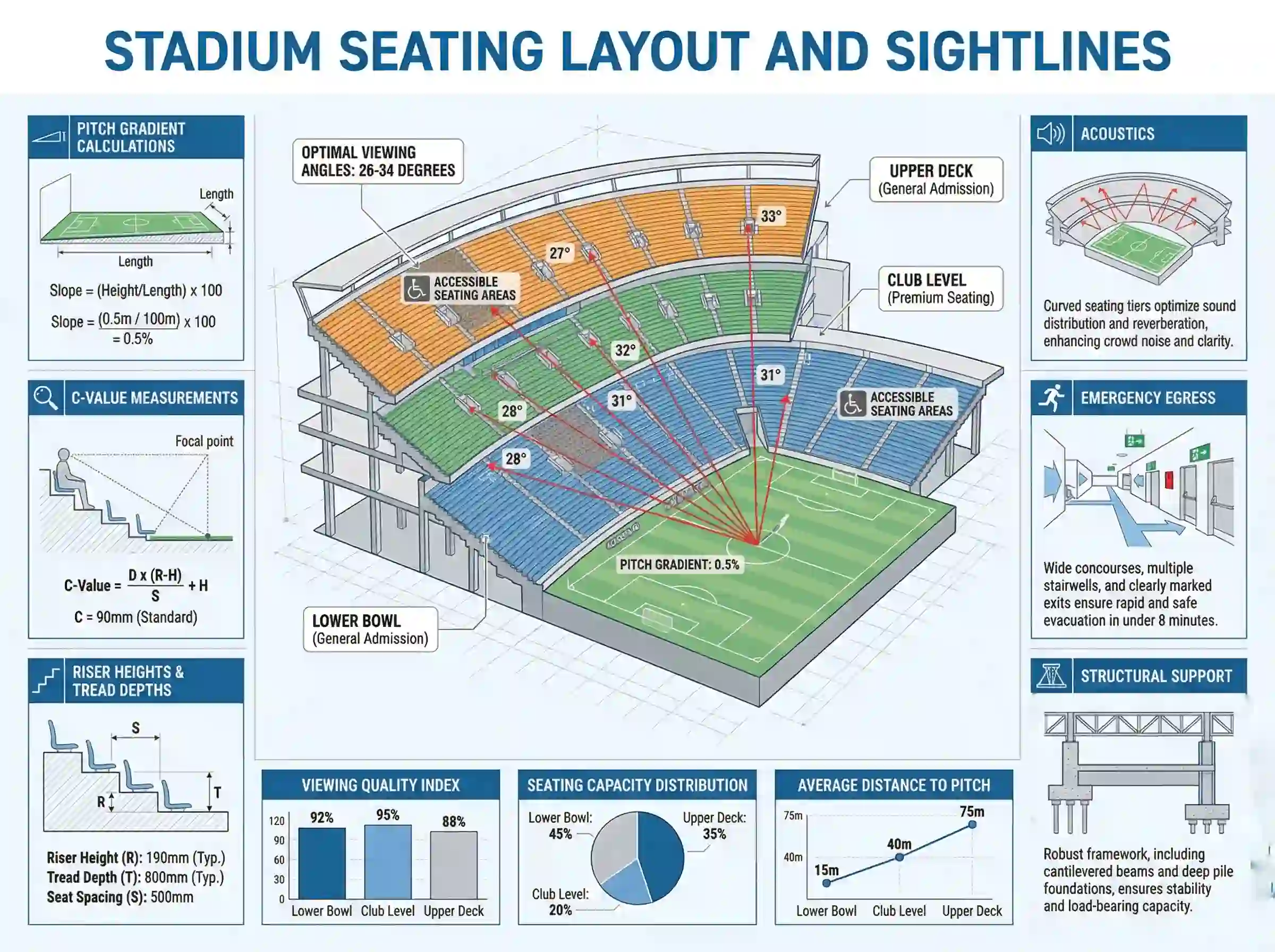
Stadium seating layout is the arrangement of seating tiers, and sightlines are the lines of sight from each seat to the action on the field, designed to give a clear view by elevating back rows. The layout uses a tiered, curved arrangement to maximize visibility, and sightlines are evaluated using a “C-value” that measures the quality of the view, with higher values indicating better sightlines.
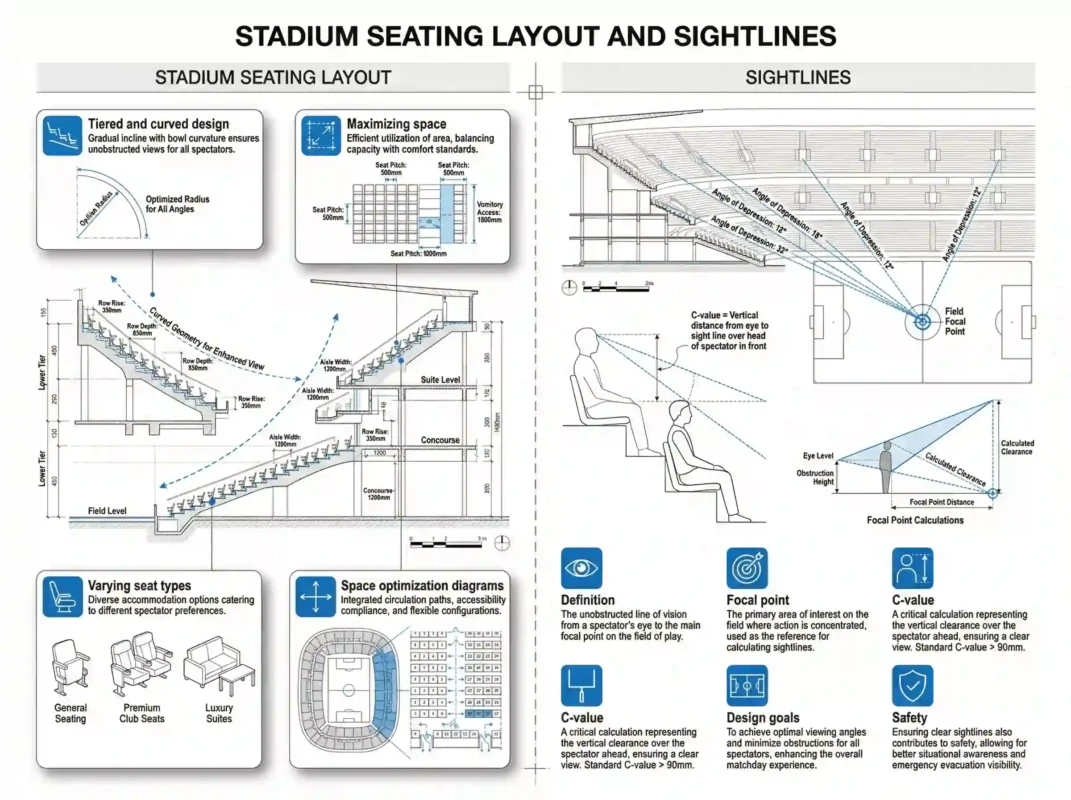
Stadium seating layout
-
- Tiered and curved design: Stadium seating is arranged in tiered levels to ensure that spectators in back rows can see over the heads of those in front. The seats are often curved to improve visibility from different angles.
-
- Maximizing space: The layout is designed to maximize spectator capacity while ensuring a good view for as many people as possible.
-
- Varying seat types: Different sections may have different types of seats, such as fixed or tip-up seats, to balance cost, comfort, and space for movement.
Sightlines
-
- Definition: A sightline is the ability of a spectator to see the action on the field from their seat, without an obstruction from the person in front of them.
-
- Focal point: The quality of a sightline is determined by its ability to provide a clear view of a specific focal point on the playing field, which can vary by sport (e.g., the touchline for football or a point further into the field for cricket).
-
- C-value: A numerical rating that measures the quality of a sightline, where a higher C-value means a better view.
-
- Design goals: Stadium designers use modeling and engineering principles to optimize the C-values for every seat, which can involve adjusting the steepness of the slope or the curvature of the seating bowl.
-
- Safety: Good sightlines are also important for safety, as they reduce the likelihood of spectators standing up to get a better view, which can cause safety issues in large crowds.
What are the Roles of Sightlines in the Stadium Seating Design layout?
Sightlines in stadium seating design are crucial for ensuring every spectator has a clear, unobstructed view of the field of play, thereby enhancing the overall experience, safety, and commercial viability of the venue.
Key Roles of Sightlines in Stadium Design
-
- Ensuring Unobstructed Views: The primary role is to guarantee that every seat, regardless of its location, provides a clear line of sight to the action without being blocked by other spectators’ heads or structural elements like columns, railings, or equipment.
-
- Enhancing Spectator Experience: Good sightlines are paramount to a fan’s enjoyment and immersion in the event. Poor visibility can lead to frustration and a negative experience, potentially impacting future attendance and ticket sales.
-
- Promoting Safety and Order: Inadequate views can cause spectators to stand up, lean forward, or move around to see better, which can block views for those behind them, leading to annoyance, arguments, and potentially safety issues within a large crowd. Properly designed sightlines encourage spectators to remain seated.
-
- Determining Seating Layout and Rake (Slope): Sightlines directly dictate the architectural design of the seating bowl, specifically the “rake” or upward slope of the tiers. Designers use the C-value (the vertical distance from a spectator’s eyes to the top of the head of the person in front) to calculate the optimal riser height for each row, often resulting in a parabolic curve in the stadium’s cross-section.
-
- Optimizing Commercial Value: Seats with clear, optimal views are considered premium and can be priced higher. By maximizing the number of seats with good sightlines, stadium owners can increase potential revenue. Seats with obstructed views, in contrast, may not be sellable.
-
- Accommodating Specific Events: Different sports or events (e.g., football, concerts, athletics) have different focal points or areas of action. Sightline design must be flexible or specifically tailored to the venue’s primary use to ensure the key action area (e.g., the goal line for soccer) is visible from all designated seats.
-
- Integrating with Other Design Elements: Sightlines influence the placement of other critical components, such as press boxes, advertising boards, and large digital screens, ensuring they don’t block views of the field or other spectators.
What are the Key Considerations in Stadium Seating Layout?
The key considerations in stadium seating layout balance an exceptional fan experience with safety, accessibility, and operational efficiency.
Core Experience and Comfort
-
- Sightlines: Unobstructed views are paramount. The design must ensure clear sightlines to the entire field of play from every seat, which involves careful calculation of the seating rake (steepness of the tiers) and positioning to avoid obstructions like pillars or advertising boards.
-
- Acoustics: Seating placement contributes to sound quality. The design can help contain crowd noise to enhance the atmosphere, which is a key part of the fan experience.
-
- Comfort and Ergonomics: Considerations include adequate seat width, legroom, back support, and cushioning, especially for events that last several hours.
-
- Atmosphere: The configuration of the bowl (e.g., single-tier vs. multi-tier stands) and the placement of general admission sections versus premium seating can significantly influence the stadium’s energy and atmosphere.
-
- Climate and Orientation: For outdoor stadiums, the venue’s orientation relative to the sun and prevailing weather can impact spectator comfort. Seating materials should be weather-resistant and UV-stable.
Safety and Regulations
-
- Structural Stability: The design must ensure the stands are structurally sound and can safely withstand the static and dynamic loads of large crowds, adhering to local building codes and safety standards.
-
- Egress and Evacuation: The layout must include sufficient aisle widths, clearly marked exits, and efficient evacuation routes to allow for the quick and safe movement of all spectators in an emergency.
-
- Fire Safety: All materials used in the seating bowl, including the seats themselves, must be fire-retardant.
-
- Crowd Management: Seating arrangements, including the segregation of opposing fan bases, must support effective crowd control and security measures.
Accessibility and Inclusivity
-
- Accessible Seating: Venues must provide a range of accessible seating options (e.g., for wheelchair users, individuals with limited mobility, or those with assistance dogs) in various locations and price points, with clear sightlines and easy access to amenities.
-
- Companion Seating: All accessible viewing positions should include an adjacent seat for a companion.
Operational and Business Factors
-
- Capacity and Space Efficiency: Designers balance maximizing ticket sales with comfort and safety requirements. This can involve using flexible seating systems (like retractable seating for multi-purpose arenas) to adapt the venue for different events.
-
- Revenue and Tiers: Premium seating areas, such as suites and club levels, are strategically located to maximize revenue, often in prime viewing areas along the halfway line.
-
- Maintenance and Durability: Seat materials should be durable, easy to clean, and built to withstand frequent use to ensure long-term performance and minimize maintenance costs.
-
- Technology Integration: Modern stadium design uses technology like 3D modeling and virtual reality to plan layouts and assess sightlines before construction.
What are the Key Principles of Stadium Sightline layout?
The key principles of stadium sightline layout focus on ensuring every spectator has a clear, unobstructed view of the action by using specific calculations and design strategies.
Core Principles and Terminology
-
- The “C-Value” (Clearance Value): This is the fundamental metric, representing the vertical distance a spectator’s line of sight must be above the head of the person immediately in front of them.
-
- A minimum recommended C-value is 60mm, while 120mm is considered optimal, providing a theoretically perfect view with no obstruction.
-
- The required C-value can vary depending on the sport and the specific focal point (e.g., the nearest touchline for soccer, or further in-field for cricket).
-
- The “C-Value” (Clearance Value): This is the fundamental metric, representing the vertical distance a spectator’s line of sight must be above the head of the person immediately in front of them.
-
- Rake Angle/Tiered Seating: The angle or slope of the seating platforms is critical to achieving adequate C-values. Steeper rakes (the incline of the seating tiers) in professional venues provide better views, particularly for those further back. The vertical rise (N) and horizontal depth (T) of each step determine this angle.
-
- Focal Point Definition: Designers must first define the key area(s) of activity on the pitch or stage that spectators need to see. All sightline calculations are based on maintaining an unobstructed view of this specific point from every seat.
-
- Unobstructed Views: A primary goal is to minimize structural obstructions like columns, handrails, or large video screens. The use of transparent barriers and minimalistic design elements helps maintain clear views.
-
- Horizontal Sightlines: In addition to vertical views, horizontal visibility must be ensured, especially in wide or curved stadiums. Seating layouts are often curved or angled towards the center of the action to improve lateral visibility.
-
- High-Ball Line Consideration: For multi-tier stadiums, sightlines must also account for views of the entire playing area, including high-flying balls. Guidelines often specify clear sightlines to a certain height above the center of the pitch.
-
- Accessibility and Inclusivity: The design must integrate accessible seating areas (for wheelchair users and those with limited mobility) in various locations without compromising sightlines for other patrons. These areas often require “super risers” or specific placement to ensure equitable viewing experiences when others stand.
-
- Balancing Capacity and Comfort: Designers must balance the desire for maximum seating capacity with the need for sufficient legroom and seat spacing to ensure spectator comfort and safe, efficient circulation and emergency evacuation.
How Seating Layout Enhances the Atmosphere and Engagement in Stadium?
Stadium seating layout significantly enhances atmosphere and engagement by maximizing fan proximity to the action, optimizing acoustics to trap and amplify noise, and creating a sense of collective identity and community.
Key aspects include:
-
- Proximity and Sightlines: Steep seating tiers (high “rake”) and bringing stands closer to the field ensure every fan has a clear, unobstructed view, which makes them feel more connected and “closer to the action”. This proximity enhances the intensity of the experience and encourages greater involvement.
-
- Acoustic Design: The architectural shape of the stadium, such as a continuous “bowl” design or a full canopy roof, helps to contain and amplify crowd noise, creating a thunderous roar that can be intimidating for visiting teams and energizing for the home side.
-
- Seating Configuration:
-
- Large, Single-Tier Stands: Areas like the “Yellow Wall” at Signal Iduna Park demonstrate how a large, uninterrupted block of general admission fans can generate intense, unified atmosphere and noise.
-
- Strategic Placement of Fan Zones: Designating specific areas for passionate, like-minded fans (e.g., behind the goals) can create vibrant hubs of energy that spread throughout the venue.
-
- Minimizing Obstructions: Avoiding mid-level corporate boxes that break up general seating tiers helps maintain the visual and auditory continuity of the crowd, preventing atmosphere from escaping.
-
- Seating Configuration:
-
- Branding and Color Schemes: Incorporating team colors and logos into the seats themselves creates a visually cohesive, immersive environment that strengthens a fan’s sense of belonging and loyalty. Strategic use of color can also influence fan energy levels and spatial perception.
-
- Social Spaces: Modern stadiums are integrating social areas, such as concourses with views of the pitch, bars, and fan zones, where people can gather, relax, and mingle, extending the event experience beyond the 90 minutes of play and building a sense of community.
-
- Comfort and Amenities: While atmosphere is key, ergonomic, comfortable seating with adequate legroom encourages fans to stay in their seats longer, ensuring they don’t miss critical moments and remain engaged throughout the event.
What are the Computational Optimization Tools in Modern Stadium Seating layout?
Modern stadium seating layouts use computational optimization tools that include specialized parametric design software, Building Information Modeling (BIM) platforms, and advanced simulation techniques to maximize capacity, improve sightlines, and enhance the overall fan experience.
Key tools and techniques include:
-
- Parametric Design Software: This is one of the most powerful computational techniques used by specialist sports architects. Instead of fixed dimensions, parametric design uses a series of relationships and parameters (e.g., C-values, riser heights) to define the geometry of the seating bowl. This allows designers to test countless configurations efficiently and ensures every seat has an unobstructed view, preventing potential financial losses from poor sightlines. Examples of platforms include Bentley’s GenerativeComponents supplemented by a MicroStation workflow.
-
- Building Information Modeling (BIM): BIM platforms manage a coordinated digital dataset that covers the entire project lifecycle, from design to operation. It allows project teams to test the design virtually through geometric and technical simulations before construction begins, which is essential for ensuring all components fit correctly and meet safety regulations.
-
- Simulation Techniques: Various simulation types are employed to predict real-world performance:
-
- Spectator Flow/Evacuation Simulation: Tools originally used for emergency evacuation planning are now used to model normal spectator behavior, queueing at concessions, and overall crowd flow to optimize concourse layouts and enhance the fan experience.
-
- Computational Fluid Dynamics (CFD): Used to analyze wind flow and air movement within the stadium bowl to ensure optimal microclimate conditions and spectator comfort. This also helps optimize roof geometry to handle wind loads and reduce operational costs by maximizing natural ventilation.
-
- Acoustic and Lighting Simulation: Used to ensure clear sound messaging for safety and an appropriate acoustic atmosphere for events, as well as to optimize floodlight positioning to meet international broadcasting requirements and safety standards.
-
- Simulation Techniques: Various simulation types are employed to predict real-world performance:
-
- Heuristic Optimization Algorithms: For complex engineering problems with many variables, heuristic techniques like genetic algorithms, hill climbing, and particle swarm optimization are used to find optimal solutions within a reasonable timescale.
-
- AI and Machine Learning: More advanced systems use Artificial Neural Networks (ANN) and algorithms like the Lotus Effect Optimization Algorithm (LEA) with Recurrent Graph Neural Networks (RecGNN) to recommend seating arrangements based on customer preferences, group sizes, and historical data, enhancing the individual fan experience.
-
- Virtual Reality (VR) and Digital Twin Technology: Designers use VR to “sit” in any potential seat during the design phase to experience the view and comfort level directly. Digital twin technology helps optimize ongoing stadium operations by simulating scenarios and testing changes in a virtual environment.
How to Maximize Sightlines in Stadium Seating Layout?
To maximize sightlines, use tiered seating to elevate spectators, ensure each tier has a steeper incline than the one below it, and use computer modeling and design principles like the C-value to minimize obstructions. Other key strategies include creating a semi-circular seating pattern that curves toward the action, avoiding structural elements like columns that block views, and considering a building’s geometry in the design process.
Key design principles
-
- Tiered and sloped seating: Arrange seating in tiers where each row is elevated above the one in front. The steepness of the rise should increase with each higher tier.
-
- The C-value: This is a formula that measures a sightline’s quality by calculating the vertical distance from a spectator’s eye to the top of the head of the person in front. A higher C-value (e.g., a C-value of 120mm) indicates a better sightline with no theoretical obstructions from the person in front.
-
- Curvature and geometry: The overall shape of the stadium is crucial. A semi-circular or bowl-like shape that curves toward the field maximizes visibility for a large number of spectators.
-
- Minimize obstructions: Avoid placing structural elements like columns, large screens, or safety barriers in locations that would block views of the field or court.
-
- Consider a “high-ball line”: Ensure that sightlines are clear for objects that might be in the air, such as a high kick in football. This line extends above the center of the pitch and near the goal and touchlines.
Strategic implementation
-
- Use design software: Employ Computer-Aided Design (CAD) and other modeling tools to simulate and analyze sightlines before construction begins, allowing for adjustments to be made in the planning phase.
-
- Consult architects and designers: Work with professionals who understand sightline principles and can balance ideal views with other factors like safety, circulation, and comfort.
-
- Consider different tiers: Designers have flexibility. For upper tiers, it may be possible to have a less steep rake because the elevated position provides better views, while lower tiers should prioritize a shallow incline. This can also help bring spectators closer to the action.
-
- Account for user needs: Factor in audience demographics, including average height and age, as well as accessibility requirements for those with disabilities.
Other important factors
-
- Row spacing and height: The spacing and height of the rows (the rise and run) are critical. Inconsistent or inadequate spacing will create sightline problems.
-
- Clear areas: Allow space for things like advertisements, cameras, and video screens, but design them to be as unobtrusive as possible.
-
- Transparency: In areas with potential obstructions, consider using transparent barriers instead of solid ones to minimize the visual impact on sightlines.
How Technology Enhances Stadium Seating and Sightline Planning?
Technology enhances stadium seating and sightline planning through advanced modeling and simulation tools, flexible physical infrastructure, and immersive digital experiences. These innovations ensure every seat offers an optimal, unobstructed view and a personalized, engaging experience for fans.
Design and Planning Enhancement
-
- 3D Modeling & Digital Twins: Architects use sophisticated software to create detailed 3D models and digital twins (virtual replicas) of the stadium. This allows them to simulate and test various seating and egress configurations virtually, identifying potential issues and optimizing designs before construction begins.
-
- Sightline Analysis Tools: Specialized software calculates “C-values” for every seat, a metric that ensures each spectator has a clear, unobstructed view over the head of the person in front of them. These tools help designers adjust the slope (rake) of seating tiers to balance optimal views with safety and comfort regulations.
-
- Parametric Design: This method enables rapid iteration of designs by changing key parameters (e.g., elevation of the first row, number of tiers) and instantly visualizing the effects. This efficiency helps balance desired capacity and premium features with the physical constraints of the site and ensures compliance with accessibility (ADA) standards.
Physical and Operational Technology Integration
-
- Retractable Seating & Pitches: To accommodate multi-purpose venues (e.g., basketball, hockey, concerts), technology enables flexible infrastructure like retractable seating systems that can change configurations to optimize sightlines for different event focal points and a 12-foot variance in court/rink elevations. Retractable roofs also ensure year-round usability regardless of weather.
-
- Smart Seating: Seats can be equipped with IoT sensors to provide real-time data on availability or offer enhanced features like built-in heating and USB ports.
-
- Transparent Barriers: The use of modern, transparent materials for safety barriers and minimalistic design elements helps reduce visual obstructions.
Fan Experience and Digital Integration
-
- Augmented Reality (AR) & Virtual Reality (VR): Fans can use stadium apps on their smartphones or AR glasses to access personalized, enhanced views, instant replays, and real-time player statistics overlaid on their view of the field.
-
- In-Seat Services & Mobile Apps: Integrated mobile apps allow fans to order food, merchandise, and access exclusive content directly from their seats, reducing the need to leave their location and miss the action.
-
- Dynamic Navigation: Location-based technology and crowd analytics use heat mapping and geofencing to guide fans through concourses, directing them to their seats, concessions, or restrooms efficiently and avoiding congested areas. This prevents overcrowding and ensures smoother movement throughout the venue, which contributes to a seamless fan journey from entry to exit.
-
- High-Definition Screens: Strategically placed large video boards and interactive displays supplement the live view, ensuring all spectators, even those in upper tiers, have access to close-ups and replays.
Architectural Insights on Stadium Seating Layout and Sightlines
Architectural design of stadium seating focuses heavily on the interplay between the seating layout and ensuring optimal, unobstructed sightlines for every spectator. This is achieved through specific design principles, geometric calculations, and the use of technology to balance capacity, comfort, and an immersive fan experience.
Seating Layout Principles
The primary goal of the seating layout is to provide clear views while maximizing capacity and ensuring safety.
-
- Tiered Arrangement: The most fundamental principle is tiered seating (raked seating), which elevates each successive row above the one in front of it. This minimizes the chance of the person in front obstructing the view of the person behind them.
-
- Bowl Shape: The overall geometry of the stadium, typically an elliptical or circular “bowl” shape inherited from ancient arenas, inherently helps maximize sightlines and enhances the acoustic atmosphere, keeping crowd noise contained.
-
- Seating Types & Zones: Modern stadiums incorporate a variety of seating options, from general admission to premium seating areas, lounges, and luxury suites, often strategically placing the best views (near the halfway line) in premium zones to generate revenue.
-
- Flexibility: Retractable or modular seating systems offer flexibility for multi-purpose venues, allowing the configuration to be adjusted based on the event (e.g., concert vs. football match) and its specific viewing requirements.
-
- Circulation and Safety: The layout must also integrate efficient vertical and horizontal circulation paths, including aisles, stairs, and vomitories (entry/exit tunnels), to facilitate smooth crowd movement, safety, and emergency evacuation in compliance with local building codes.
Sightline Optimization
Sightlines are critical to spectator satisfaction and are meticulously calculated during the design phase.
-
- C-Value Calculation: Architects use a specific mathematical formula to calculate the “C-value” for each seat. This value represents the vertical clearance between a spectator’s line of sight and the top of the head of the person seated two rows in front (or one row for specific checks).
-
- Excellent: A C-value of 120mm or more is generally considered excellent.
-
- Acceptable: Values can be lower in upper tiers where the perceived quality of view is improved by elevation, but very low values are avoided in lower tiers as they cause people to stand up.
-
- C-Value Calculation: Architects use a specific mathematical formula to calculate the “C-value” for each seat. This value represents the vertical clearance between a spectator’s line of sight and the top of the head of the person seated two rows in front (or one row for specific checks).
-
- Focal Point: The required C-value and the angle of the rake are determined by the specific sport(s) to be hosted and the designated “focal point” on the field of play. For example, a football stadium requires a clear view of the nearest touchline, while other sports may allow a focal point further in-field.
-
- Obstruction Avoidance: Designers use computer-aided design (CAD) software and 3D modeling to simulate views from every seat and ensure that structural elements like columns, railings, and large video screens do not obstruct views. Transparent barriers are often used instead of solid ones to maintain clear sightlines where safety measures are required.
-
- Inclusive Design: Modern architecture ensures equitable viewing experiences for all attendees, including those with disabilities. Wheelchair positions are strategically placed (often at the front of tiers or on “super-risers”) to ensure their sightlines are not blocked when other spectators stand.
How to Maximize Stadium Capacity Without Compromising Fan Comfort?
Maximizing stadium capacity while prioritizing fan comfort involves a two-pronged approach: optimizing the physical design of the venue and leveraging smart technology to enhance the fan experience.
Physical Design Optimizations
-
- Innovative and Ergonomic Seating: Modern seating designs feature compact profiles, contoured backrests with lumbar support, and advanced cushioning materials that allow for increased density without sacrificing comfort.
-
- Optimized Layouts and Sightlines: Using computer modeling and virtual reality, architects can design seating bowls to maximize sightlines and minimize obstructions, ensuring every seat offers a quality view. Tiered seating platforms and strategic distribution of aisles improve flow and access.
-
- Flexible and Modular Seating: Retractable and modular seating systems allow venues to reconfigure layouts for different events (sports, concerts, etc.), optimizing capacity and experience for the specific audience.
-
- Enhanced Amenities: Increasing the availability and quality of restrooms, concessions, and social areas helps mitigate the impact of larger crowds. Expanding concourses and vertical circulation routes (ramps, stairways, escalators) ensures smooth and safe movement.
-
- Climate Control and Shelter: Retractable roofs and large canopies protect fans from adverse weather (sun, rain), while smart HVAC systems and climate-responsive seating materials improve thermal comfort within the stadium bowl.
-
- Accessibility and Safety: Ensuring sufficient and well-integrated accessible seating positions (with companion seats) and clear, well-managed egress paths and safety barriers are fundamental to accommodating all fans safely
Leveraging Smart Technology
-
- Seamless Entry and Exit: Digital and mobile ticketing systems, along with biometric verification (like facial recognition), significantly reduce wait times and ensure secure, hassle-free access.
-
- Mobile Ordering and In-Seat Delivery: Fan apps allow spectators to order food, beverages, and merchandise from their phones and have them delivered to their seats, eliminating the need to wait in long lines and miss the action.
-
- Indoor Navigation and Wayfinding: Location-based technology and mobile apps with indoor maps help fans find their seats, restrooms, and concessions easily, minimizing confusion and crowd density in bottlenecks.
-
- Real-Time Crowd Management: IoT sensors and AI-powered analytics monitor crowd movement and density, allowing staff to proactively manage crowd flow, direct fans to less congested areas, and respond rapidly to incidents.
-
- Enhanced Connectivity and Engagement: Robust Wi-Fi and 5G connectivity allow fans to access real-time stats, instant replays, AR/VR experiences, and share content on social media, enhancing the overall immersive experience.
-
- Data and Personalization: Collecting and analyzing fan data through CRM systems and mobile app interactions allows stadiums to offer personalized promotions, content, and services, making each fan feel valued and encouraging repeat visits.
By combining these innovative design and technology strategies, stadium operators can create a venue that maximizes attendance while providing a premium, comfortable, and engaging experience that competes effectively with the comfort of watching events from home.