
Why VIP Seating Is a Game-Changer for Modern Stadiums?

VIP seating is a game-changer for modern stadiums because it significantly increases revenue through higher-priced tickets and provides an enhanced, more comfortable, and luxurious experience for fans, which fosters loyalty and allows for greater fan engagement. It also allows stadiums to host a wider variety of events by providing flexible, premium spaces with exclusive amenities like gourmet dining, private bars, and state-of-the-art technology.
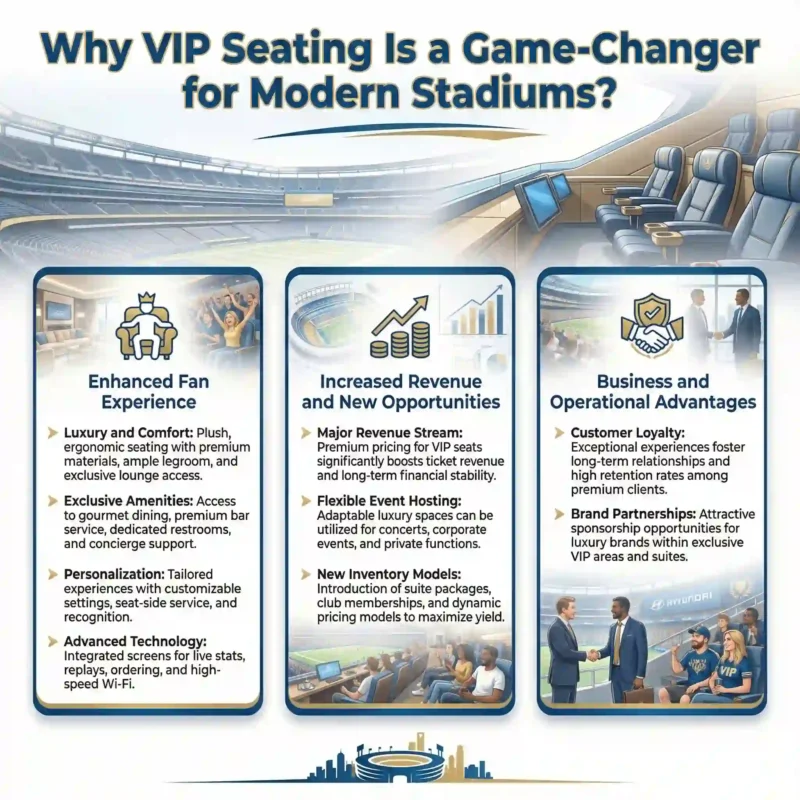
Enhanced fan experience
-
- Luxury and comfort: VIP seats are designed with plush cushioning, ergonomic support, and premium materials, offering a more comfortable and enjoyable view than standard seating.
-
- Exclusive amenities: VIP areas often include private bars, upscale restaurants, and private restrooms, as well as perks like dedicated parking and complimentary snacks.
-
- Personalization: Stadiums can offer personalized experiences, from special gifts and merchandise to meet-and-greets with athletes or performers, creating a more memorable event.
-
- Advanced technology: Modern VIP areas are equipped with cutting-edge technology, including charging ports, interactive displays, and social media integration, to enhance the viewing experience.
Increased revenue and new opportunities
-
- Major revenue stream: Premium seating is a significant source of income for stadiums, as it allows them to charge much higher prices for a more desirable experience.
-
- Flexible event hosting: The design of modern stadiums makes it easier to host a wide range of events beyond sports, from concerts to corporate events, as hospitality areas can be used more flexibly.
-
- New inventory models: Stadiums are shifting from a few large, traditional suites to a wider variety of premium options at different price points, including more customizable and diverse premium experiences.
Business and operational advantages
-
- Customer loyalty: The elevated experience keeps fans engaged and fosters loyalty to the team and the venue, as they feel valued and part of an exclusive group.
-
- Brand partnerships: Exclusive VIP areas provide opportunities for lucrative sponsorships and partnerships with high-end brands, which can be integrated into the premium experience.
What are the key features of VIP stadium seating design?
Key features of VIP stadium seating design include premium comfort and luxury materials, prime viewing locations with excellent sightlines, and integrated technology like charging ports and cup holders. Additional elements often include custom branding, weather-resistant materials for durability, and exclusive amenities such as private lounges and expedited access to enhance the premium fan experience.
Comfort and luxury
-
- Premium materials: Seats are made with high-quality upholstery, plush cushioning, and ergonomic designs, often using materials like synthetic leather.
-
- Customization: Options can include heated seats, personalized embroidery, and a choice of styles, colors, and finishes.
-
- Added amenities: Features like armrests and cup holders are standard, with more advanced options available.
Location and viewing experience
-
- Prime location: VIP seating is situated in the best areas of the stadium for optimal sightlines and views of the event.
-
- Spacious design: Seats are often wider with more legroom than standard seating, with minimum width and depth specifications often recommended.
-
- Exclusive access: Access to private lounges, dedicated bars, and priority entry/exit are common perks.
Technology and functionality
-
- Integrated technology: Some seats include integrated technology such as USB charging ports, call buttons, and Wi-Fi access.
-
- Durable and safe materials: Seats are built to last using high-quality, durable, and fire-resistant materials that can withstand heavy use and varying weather conditions.
-
- Smart design: Some designs incorporate features like foldable seats with silent operation, a feature for easy access.
Overall atmosphere and branding
-
- Corporate branding: Spaces are designed for corporate hospitality, with opportunities for branding and sponsor visibility.
-
- Aesthetic appeal: The design can be customized to match the overall style of the venue, with features like transparent or enclosed façades, and shading systems.
-
- Hospitality integration: VIP areas are seamlessly integrated with hospitality features like private bars, dining areas, and restrooms.
What materials are used in VIP stadium seating design?
VIP stadium seating design incorporates a range of high-quality and durable materials to ensure comfort, style, and longevity. These materials are often chosen for their weather resistance, fire retardancy, and aesthetic appeal to create a premium experience.
Key materials used in VIP stadium seating include:
-
- Upholstery: VIP seats often feature plush cushioning and high-quality upholstery for enhanced comfort.
-
- Synthetic leather (often fire-retardant) is a popular choice due to its durability, visual appeal, and resistance to fading, cracking, and moisture, making it suitable for both indoor and outdoor use.
-
- Fabric (sturdy and often with fire-retardant additives) may also be used, particularly in indoor arenas or executive boxes.
-
- Upholstery: VIP seats often feature plush cushioning and high-quality upholstery for enhanced comfort.
-
- Seating Shell/Structure: The main body of the seat is designed for resilience and strength.
-
- High-density polyethylene (HDPE) and polypropylene (PP) are commonly used plastics, often manufactured via gas injection molding for high impact resistance and durability. These materials typically include UV-resistant and anti-oxidant additives to prevent color fade and deterioration from sun exposure.
-
- Seating Shell/Structure: The main body of the seat is designed for resilience and strength.
-
- Framing and Mounting: The structural components provide stability and resistance to corrosion.
-
- Stainless steel or powder-coated aluminum frameworks are used for robust support. These metals are treated with anti-corrosion coatings to ensure structural integrity over time, especially in outdoor environments.
-
- Galvanized steel is used in the construction of modular grandstands and support systems.
-
- Framing and Mounting: The structural components provide stability and resistance to corrosion.
-
- Padding: High-density foam (typically 2 cm thick) is used within the seat and backrest pads to provide extra comfort, often carefully assembled with the fire-resistant synthetic leather covers.
-
- Additives and Coatings: To meet safety and performance standards, materials are enhanced with various additives:
-
- Fire-retardant (FR) additives are incorporated into plastics and upholstery to delay burning and comply with international safety regulations.
-
- UV and antioxidant additives are crucial for preventing material degradation and color fading in outdoor installations.
-
- Anti-corrosion treatments protect metal parts from rust and environmental damage.
-
- Additives and Coatings: To meet safety and performance standards, materials are enhanced with various additives:
What is the Role of VIP Seating in Modern Stadiums?
VIP seating in modern stadiums serves multiple roles: it generates significant revenue through premium hospitality and brand partnerships, enhances the overall prestige and brand image of the venue, and elevates the fan experience by providing luxury amenities and exclusivity. This includes comfortable and well-appointed seating, private access, high-end food and beverage options, and unique technology integration.
Financial role
-
- Revenue generation: VIP areas, including luxury boxes and premium seats, generate substantial income through long-term hospitality packages, tickets, and food and beverage sales.
-
- Brand partnerships: These exclusive zones provide valuable marketing opportunities for sponsors and brands.
Venue and brand role
-
- Increased prestige: VIP seating helps associate the stadium with luxury and high standards, elevating its overall brand image.
-
- Attracting high-profile events: Having premium seating can be a key factor in a stadium’s ability to host major events, concerts, and international sports spectacles.
Fan experience role
-
- Comfort and exclusivity: VIP seating offers a superior level of comfort with plush chairs, ergonomic designs, and private amenities like dedicated restrooms and bars.
-
- Personalized services: Guests receive personalized experiences, such as concierge services, in-seat ordering, and access to exclusive content or player areas.
-
- Community building: These premium areas can foster a sense of community among ticket holders who attend multiple events, encouraging repeat visits.
-
- Enhanced technology: Modern VIP experiences often incorporate technology like in-game statistics, AR/VR tools, and seamless mobile app integration.
What Does the VIP Experience Mean in stadium seating design?
In stadium seating design, the “VIP Experience” refers to premium, exclusive, and luxurious hospitality areas that offer enhanced comfort, top-tier amenities, and personalized services beyond the standard general admission. These areas are designed to provide a unique and memorable event day, often targeting corporate clients, sponsors, and high-end fans.
Key Features of the VIP Experience
The VIP experience integrates design, technology, and service to create a premium environment. Key features include:
-
- Premium Location & Views: VIP seats are strategically located in the best sections of the stadium, typically in the main stand, along the halfway line or with optimal sightlines of the pitch/stage.
-
- Enhanced Comfort & Design: Seating is significantly more comfortable than standard options, featuring:
-
- Wider, padded, and ergonomic seats, often with armrests.
-
- Increased legroom and ample spacing between seats for easy movement.
-
- High-quality materials like leather or synthetic leather upholstery.
-
- Optional features such as heating, cup holders, and integrated USB charging ports.
-
- Enhanced Comfort & Design: Seating is significantly more comfortable than standard options, featuring:
-
- Exclusive Access & Privacy: VIP areas are segregated from general admission, with dedicated entrances, private concourses, and separate facilities to avoid crowds.
-
- Private Boxes (Skyboxes): Enclosed, private suites for groups, often with a glass view of the action and direct access to dedicated outdoor seating.
-
- Hospitality Lounges: Shared, elegant, and often large open spaces for mingling, dining, and relaxing before, during, and after the event.
-
- Exclusive Access & Privacy: VIP areas are segregated from general admission, with dedicated entrances, private concourses, and separate facilities to avoid crowds.
-
- High-End Amenities & Services: The experience is elevated by a range of exclusive perks, including:
-
- Gourmet Catering & Premium Bars: Access to high-quality food options, from buffets and fine dining restaurants to sophisticated bars with complimentary drinks.
-
- In-Seat Wait Service: Dedicated staff or digital ordering systems (via apps or touchscreens) allow guests to order food and beverages directly to their seats.
-
- Dedicated Facilities: Private, high-quality restrooms are provided within the VIP areas.
-
- Personalized Touches: Services such as a personal host, concierge assistance, and custom branding within private boxes are common.
-
- High-End Amenities & Services: The experience is elevated by a range of exclusive perks, including:
-
- Integrated Technology: Modern VIP areas often feature wall-mounted TVs to catch broadcast content, high-speed Wi-Fi, and location-based technology for personalized offers and easy navigation.
-
- Unique Experiences: Some packages offer behind-the-scenes access, such as a pitchside walk, a pre-match tunnel tour, or the chance to meet players or artists.
What kind of Maintenance and Safety Considerations are required for VIP Stadium Seating design?
VIP stadium seating design requires rigorous attention to safety compliance, material durability, robust maintenance programs, and dedicated security measures that exceed general admission standards.
Safety Considerations
Safety is the primary consideration, especially given the high occupancy loads and potential for rapid crowd movement.
-
- Building Codes and Regulations: All design must strictly comply with national and local building, fire, and safety codes, such as the Guide to Safety at Sports Grounds (the “Green Guide”) in the UK or relevant FIFA Publications internationally.
-
- Egress and Evacuation: VIP areas must have clear, wide concourses, aisles, and dedicated entry/exit points to facilitate efficient emergency evacuation.
-
- Clearways: A minimum clearway (space in front of the seat) of 650mm is recommended, greater than general admission, to allow for easy movement even when seats are down.
-
- Tip-up Seats: Tip-up (folding) seat designs are often preferred to maximize circulation space in rows.
-
- Egress and Evacuation: VIP areas must have clear, wide concourses, aisles, and dedicated entry/exit points to facilitate efficient emergency evacuation.
-
- Structural Integrity: Seats must be robust and securely anchored to the stadium structure to withstand repeated heavy use and potential crowd surges. Safety barriers and railings must be able to resist significant horizontal loads.
-
- Fire Safety: All materials used must be fire-retardant and comply with fire safety regulations. The area should be integrated with the stadium’s fire alarm and sprinkler systems, including emergency voice/alarm systems that cut through crowd noise.
-
- Accessibility: Ample provisions for spectators with limited mobility and wheelchair users must be included, with easy access seating no more than three steps from the concourse and adjacent companion seats.
-
- Security: Dedicated security planning is vital, including potentially separate entrances, access control (e.g., biometric scans or specialized credentials), constant surveillance, and integration with overall stadium security strategies.
Maintenance Considerations
Regular maintenance is essential to ensure longevity, appearance, and continued safety compliance.
-
- Regular Inspections: A documented inspection program, ideally quarterly or more frequently, should be in place to identify potential hazards like loose bolts, cracks, sharp edges, or corrosion.
-
- Quality Materials: Investing in high-quality, durable, and weather-resistant materials (including UV-resistant plastics/coatings for outdoor seats) reduces wear and tear and the need for frequent replacement.
-
- Cleaning Regimens: Regular cleaning using appropriate mild detergents prevents the buildup of dirt and grime which can degrade materials over time.
-
- Prompt Repair and Replacement: Any damaged or worn-out components must be repaired or replaced immediately to prevent minor issues from escalating into safety hazards. Modular designs can facilitate easier individual part replacement.
-
- Moving Parts: For tip-up seats or other moving mechanisms, regular lubrication of hinges and joints is necessary for smooth operation.
-
- Staff Training: Maintenance and operational staff should be trained in proper cleaning methods, how to spot potential issues, and correct operation of any specialized seating systems (e.g., retractable seating).