
What Makes a Stadium ‘Smart’? Key Technologies Powering Modern Sports Venues


The modern stadium is no longer just a venue for sporting events, it is a digitally connected, technology-driven ecosystem designed to enhance performance, fan engagement, operational efficiency, and sustainability.
A smart stadium integrates infrastructure, data, automation, and digital systems into one synchronized environment. From intelligent lighting and IoT-enabled monitoring to LED display ecosystems and smart seating, today’s sports venues are engineered for performance on and off the field.
What Is a Smart Stadium?
A smart stadium is a technologically advanced sports venue that integrates IoT sensors, high-speed 5G/Wi-Fi, and AI to enhance fan experiences, improve operational efficiency, and boost safety. These venues use data-driven systems for real-time crowd management, personalized mobile apps for services, and digital infrastructure to streamline, for example, parking, ticketing, and concessions.
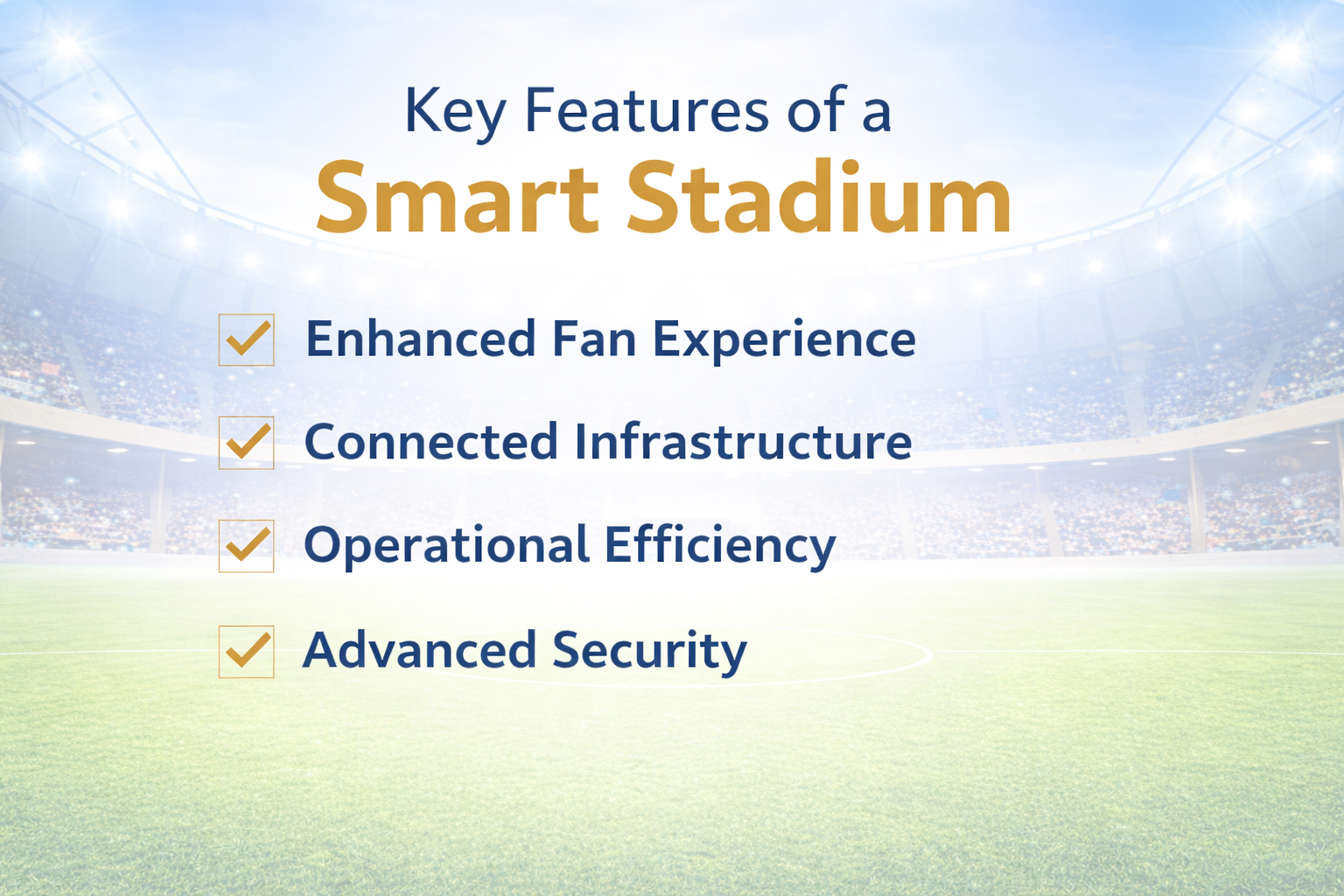
Key features of a smart stadium include:
-
- Enhanced Fan Experience: Mobile apps for seat upgrades, ordering food/merchandise, and accessing instant replays or live stats from their seats.
-
- Connected Infrastructure: High-density Wi-Fi 6 and 5G networks allow thousands of fans to simultaneously stream or share content.
-
- Operational Efficiency: IoT sensors and AI analyze crowd flow to optimize security, reduce wait times, and manage environmental controls like lighting and HVAC for sustainability.
-
- Advanced Security: Features such as facial authentication for entry, digital ticketing, and smart surveillance systems to ensure safety.
Why Smart Stadium Infrastructure Requires Integrated Engineering
Smart stadium infrastructure requires integrated engineering to seamlessly connect disparate systems such as IoT sensors, 5G networks, HVAC, and security into a cohesive, data-driven ecosystem. This integration enhances the fan experience, optimizes operational efficiency through real-time data, improves safety, and ensures sustainability. It enables, for example, linking ticketing data with digital signage for personalized access and crowd control, while simultaneously adjusting energy consumption based on occupancy.
Key reasons for requiring integrated engineering in smart stadiums include:
-
- Operational Efficiency & Automation: Integrated systems, including IoT and AI, allow for automated, real-time management of facilities, such as monitoring restroom traffic for maintenance, optimizing lighting, and managing HVAC systems.
-
- Enhanced Fan Experience: Integrated technologies enable personalized experiences, such as in-seat ordering, real-time parking info, and interactive content (AR/VR) through high-speed, connected networks.
-
- Safety and Security: The unification of surveillance cameras, access control, and crowd monitoring tools allows for real-time security management, such as identifying bottlenecks or managing emergency evacuations.
-
- Sustainability and Cost Management: Integrated building management systems (BMS) reduce energy usage and operational costs, aligning with modern sustainability standards and environmental goals.
-
- Data-Driven Decision Making: An integrated approach creates a single source of truth, enabling data analytics, digital twins, and AI-driven monitoring to enhance, rather than just manage, stadium operations.
Key Technologies Powering Modern Sports Venues
Modern sports venues are transformed into smart, connected ecosystems powered by IoT, AI-driven analytics, and ultra-high-speed connectivity to elevate fan experiences and operational efficiency. Key technologies include, but are not limited to, mobile ticketing,cashless transactions, smart lighting, high-density Wi-Fi, and personalized, in-app, real-time services, creating, for example, a seamless experience from parking to seat.
Core Technology Pillars in Modern Venues
-
- Connectivity & IoT: High-density Wi-Fi and 5G networks, augmented by Internet of Things (IoT) sensors, ensure constant connectivity, enabling real-time content delivery, mobile apps, and digital signage.
-
- Digital Fan Engagement: Mobile apps provide interactive, personalized services such as in-seat food ordering, instant replays, and smart wayfinding.
-
- AI and Data Analytics: IBM and similar platforms use AI to optimize crowd management, predict maintenance needs, and tailor marketing based on fan behavior.
-
- Biometric & Automated Security: Technologies like facial recognition and biometric, touchless entry points speed up ticket validation, enhancing both security and convenience.
-
- Advanced Audio-Visual Systems: Massive, high-definition LED displays, specialized sound systems, and Hawk-Eye tracking enhance live viewing.
-
- Sustainability Solutions: Smart lighting, automated pitch covers, and energy-efficient building management systems (BMS) reduce the environmental footprint.
-
- Blockchain for Ticketing: Secure, decentralized blockchain technology is used to prevent fraud in ticket sales.
High-Speed Connectivity & Digital Fan Experience
Connectivity is at the heart of a smart sports venue.
Modern fans expect:
-
- High-speed Wi-Fi
-
- Mobile app-based services
-
- Contactless payments
-
- Smart parking guidance
-
- Live in-app match updates
These digital conveniences enhance engagement, reduce friction, and increase in-stadium spending.
A connected fan is a more engaged fan.
Build Smarter. Build Future-Ready. Built with JMR InfraSolutions.
At JMR InfraSolutions, we deliver end-to-end turnkey sports infrastructure solutions designed for performance, innovation, and long-term value.
Our expertise includes:
-
- Smart LED high-mast lighting systems
-
- Stadium seating solutions (EZY Seating)
-
- LED display boards & scoreboards
-
- Integrated electrical & structural infrastructure
-
- Multi-sport complex development
-
- Sustainable, compliance-ready execution
We don’t just build stadiums, we engineer intelligent sports environments that empower communities and elevate performance.
Ready to Develop a Smart Stadium?
Whether you’re planning a new sports complex, upgrading an existing facility, or bidding for a government infrastructure project, our team provides precision-driven, technology-enabled solutions tailored to your vision.
-
- Request a smart stadium consultation