
Stadium LED Video Walls for Replays, Branding, and Fan Engagement

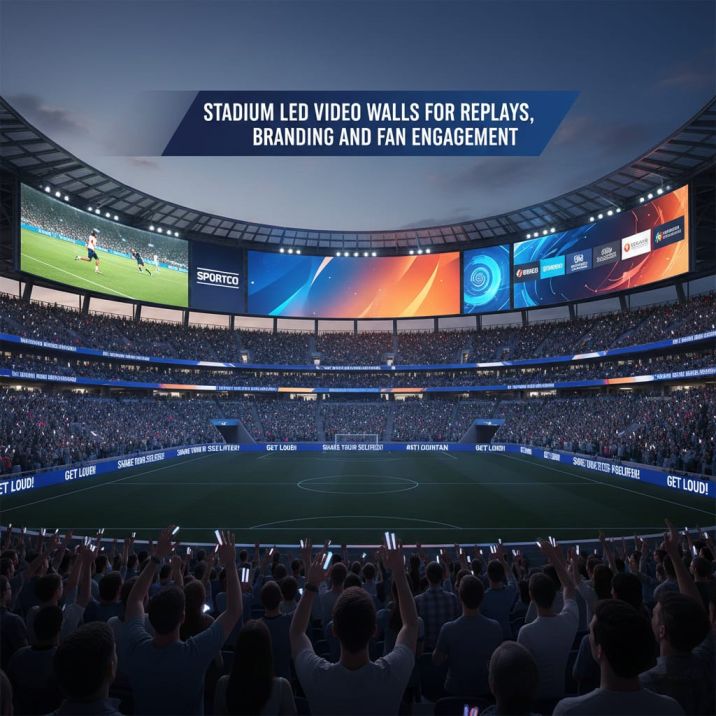
In 2026, stadium LED video walls have evolved into a “digital canvas” that serves as the central nervous system for fan interaction and revenue generation. These displays are no longer isolated screens but are fully integrated ecosystems that synchronize content across the entire venue.
The Role of LED Video Walls in Modern Stadium Experiences
LED video walls are central to modern stadiums, transforming the fan experience by providing immersive, high-definition visuals, instant replays, real-time stats, and interactive content (like Kiss Cams) that boost engagement and create excitement. They enhance revenue through dynamic advertising, improve navigation with clear wayfinding, build atmosphere with programmable lighting, and ensure every seat offers a great view, making venues more vibrant and modern entertainment hubs.
Key Roles in Stadiums
-
- Enhanced Viewing Experience: Ultra-high-definition displays offer clear, bright visuals with wide viewing angles, ensuring fans in any seat see the action as clearly as those courtside.
-
- Fan Engagement: They fuel interactivity with features like Kiss Cams, fan challenges, social media integration, live polls, and interactive content, making fans feel part of the event.
-
- Immersive Atmosphere: Dynamic content, cinematic graphics, and programmable lighting create an electrifying, multi-layered environment that builds anticipation and excitement.
-
- Real-Time Information: Displays provide instant replays, live stats, player highlights, and game updates, keeping spectators informed and immersed in the game’s crucial moments.
-
- Revenue Generation: High-impact digital billboards offer lucrative opportunities for sponsors, while also being used for event announcements and promotions.
-
- Operational Efficiency: Centralized content management allows for consistent messaging, while smart features like ambient light sensors and modular designs aid smooth operation and maintenance.
Enhancing Stadium Branding With Dynamic LED Video Walls
Dynamic LED video walls revolutionize stadium branding by creating immersive fan experiences, boosting revenue through high-impact advertising, and enhancing operational efficiency with interactive content like live polls, instant replays, and social media integration, transforming passive spectators into engaged participants through stunning visuals and storytelling, thereby increasing sponsor value and venue appeal.
Key Benefits for Stadium Branding
-
- Increased Sponsor Value: Eye-catching perimeter boards and large video walls offer prime advertising real estate, attracting premium sponsors with high visibility and dynamic content.
-
- Enhanced Fan Engagement: Interactive elements like live polls, hashtag promotions, social media feeds, and instant replays keep fans captivated and connected to the event.
-
- Brand Storytelling: Brands can use HD visuals, motion, and sound to tell compelling stories, creating deeper emotional connections with the audience.
-
- Improved Aesthetics: LED walls add a modern, sleek architectural identity to venues, elevating the overall visual appeal and creating a premium atmosphere.

How They Work & Key Features
-
- Active LED Technology: Individual LEDs act as pixels, controlled by transistors for real-time responsiveness, high contrast, and consistent brightness.
-
- Versatile Content: Deliver live feeds, replays, scores, dynamic ads, and interactive content seamlessly.
-
- High Performance: Features like high brightness, wide viewing angles, and smooth motion ensure visibility from anywhere in the stadium.
-
- Durability & Maintenance: Designed for harsh environments with easy front/rear access for minimal downtime and maintenance.
How LED Video Walls Drive Fan Engagement and Interaction
LED video walls boost fan engagement by transforming passive spectators into active participants through immersive visuals, instant replays, live stats, and interactive features like social media walls, polls, and gamified content, creating a dynamic atmosphere and deeper connection to the event and players. They provide high-resolution clarity from any seat, deliver cinematic-quality graphics, and use low-latency video to synchronize with live action, keeping energy high during lulls and making fans feel part of the spectacle.
Key Engagement Drivers:
-
- Instant Replays & Highlights: High-definition slow-motion replays allow fans to relive spectacular moments, ensuring everyone sees crucial plays up close, which amplifies excitement.
-
- Real-Time Information: Live scores, player statistics, and game updates keep fans informed and immersed, enhancing their understanding and connection to the game.
-
- Interactive Content: Features like “Kiss Cams,” look-alike cams, live polls (e.g., Player of the Match), and trivia get the crowd involved and create shared laughter and participation.
-
- Social Media Integration: Displaying fan tweets, posts, and photos with event hashtags makes the audience feel seen and included, extending the event’s reach.
-
- Atmosphere & Hype: Dynamic graphics, countdowns, music, and curated “hype” content build anticipation and maintain energy, turning downtime into entertainment.
-
- Immersive Personalization: Custom content, motion sensors, and interactive touchscreens can create personalized experiences, making fans feel important and directly engaged with the event.
-
- AR/VR Experiences: Cutting-edge walls can even integrate augmented reality, allowing fans to interact with digital elements overlaid on the real stadium environment.
Modular LED Video Wall Design for Easy Maintenance and Upgrades
Modular LED video wall designs facilitate easy maintenance and upgrades through key features such as hot-swappable components, front or rear serviceability, and standardized modular panel designs. These design choices minimize downtime and reduce long-term maintenance costs.
Key Design Features for Serviceability
-
- Modular Panel Design: The fundamental design uses small, individual LED panels (modules) that connect to form a large, seamless display. This allows a single, faulty module to be replaced quickly without affecting the entire wall’s operation.
-
- Front or Rear Serviceability: Manufacturers offer designs that allow access to components from either the front or the back of the panel.
-
- Front-service designs are ideal for fixed installations where rear access is limited, such as those integrated into walls or tight spaces.
-
- Rear-service designs require physical space behind the wall for maintenance access.
-
- Front or Rear Serviceability: Manufacturers offer designs that allow access to components from either the front or the back of the panel.
-
- Hot-Swappable Components: Many advanced modular systems feature components (like LED modules or power supplies) that can be replaced while the rest of the display is still running, which nearly eliminates downtime.
-
- Memory on Module (MOM) Technology: Specific products, such as the
American DJ VS1 1.95mm Pixel Pitch LED Video Wall Panel
, incorporate technology that stores calibration and configuration data on the module itself. This ensures seamless color and brightness matching after a replacement, without extensive recalibration.
- Memory on Module (MOM) Technology: Specific products, such as the
-
- Standardized Interfaces: Consistent module dimensions and standardized power/data connections allow for interchangeability and easier integration of new technology as it becomes available.
-
- Spare Parts Inventory: According to experts from Infonics Technologies and Linsn LED, maintaining an inventory of spare parts (e.g., LED modules) is a best practice to facilitate quick, in-house repairs.
Choosing the Right Stadium LED Video Wall Partner with JMR InfraSolutions
Selecting the right partner for a stadium LED video wall is critical to delivering clear replays, impactful branding, and engaging fan experiences. JMR InfraSolutions offers end-to-end expertise in designing and delivering high-performance LED video walls tailored for cricket, football, and multi-sport stadiums.
With a strong understanding of stadium environments, JMR ensures broadcast-ready visuals, optimal brightness for outdoor conditions, and seamless integration with scoreboards and control systems. Their turnkey approach from design and installation to commissioning and long-term support reduces risk and ensures reliable performance throughout the system’s lifecycle.
For stadium owners seeking a future-ready, scalable, and serviceable LED video wall solution, partnering with JMR InfraSolutions means investing in technology that enhances fan engagement while maximizing long-term value.