
Modern Stadium Infrastructure: What Defines a World-Class Sports Venue Today


Modern stadiums are no longer just venues for sporting events, they are multi-purpose destinations, economic catalysts, and technological marvels. Today’s world-class sports venue blends cutting-edge engineering, sustainability, digital innovation, and unforgettable fan experiences into one seamless ecosystem.
What Defines Modern Stadium Infrastructure?
Modern stadium infrastructure is defined by a shift toward fan-centric, multifunctional, and sustainable designs, incorporating smart technology, high-speed connectivity (5G/Wi-Fi), and advanced, adaptable seating. Key elements include retractable roofs, immersive LED environments, premium hospitality, and eco-friendly construction. These venues now serve as year-round, digital-first entertainment hubs designed for optimal safety, accessibility, and experience.
Key Elements of Modern Stadium Infrastructure
Modern stadium infrastructure is defined by a shift toward smart, sustainable, and fan-centric, multifunctional, and tech-integrated venues that enhance user experience while reducing environmental impact. Key features include high-speed connectivity (5G, Wi-Fi), retractable roofs, sustainable materials and advanced, digital, engagement tools, alongside premium, hospitality and flexible designs, for year-round use.
Key elements of modern stadium infrastructure include:
-
- Smart Technology and Connectivity: High-speed Wi-Fi, 5G networks, and Internet of Things (IoT) sensors are integrated to support mobile apps, digital ticketing, in-seat ordering, and real-time data for fans.
-
- Sustainability and Energy Efficiency: Modern designs often feature net-zero goals, utilizing solar panels, rainwater harvesting, LED, lighting, and,, eco-friendly materials (like recycled steel) to minimize environmental impact.
-
- Multi-Purpose Functionality: Stadiums are designed for year-round use, accommodating concerts, conventions, and, other, sports, in addition to, their, primary, purpose,.
-
- Advanced Audiovisual Systems: High-definition, massive, LED screens, scoreboards, and sophisticated sound systems are essential for enhancing the entertainment experience.
-
- Enhanced Fan Experience & Amenities: Premium seating, luxury, suites, club lounges, and diverse food/beverage vendors are incorporated, to drive, revenue and comfort.
-
- Safety, Accessibility, and Logistics: Infrastructure includes efficient crowd management, systems, clear, wayfinding, smart, security cameras, and compliance with accessibility regulations.
-
- Flexible Structure and Design: Features like, retractable, roofs, and modular, seating allow for, adaptation to, various weather, conditions and, events.
What Truly Defines a World-Class Sports Venue in the Modern Era?
A world-class sports venue in the modern era is defined by its ability to act as a 365-day, multi-purpose entertainment, technological, and community hub rather than just a match-day stadium. Key features include immersive fan experiences, advanced digital connectivity, sustainable design, and flexible, mixed-use spaces that serve as vibrant urban destinations, such as seen with Tottenham Hotspur Stadium.
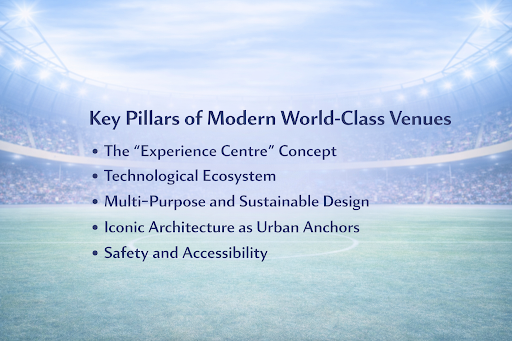
Key Pillars of Modern World-Class Venues
-
- The “Experience Centre” Concept: Modern arenas go beyond games by focusing on total fan comfort, including improved sightlines, premium hospitality (lounges, luxury boxes), and, in some cases, air-conditioned outdoor spaces.
-
- Technological Ecosystem: Venues feature robust digital infrastructure, high-density Wi-Fi, 5G connectivity, and AI-driven crowd management to facilitate social media sharing and app-based, seamless, and safe experiences.
-
- Multi-Purpose and Sustainable Design: To ensure long-term viability, venues are designed for year-round use, hosting concerts, conferences, and community events. They are also increasingly sustainable, acting as hubs for renewable energy storage.
-
- Iconic Architecture as Urban Anchors: Modern stadiums are designed as landmarks that redefine city skylines and serve as focal points for wider entertainment districts.
-
- Safety and Accessibility: Enhanced security, inclusive, and accessible, these venues prioritize navigating capabilities and accommodating safe and comfortable environments for all.
The Evolution of Modern Stadium Infrastructure: From Arenas to Smart Ecosystems
Modern stadium infrastructure has evolved from simple concrete arenas into intelligent, sustainable, and interconnected ecosystems that leverage IoT, 5G, and AI to enhance fan engagement and operational efficiency. These venues now serve as year-round community hubs, featuring, energy-efficient designs, digital-first fan experiences, and advanced crowd management.
Key Evolution Drivers:
-
- Technological Integration: Transition from hardwired systems to IP-based, scalable infrastructure (e.g., SMPTE 2110) enables real-time data analytics, high-speed 5G connectivity, and seamless app-based services (ticketing, food, parking).
-
- Sustainability as Standard: Modern stadiums incorporate solar power, smart lighting, and water harvesting systems to reduce environmental impact.
-
- Smart Ecosystems: Venues are becoming “smart buildings” that use IoT sensors to manage energy consumption and optimize fan movement, with some designs (like at Allegiant Stadium) offering fully personalized fan experiences.
-
- Economic Hubs: Stadiums now function as catalysts for urban development, often creating surrounding districts that generate revenue beyond match days.
-
- Safety and Security: Advanced AI-powered analytics and surveillance enhance crowd control and safety protocols.
Why Choose JMR InfraSolutions for Modern Stadium Infrastructure?
JMR InfraSolutions is a leader in technology-enabled sports facility development. Our expertise includes:
-
- Modular and traditional stadium construction
-
- EZY Seating systems
-
- Estrella high-performance lighting
-
- EZY LED display boards
-
- Turf and irrigation systems
-
- Complete turnkey sports infrastructure
We don’t just construct venues, we create world-class sports environments designed for innovation, performance, and long-term impact.