
High Mast Lighting Solutions for Stadiums and Large Sports Complexes

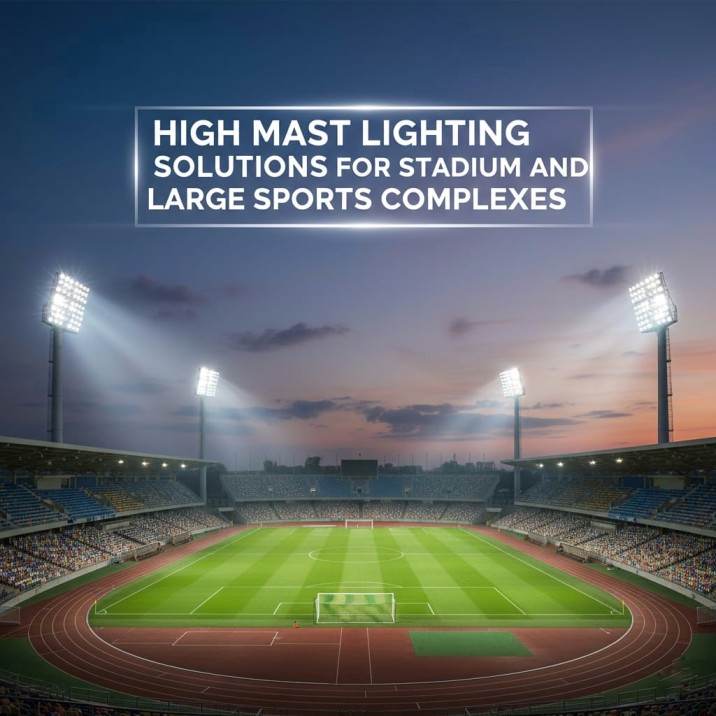
In 2026, high mast lighting for stadiums and sports complexes focuses on ultra-high efficacy LEDs, smart IoT integration, and broadcast-ready optics to support 4K/8K media requirements. Modern systems prioritize energy savings of up to 75% compared to legacy HID systems.
The Components of a High Mast Lighting System
A high mast lighting system comprises a tall, multi-section steel pole, a motorized lowering system with wire ropes, a luminaire ring holding LED fixtures, a control panel, a foundation, and essential safety features like lightning arrestors, all designed for efficient, wide-area illumination and easy ground-level maintenance.
Here are the core components:
-
- Mast Pole: A tall, tapered structure (often galvanized steel) in sections, designed for stability and wind resistance.
-
- Foundation: A robust reinforced concrete base that anchors the pole securely to the ground.
-
- Luminaire Ring/Headframe: A circular frame at the top that holds multiple LED or HPS (High-Pressure Sodium) light fixtures, distributing light over a large area.
-
- Lowering System: A motorized winch, pulleys, stainless steel wire ropes, and a bridal/cable system that lowers the luminaire ring for maintenance, eliminating the need for bucket trucks.
-
- Control Panel: An electrical panel (often a Feeder Pillar) for power supply, switching, dimming, and remote management.
-
- Lighting Fixtures: Primarily energy-efficient LEDs, arranged for 360-degree coverage, sometimes with shields to reduce light pollution.
-
- Safety & Grounding: Includes lightning arrestors, grounding systems, and robust base doors for access and security.

The Advantages of High Mast Lighting in Sports
High mast lighting offers superior, uniform illumination for sports fields, enhancing player safety and gameplay by reducing shadows and dark spots, while modern LED systems provide significant energy savings, lower maintenance, improved control, and better visual experiences for athletes and spectators, creating a more professional and engaging environment for night games.
Key Advantages
-
- Enhanced Safety & Visibility: Tall poles place lights high above the field, distributing bright, uniform light evenly, which minimizes shadows, prevents blinding glare, and helps players see the ball, opponents, and hazards clearly, reducing injury risk.
-
- Superior Gameplay: Consistent illumination across large areas ensures high-quality performance for both professional and amateur athletes, crucial for fast-paced sports.
-
- Energy Efficiency & Cost Savings: Modern LED high mast lights use significantly less energy than older technologies (like metal halide), cutting electricity costs and lowering operational expenses.
-
- Reduced Maintenance: LEDs have a much longer lifespan and greater durability, leading to fewer bulb replacements and less maintenance downtime.
-
- Less Visual Clutter: Fewer poles are needed to light large areas effectively, creating an uncluttered view and a better aesthetic for the venue.
-
- Improved Spectator Experience: Better lighting creates a more vibrant atmosphere for fans, enhancing the overall event experience.
-
- Versatility & Control: Systems can be customized with dimming and control features, allowing for different lighting levels and effects, from practice to major events.
-
- Reduced Light Pollution: Modern optics and precise aiming help control light spill, directing light onto the field and minimizing upward light pollution.
Why High Mast Lighting Is Essential for Modern Stadiums
High mast lighting is essential for modern stadiums because it provides uniform, powerful illumination across large areas, crucial for player safety, high-definition broadcasting, and spectator experience, while reducing shadows and visual clutter with fewer poles, often incorporating energy-efficient LEDs for lower operational costs and enhanced security. These systems ensure clear visibility for athletes, accurate play, and immersive viewing, meeting broadcast standards and improving overall event safety.
The Key Reasons for High Mast Lighting in Stadiums
-
- Uniform & Shadow-Free Illumination: Mounting lights high up distributes light evenly across the entire field, eliminating dark spots and shadows that hinder play and viewing.
-
- Enhanced Player & Spectator Safety: Clear, bright lighting reduces accidents and allows players to perform accurately, while spectators can see clearly and move safely.
-
- High-Definition Broadcasting: Ensures flicker-free, consistent lighting for cameras, creating crisp images for television coverage without glare or complex setups.
-
- Fewer Poles, Less Visual Clutter: Fewer, taller poles provide wide coverage, reducing physical obstacles and visual intrusion, which improves the overall aesthetic and sightlines.
-
- Energy Efficiency & Cost Savings: Modern LED high mast systems use significantly less energy and have longer lifespans, lowering maintenance and electricity costs.
-
- Improved Security & Surveillance: Powerful illumination covers large areas, deterring crime and making surveillance cameras more effective.
-
- Durability: Designed to withstand harsh weather, ensuring reliable performance for year-round events.
High Mast Lighting Integration in New Stadium Construction Projects
Integrating high mast lighting in new stadiums involves strategic design for uniform, high-intensity illumination using energy-efficient LEDs, focusing on precise aiming, glare reduction, and smart controls for dimming and scheduling, ensuring safety for players/spectators, meeting broadcasting standards, and optimizing operational costs through advanced systems like Musco’s TLC for LED™. This process includes custom pole design, integration with existing infrastructure, and long-term sustainable solutions for both large professional venues and community fields.
Key Considerations for Integration
-
- Uniformity & Intensity: High lumen output (e.g., 1000W LED) ensures brightness across the entire field, eliminating shadows for clear visibility.
-
- Energy Efficiency & Sustainability: Modern LED systems significantly reduce energy consumption and operational costs compared to traditional HID lamps, with options for solar/hybrid integration.
-
- Glare & Flicker Control: LED technology offers precise light distribution and flicker-free performance, improving visual comfort and broadcast quality.
-
- Smart Control Systems: Integration with remote controls for dimming, scheduling, and zoning allows for customized lighting for different events and times, enhancing flexibility and safety.
-
- Design & Installation: Custom-height poles (up to 40m) and field-replaceable components simplify installation and maintenance, as seen in turnkey projects.
-
- Broadcasting Standards: Advanced designs meet the specific requirements for high-definition (HD) and 4K-ready broadcasting.
Design & Deliver Stadium High Mast Lighting with JMR InfraSolutions
Leverage JMR InfraSolutions’ end-to-end expertise in stadium construction and lighting systems to achieve uniform illumination, safety compliance, and long-term performance.