
Digital Transformation in Sports Infrastructure


The global sports industry is undergoing a profound shift. Stadiums are no longer just concrete structures with seating and turf, they are becoming intelligent, technology-driven ecosystems. From IoT-enabled lighting and AI-powered analytics to smart seating and immersive fan engagement platforms, digital transformation in sports infrastructure is redefining how venues are
designed, operated, and experienced.
What Is Digital Transformation in Sports Infrastructure?
Digital transformation in sports infrastructure is the integration of advanced technologies such as AI, IoT, and data analytics into physical venues and operational processes to improve performance, enhance fan experiences, and increase operational efficiency. It turns traditional stadiums into “smart venues” and streamlines how sports organizations function, creating data-driven, interconnected environments.
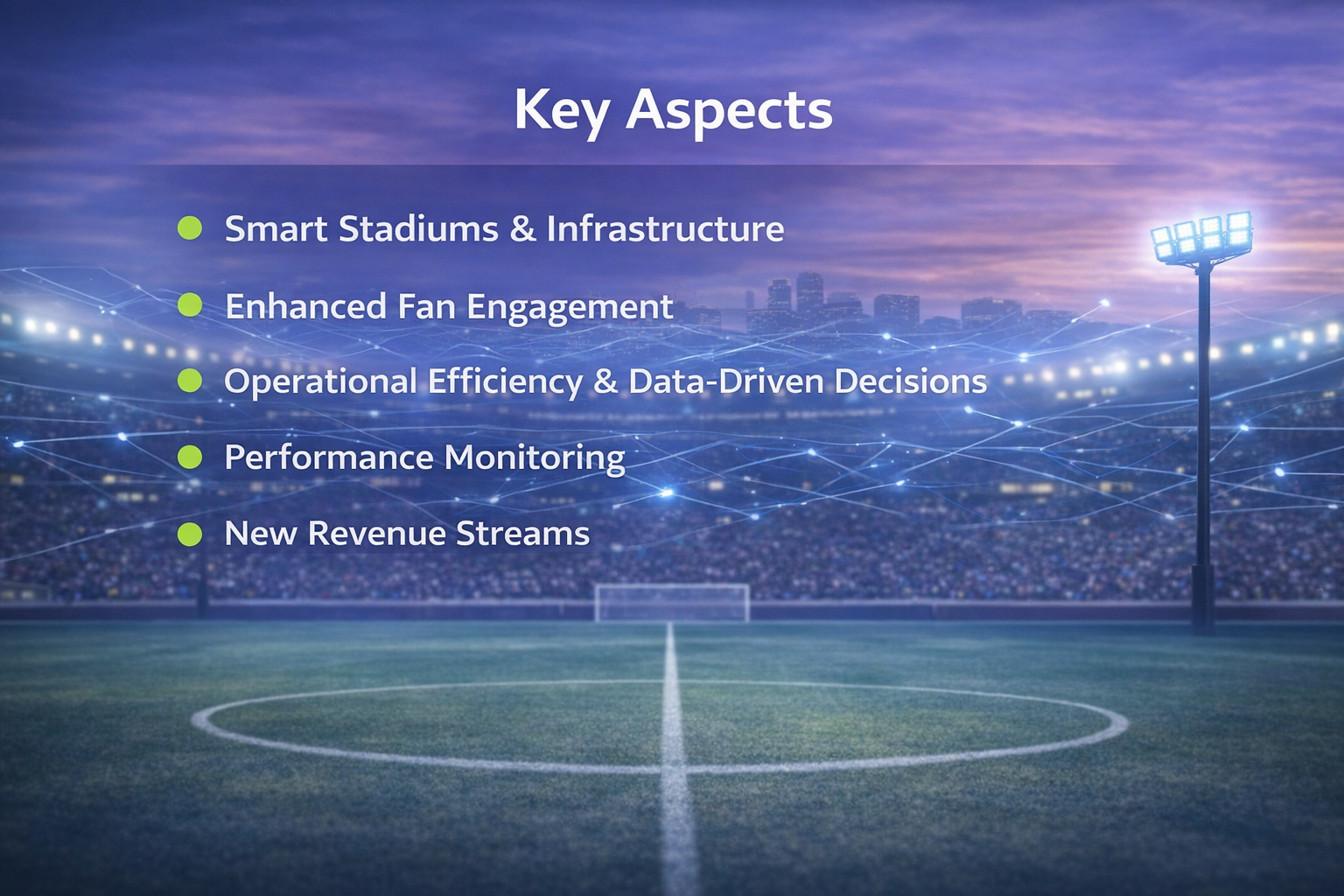
Key aspects include:
-
- Smart Stadiums & Infrastructure: Upgrading venues with high-speed Wi-Fi, beacon technology, and interactive displays to offer real-time stats, instant replays, and reduced concession wait times.
-
- Enhanced Fan Engagement: Moving beyond traditional viewing to personalized, immersive experiences via apps, AR, VR, and digital gamification.
-
- Operational Efficiency & Data-Driven Decisions: Utilizing AI and cloud computing to streamline workflows, optimize, manage energy, and improve security.
-
- Performance Monitoring: Using wearable technology (GPS, sensors) to track athlete health and enhance training through real-time data.
-
- New Revenue Streams: Implementing digital ticketing, tokenized rewards, and targeted digital marketing to boost income.
Why Digital Transformation Is Essential for Modern Venues
Digital transformation is essential for modern venues to survive and thrive by delivering seamless, personalized, and efficient experiences that meet evolving customer expectations. By adopting technologies like IoT, cloud computing, and AI, venues can increase operational efficiency, reduce costs, and enhance safety through cashless, contactless, and data-driven operations.
Here is why digital transformation is critical for modern venues:
-
- Elevated Customer Experience: Modern attendees demand speed and convenience. Digital tools allow for frictionless, personalized experiences such as mobile ticket scanning, cashless payments, and interactive, personalized services which increase satisfaction and loyalty.
-
- Operational Efficiency and Cost Savings: Replacing manual, paper-based processes with automated systems reduces administrative overhead, eliminates errors, and optimizes resource allocation (e.g., automated energy management or staff scheduling).
-
- Data-Driven Decision Making: Implementing IoT and advanced analytics allows venue managers to monitor crowds in real-time, understand visitor behavior, and optimize facility usage.
-
- Enhanced Security and Safety: Digital transformation supports advanced security measures, such as enhanced surveillance and, crucial for public health, contact-free interactions.
-
- Increased Revenue Streams: Digital, online booking systems for events, parking, or amenities especially for smaller meetings can significantly increase revenue by allowing customers to book instantly, reducing the 47 minutes on average spent on manual, offline booking processes.
Core Pillars of Digital Transformation in Sports Infrastructure
Digital transformation in sports infrastructure is built on four core pillars: fan engagement (omnichannel, personalized experiences), operational excellence (smart, secure, efficient venue management), smart stadium technology (IoT, connectivity), and data-driven decision-making. These pillars create safe, sustainable, and highly connected environments that optimize revenue and fan satisfaction.
Core Pillars of Digital Transformation in Sports Infrastructure
-
- Fan Engagement & Personalization: Transforming the matchday experience from physical to a hybrid/virtual reality. This includes using AR/VR, personalized apps, and digital loyalty programs to enhance spectator interaction, which can lead to increased attendance and engagement.
-
- Operational Excellence & Safety: Utilizing IoT and AI for smarter, safer venues. Key technologies include real-time crowd management, digital surveillance to detect threats, and automated,location-based services to improve security.
-
- Smart Building/Stadium Optimization: Converting venues into intelligent, sustainable ecosystems. This involves smart, connected infrastructure (e.g., lighting, HVAC, parking) that uses data to reduce energy consumption and improve logistics.
-
- Data-Driven Decision-Making: Leveraging big data and analytics to optimize operations and marketing. This pillar allows sports organizations to analyze fan behavior, improve sponsorship ROI, and personalize advertising.
-
- Unified Digital Infrastructure: Building flexible, scalable, and secure IT infrastructure (cloud computing, high-speed Wi-Fi) that supports the increasing data demands of modern stadiums.
Benefits of Digital Transformation in Sports Infrastructure
Digital transformation in sports infrastructure converts traditional physical venues into data-powered “smart” ecosystems. By integrating technologies like IoT sensors, 5G connectivity, and AI-driven analytics, sports organisations can achieve significant gains in operational efficiency, revenue growth, and fan loyalty.
Key Benefits of Digital Transformation
-
- Operational Efficiency & Cost Savings: Digitizing information-intensive processes can cut operational costs by up to 80%. Automated systems for scheduling and facility management can reduce administrative overhead by 45% and increase facility utilisation rates by 40%.
-
- Enhanced Fan Experience: Smart stadiums offer “frictionless” experiences, such as mobile apps that show the shortest lines for concessions or bathrooms. Technologies like Augmented Reality (AR) and Virtual Reality (VR) create immersive environments both in-venue and for remote viewers.
-
- Revenue Optimization: Facilities using digital platforms often report a 20-30% increase in revenue within the first year. Transformation allows for dynamic ticket pricing based on real-time demand and the creation of new revenue streams through digital content and virtual participation.
-
- Athlete Performance & Safety: Wearable IoT devices provide real-time biometric data (e.g., heart rate, fatigue), helping to improve player performance by 20% and reduce the severity of injuries.
-
- Sustainability & Smart Management: Digital tools enable better resource management, such as automated lighting and climate control, which reduces energy consumption and environmental impact.
JMR InfraSolutions Approach to Digital Sports Infrastructure
JMR InfraSolutions follows a single-point turnkey model, delivering end-to-end solutions that combine physical construction with digital innovation.
Our Integrated Capabilities Include:
-
- Smart stadium planning & design
-
- IoT-enabled lighting systems
-
- EZY Seating solutions
-
- High-performance turf & irrigation systems
-
- Estrella lighting systems
-
- LED display boards & scoreboards
-
- Centralized monitoring systems
-
- Sustainable and modular construction
By integrating technology from the conceptual stage, JMR ensures seamless interoperability between all infrastructure components.
Why Partner with JMR InfraSolutions?
JMR InfraSolutions combines:
-
- Engineering precision
-
- Advanced technology integration
-
- International safety compliance
-
- Sustainable infrastructure practices
-
- Modular & scalable design expertise
-
- End-to-end turnkey execution
By merging innovation with execution excellence, JMR creates sports environments that go beyond construction delivering connected infrastructure that empowers communities and builds lasting legacies.