Artificial Turf Cost Analysis and Long-Term Value

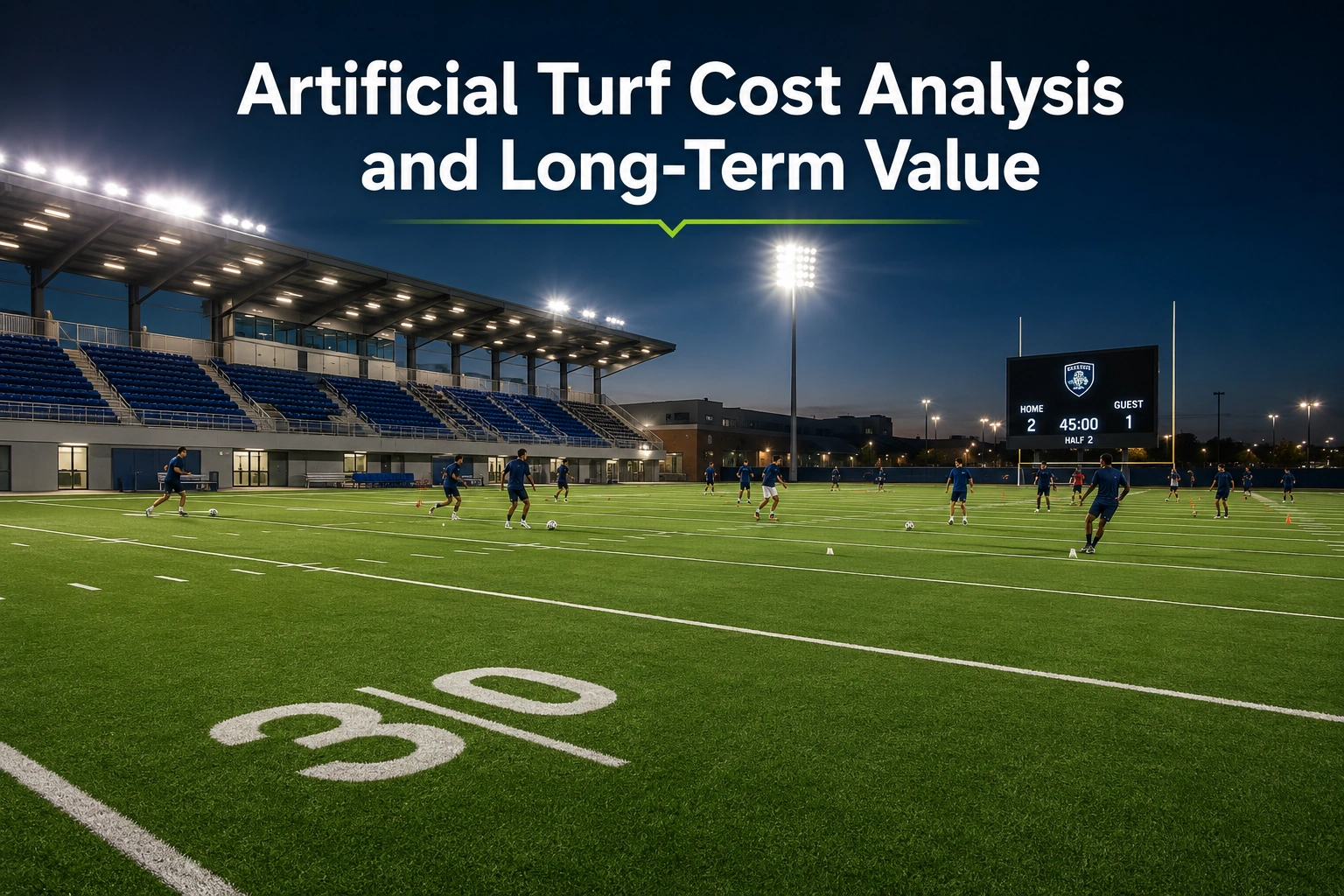
Investing in an artificial turf field is an important decision for sports facility owners, educational institutions, government organizations, and sports academies. While artificial turf may involve a higher initial investment than natural grass, the long-term operational benefits often make it a more cost-effective solution.
JMR provides complete artificial turf installation and sports infrastructure development services designed to help clients maximize facility performance, reduce maintenance expenses, and achieve greater long-term value from their sports infrastructure investments.
Understanding the True Cost of Sports Field Development
When evaluating sports surface options, it is important to consider more than just installation costs. Long-term maintenance, field availability, operational expenses, and lifecycle performance all contribute to the total cost of ownership.
JMR helps clients assess project requirements and develop customized solutions that balance budget considerations with long-term facility goals.
Why Artificial Turf Offers Long-Term Value
Artificial turf systems are designed to support continuous sports activities while minimizing maintenance requirements. This allows facility owners to maximize field utilization and improve overall return on investment.
Key value benefits include:
- Increased field availability
- Reduced maintenance costs
- Lower water consumption
- Enhanced durability
- Consistent sports performance
- Extended facility usability
These advantages make artificial turf a practical long-term infrastructure investment.
Increased Field Usage and Availability
Natural grass fields often require recovery periods after intensive use or adverse weather conditions. Artificial turf allows facilities to remain operational for significantly longer periods throughout the year.
Benefits include:
- More training hours
- Additional tournaments and events
- Reduced downtime
- Year-round usability
- Greater scheduling flexibility
This increased availability helps organizations maximize the value of their sports facilities.
Reduced Maintenance Expenses
One of the biggest financial advantages of artificial turf is the reduction in ongoing maintenance requirements. Unlike natural grass fields, artificial turf eliminates many recurring maintenance activities.
Maintenance savings may include:
- No mowing costs
- Reduced irrigation expenses
- No fertilization requirements
- Lower labor costs
- Reduced field repair expenses
These savings can significantly reduce operational costs over the lifespan of the field.
Lower Water Consumption
Water conservation has become an important consideration for sports facility operators. Artificial turf systems require little to no routine irrigation, helping organizations reduce water usage and utility costs.
Benefits include:
- Lower water bills
- Sustainable facility operations
- Reduced dependence on irrigation systems
- Improved environmental responsibility
- Better resource management
This makes artificial turf particularly valuable in regions where water conservation is a priority.
Consistent Performance Throughout the Year
Artificial turf provides reliable playing conditions regardless of seasonal weather changes or usage levels. JMR installs advanced turf systems designed to maintain performance standards throughout the year.
Performance advantages include:
- Uniform playing surfaces
- Consistent ball behavior
- Reliable traction
- Enhanced athlete experience
- Professional field appearance
These features contribute to a better experience for athletes, coaches, and facility operators.
Revenue Generation Opportunities
Sports facilities with artificial turf often benefit from increased operational flexibility. The ability to host more events, training sessions, and tournaments can create additional revenue opportunities.
Potential benefits include:
- Field rental income
- Tournament hosting opportunities
- Community event usage
- Sports academy programs
- Corporate and recreational activities
Higher facility utilization can improve overall financial performance.
Long-Term Durability and Lifecycle Benefits
Artificial turf systems are engineered to withstand intensive usage while maintaining structural integrity and visual appeal. JMR provides durable turf solutions designed for long-term sports facility performance.
Durability benefits include:
- Extended service life
- Resistance to heavy traffic
- Reduced wear and tear
- Improved field longevity
- Lower replacement frequency
This durability helps maximize infrastructure value over time.
Flexible Project Planning and Budget Solutions
Every sports infrastructure project has unique financial requirements. JMR works closely with clients to develop customized project plans that align with operational goals, timelines, and available budgets.
Our approach focuses on delivering long-term value through efficient project execution, quality installation, and sustainable infrastructure development.
Complete Turnkey Sports Infrastructure Solutions
JMR offers more than artificial turf installation. We provide complete sports infrastructure solutions designed to support world-class sports facility development.
Our services include:
- Stadium construction
- Sports complex development
- Artificial turf systems
- Athletic track installation
- Sports flooring solutions
- Sports lighting systems
- Stadium seating
- LED scoreboards and displays
- Smart irrigation systems
This integrated approach allows clients to manage entire projects through a single experienced infrastructure partner.
Why Choose JMR InfraSolutions for Artificial Turf Projects?
JMR combines technical expertise, turnkey project execution, and quality-focused installation services to deliver high-performance artificial turf solutions.
Our strengths include:
- End-to-end project management
- Customized sports infrastructure solutions
- Professional installation services
- Fast project delivery
- Long-term maintenance support
- Sustainable construction practices
- Experienced project teams
- Commitment to international quality standards
We focus on helping clients achieve maximum value from their sports infrastructure investments.
Conclusion
Artificial turf is more than a sports surface investment—it is a long-term infrastructure solution that can improve facility performance, reduce operational expenses, and increase field availability. By minimizing maintenance requirements and supporting year-round use, artificial turf helps organizations maximize the value of their sports facilities.
JMR provides complete artificial turf and sports infrastructure solutions tailored to the unique needs of schools, sports academies, municipalities, stadiums, and recreational facilities. Through our turnkey project execution approach, we help clients achieve reliable performance, long-term cost efficiency, and sustainable infrastructure development that delivers value for years to come.
Frequently Asked Questions
1. Is artificial turf more expensive than natural grass?
Artificial turf generally has a higher initial installation cost, but it often delivers lower long-term maintenance expenses and greater field usage over its lifespan.
2. How does artificial turf reduce operating costs?
Artificial turf eliminates mowing, fertilization, reseeding, and many irrigation requirements, significantly reducing maintenance and labor expenses.
3. Does artificial turf increase field availability?
Yes. Artificial turf can support year-round use with minimal downtime, allowing facilities to host more activities and events.
4. Can artificial turf help save water?
Yes. Artificial turf requires little to no regular irrigation, making it an excellent solution for water conservation and sustainable facility management.
5. What types of organizations benefit from artificial turf?
Schools, universities, sports academies, municipalities, stadium operators, community sports facilities, and recreational centers can all benefit from artificial turf.
6. Does JMR provide complete artificial turf installation services?
Yes. JMR offers planning, design, installation, testing, commissioning, upgrades, replacement, and maintenance support.
7. Can artificial turf generate additional revenue for sports facilities?
Yes. Increased field availability allows facilities to host more events, tournaments, training sessions, and rental activities.
8. Does JMR provide turf replacement and renovation services?
Yes. JMR offers turf replacement, modernization, upgrades, and facility renovation services for existing sports infrastructure.
9. Does artificial turf provide long-term value?
Yes. Reduced maintenance costs, increased usage, improved durability, and operational efficiency contribute to strong long-term value.
10. Why choose JMR InfraSolutions for artificial turf development?
JMR provides turnkey project execution, customized solutions, quality installations, maintenance support, and complete sports infrastructure expertise under one roof.