
Future-Proofing Stadium Infrastructure for New Sports Technologies

Future-proofing stadium infrastructure involves transitioning from static venues to dynamic, data-driven, and sustainable “smart” ecosystems that can adapt to rapid technological advancements. Key strategies include implementing high-capacity fiber-optic networks, adopting 5G, utilizing modular design for flexibility, and integrating IoT and AI for enhanced operational efficiency and fan engagement.
Why Future-Proofing Stadium Infrastructure Matters
Future-proofing stadium infrastructure is essential to ensure long-term relevance, financial viability, and safety. It transforms venues into year-round, high-tech assets that meet modern fan expectations.
-
- Maximizes Revenue Streams: Future-ready, versatile stadiums can host diverse events beyond match days such as concerts and corporate events increasing year-round commercial income.
-
- Enhanced Fan Experience: Integration of 5G, high-speed Wi-Fi, and app-based services meets the demand for digital, interactive, and personalized, “second-screen” experiences.
-
- Operational Efficiency: Smart technology (IoT, AI) enables predictive maintenance, reduces energy consumption, and optimizes staffing, lowering long-term operating costs.
-
- Safety and Security: Upgraded, modern infrastructure allows for advanced crowd management, better surveillance, and faster entry/exit, reducing risks.
-
- Sustainability and Compliance: Designing with eco-friendly materials and energy-efficient systems (e.g., LED, solar) reduces carbon footprints, complies with new regulations, and lowers energy costs.
-
- Avoids “White Elephants”: Modular designs and flexible, multipurpose spaces prevent stadiums from becoming costly, underused relics.
-
- Protects Investment: Proactive planning for future technology and regulatory changes is less expensive than retrofitting and extends the facility’s economic life.
Key Sports Technologies Shaping the Future of Stadiums
Future stadiums are being redefined as “smart venues” by integrating IoT, AI, and 5G connectivity to create immersive, personalized experiences. Key technologies include mobile-first contactless services (ticketing/payments), AI-driven crowd management, AR-enhanced viewing, and advanced LED, fostering, and environmentally conscious solutions.
Key Technologies Shaping the Future of Stadiums:
-
- Smart Connectivity & IoT (Internet of Things): High-speed internet (5G) and IoT sensors are fundamental, allowing for real-time tracking of fan movement, managing facility maintenance, and providing seamless connectivity throughout the venue.
-
- AI & Data Analytics: Artificial Intelligence enhances operational efficiency by enabling dynamic pricing, managing crowd flow to reduce bottlenecks, and powering chatbots for customer support.
-
- Mobile-First & Contactless Experience: Smartphone applications have become central for digital ticketing, ordering food from seats, and navigating the stadium.
-
- Biometric Security & Entry: Facial authentication is increasingly used to streamline entry, speed up queues, and secure restricted areas, enhancing both safety and convenience.
-
- Immersive & Personalized Fan Engagement: Augmented Reality (AR) and large-format screens provide instant replays and real-time stats, while targeted in-stadium advertising offers customized promotions directly to fan devices.
-
- Sustainable & Smart Infrastructure: Future venues are incorporating eco-friendly technology, such as energy-efficient, smart lighting and advanced environmental controls, aligning with sustainability goals.
Designing Flexible and Modular Stadium Infrastructure
Designing flexible and modular stadium infrastructure involves using prefabricated components, such as metal trusses and seating units, to create adaptable, scalable, and cost-effective venues. These, along with retractable roofs and modular hospitality pods, allow for rapid assembly, multi-purpose event hosting, and easy, reconfigurable layouts. This approach reduces construction time by up to 70% and enhances sustainability through reusable materials.
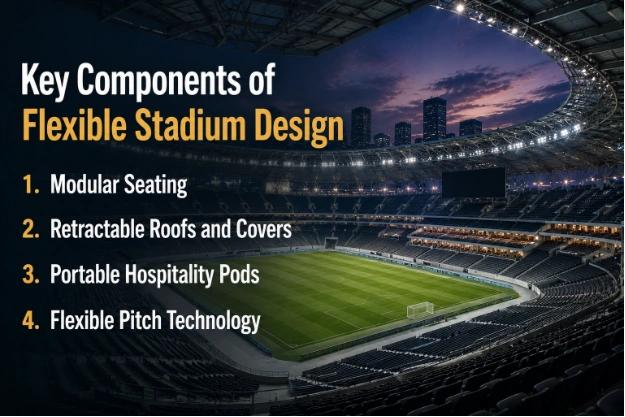
Key Components of Flexible Stadium Design
-
- Modular Seating: Prefabricated, reconfigurable, and expandable, with some units offering capacities for 400 spectators including accessible seating.
-
- Retractable Roofs and Covers: Enables year-round use and climate control, transforming open-air stadiums into indoor arenas.
-
- Portable Hospitality Pods: Pre-assembled custom-branded units used for VIP lounges, concession areas, and restrooms that can be placed throughout the stadium.
-
- Flexible Pitch Technology: Durable surfaces designed to accommodate concerts, festivals, and other non-sporting events without permanent damage.
Benefits of Modular Infrastructure
-
- Reduced Construction Time: Projects can be completed in significantly less time than traditional builds, with some modular stadiums, taking less than 4 months.
-
- Cost-Effectiveness: Modular solutions can be 50% to 70% cheaper than traditional construction.
-
- Scalability: Venues can adjust capacity based on demand.
-
- Sustainability: Reduced on-site waste and the potential to disassemble and relocate components.
-
- Revenue Generation: Flexible spaces and high-end hospitality areas allow for diverse, event hosting.
Long-Term Value of Future-Ready Stadium Infrastructure
Future-ready stadium infrastructure, characterized by smart technology, sustainability, and multi-purpose design, offers substantial long-term value by transforming venues into year-round, high-revenue assets. With the global smart stadiums market projected to reach USD 41.68 billion by 2029, these investments enhance operational efficiency, fan experience, and financial sustainability.
Key Long-Term Value Drivers
-
- Revenue Diversification & Year-Round Usage: Future-ready stadiums are designed for more than just match days. Their multi-purpose functionality allows them to host concerts, corporate events, and community activities, providing consistent, year-round income.
-
- Enhanced Fan Experience and Engagement: Technologies such as 5G, high-speed Wi-Fi, AR/VR, and app-based services create immersive experiences that drive attendance and loyalty. Personalized services, such as mobile ticketing and in-seat ordering, improve convenience and satisfaction.
-
- Operational Efficiency & Cost Savings: AI-driven systems optimize energy, water, and waste management, significantly lowering operating costs. Predictive maintenance powered by IoT prevents equipment failure and reduces long-term repair expenses.
-
- Sustainability & Environmental Impact: Modern stadiums often aim for LEED or BREEAM certifications, using renewable energy (e.g., solar panels) and sustainable materials. This reduces carbon footprints, enhances brand reputation, and future-proofs against environmental regulations.
-
- Improved Security & Safety: Advanced surveillance, facial recognition, and biometric scanning enhance spectator safety, which is crucial for high-density, public venues.
-
- Urban Regeneration & Community Impact: Stadium districts often function as urban, cultural, and economic hubs that stimulate local development, attracting retail, hospitality, and office infrastructure, such as the redevelopment projects seen in the US and Europe.
-
- Construction Efficiency: Modular and prefabricated construction methods can reduce construction time by up to 50%, allowing for faster project delivery and easier, less costly future expansions.
Why Future-Proof Stadium Infrastructure Is Central to JMR InfraSolutions Design Philosophy
Future-proof stadium infrastructure is central to JMR InfraSolutions’ design philosophy because it guarantees long-term viability, maximizes operational efficiency, and enhances the spectator experience through adaptable, sustainable, and technologically advanced solutions. By prioritizing flexible, and smart construction, JMR ensures that venues remain relevant and functional for years to come.
Key reasons for this focus include:
-
- Sustainability and Eco-Friendly Design: JMR incorporates sustainable materials, energy-efficient lighting, and smart irrigation systems to minimize environmental impact while maximizing long-term performance. This approach supports the growing industry focus on green, sustainable construction.
-
- Modular and Adaptable Solutions: Utilizing permanent modular structures, JMR creates “fast, flexible, and sustainable” venues that can adapt to changing needs and timelines. This allows for easier, cost-effective, and faster upgrades compared to traditional, rigid constructions.
-
- Advanced Technology Integration: JMR focuses on integrating modern technology, such as high-visibility LED displays and advanced sports lighting, into the core design. These elements are crucial for creating a “smart stadium” environment, enhancing both the game and the fan experience.
-
- Improved Safety and Fan Experience: The design philosophy emphasizes optimizing sightlines, safety, and comfort, ensuring that venues are secure, enjoyable, and accessible for spectators.
-
- Turnkey Project Management: JMR provides end-to-end project execution, from design and engineering to construction and final delivery, ensuring that the infrastructure is of high quality and perfectly tailored to client requirements.