
What are Curved LED screens?

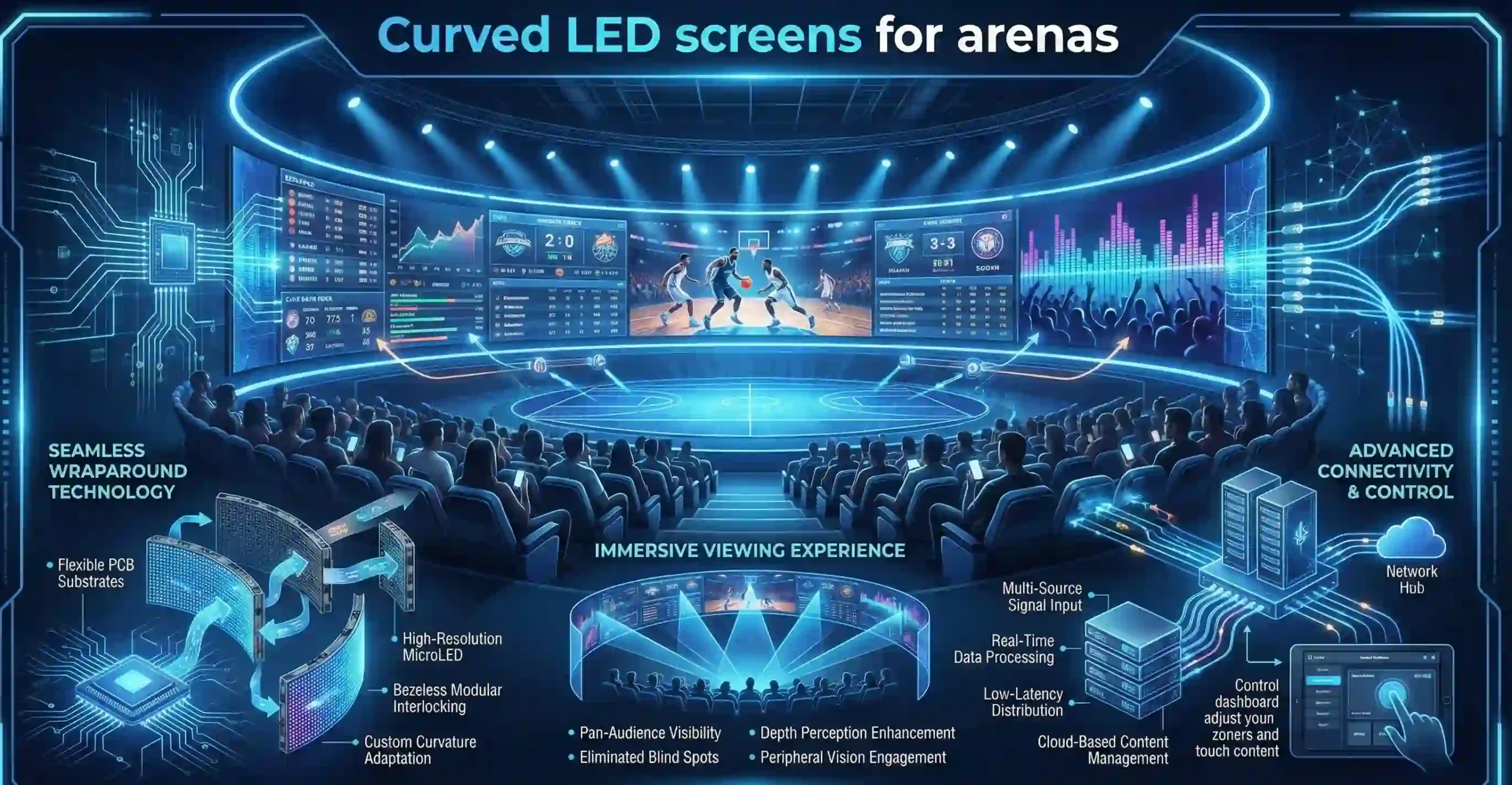
A curved LED screen is a display designed with a concave, convex, or entirely flexible curved surface, in contrast to a flat screen. This design mimics the natural curvature of the human eye’s field of vision, which provides a more immersive and comfortable viewing experience by directing light from all angles toward the viewer’s eye.
What is the role of curved led screens for arenas?
Curved LED screens in arenas enhance the viewing experience by improving visibility for all attendees and creating a more immersive and dynamic atmosphere for events. Their curved design provides wider viewing angles, ensures consistent brightness, and can create a sense of depth, making them ideal for large venues where people are spread out. This allows for more engaging visuals for both the live audience and those watching on broadcast cameras.
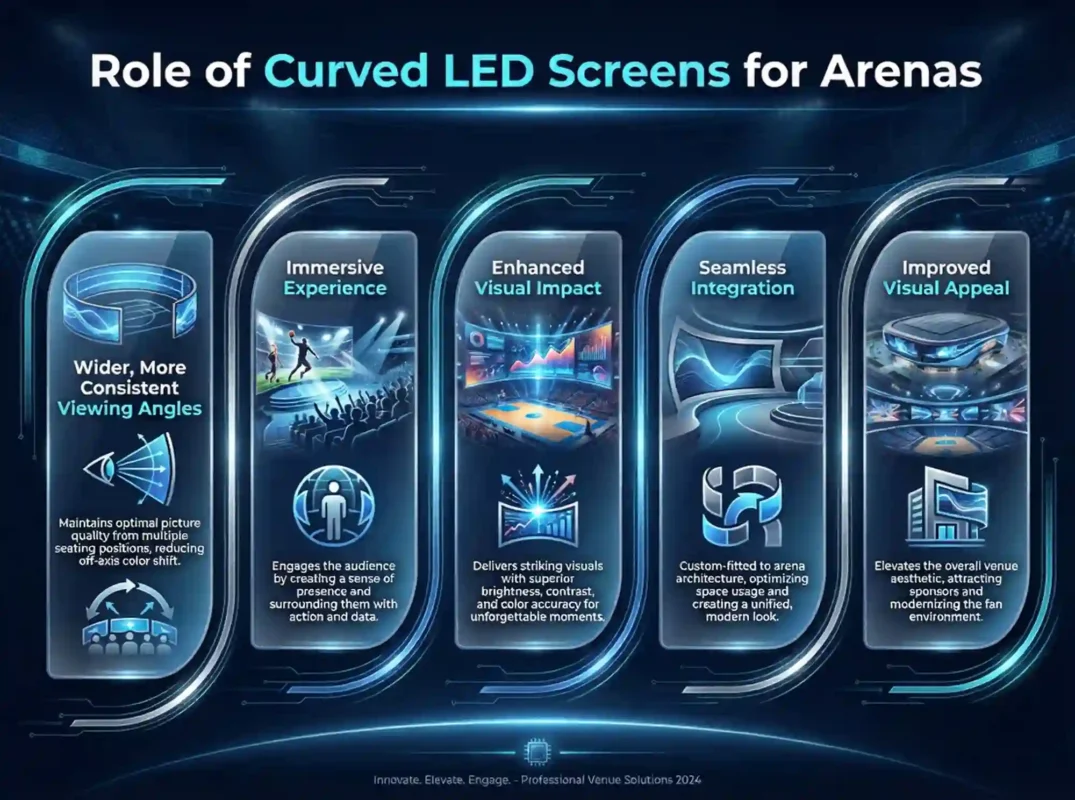
Key roles of curved LED screens:
-
- Wider, more consistent viewing angles: The curvature ensures that content is clearly visible from more positions throughout the arena, maintaining a consistent and vibrant visual experience for everyone.
-
- Immersive experience: Curved screens can surround the viewer, using peripheral vision to create a more immersive and engaging atmosphere, which is especially effective for concerts and sports.
-
- Enhanced visual impact: The curved shape can create a sense of depth and make the visuals feel more lifelike, captivating the audience more effectively.
-
- Seamless integration: Displays can be configured to match the natural curve of the stadium, creating a seamless and flowing visual experience that enhances the overall event atmosphere.
-
- Improved visual appeal: For camera broadcasts, curved screens create a more appealing and modern-looking background or stage design, visually emphasizing the importance of the talent or event
What are the key features of curved led screens for arenas?
Curved LED screens for arenas offer key features such as an immersive viewing experience, wider and more consistent viewing angles, and design flexibility to integrate seamlessly with the venue’s architecture.
The key features are:
-
- Immersive Visual Experience The curvature naturally wraps around the viewer’s field of vision, creating a sense of depth and making the content feel more life-like and engaging. This panoramic effect enhances the atmosphere of live events.
-
- Wider Viewing Angles Unlike flat screens which can show distortion or color shifts at the edges when viewed from the side, curved screens provide a consistent, clear image from a broader range of vantage points within the arena.
-
- Reduced Glare and Distortion The design helps in distributing light evenly and deflecting ambient light, which minimizes reflections and glare, ensuring content remains highly visible even in bright indoor or outdoor arena lighting conditions.
-
- High Visual Performance Features like high resolution (4K and 8K options), high brightness (essential for visibility in large, well-lit spaces), and high refresh rates (often 3840Hz or higher) ensure smooth, detailed video content and live action replays without motion blur or ghosting.
-
- Design and Installation Flexibility Curved screens are often modular and can be customized to fit unique architectural features like columns, arches, or the perimeter of the field, which maximizes usable display space and provides a modern aesthetic.
-
- Enhanced Durability Especially for outdoor arenas, these displays are built with robust materials, often featuring IP65 ratings for water and dust resistance and aerodynamic designs for better wind resistance, ensuring longevity and reliability in varying weather conditions.
-
- Improved Engagement and Revenue The dynamic and eye-catching nature of curved displays, combined with features like social media integration, live polls, and dedicated ad space, significantly boosts fan engagement and creates new revenue streams for advertising and sponsorships.
-
- Energy Efficiency Modern designs often incorporate advanced cooling systems and energy-saving technologies (like PWM+DC hybrid dimming) which reduce power consumption and operational costs.
What are The Immersive Power of Arena Curved Screens?
The immersive power of arena curved screens lies in their unique ability to wrap visuals around the audience’s field of vision, creating a powerful sense of depth and making
Key Aspects of Their Immersive Power
-
- Expanded Field of View: The curvature fills the peripheral vision, offering a panoramic effect that is more similar to how humans naturally see the world. This results in a more natural and engaging experience compared to flat screens, where the edges can appear distorted or further away.
-
- Enhanced Depth Perception & 3D Effects: By utilizing the screen’s curve, designers can create a stronger illusion of depth and motion, often without requiring special 3D glasses.
-
- Reduced Eye and Neck Strain: Because the entire screen is at a more uniform distance from the viewer’s eyes, the need for constant refocusing and head movement is minimized, leading to greater comfort during extended use.
-
- Seamless, Distortion-Free Visuals: Advanced curved LED panels are designed to bend and flow with architectural contours, ensuring consistent brightness, color, and image quality across the entire surface without the distortion or seams sometimes found when trying to achieve a similar effect with multiple flat panels.
-
- Versatile Design: Curved screens can be customized for various scales and shapes, from massive stadium scoreboards and ribbon displays to cylindrical projection screens for simulation or artistic installations.
What are the advantages of curved led screens?
Curved LED screens offer advantages like a more immersive and realistic viewing experience due to wider viewing angles and a sense of depth. They provide better visual comfort by reducing eye strain and glare, are more visually impactful in large or public spaces, and offer greater design flexibility for creating unique and aesthetic setups.
Key advantages include:
-
- Immersive Viewing Experience The curved design wraps around the viewer’s peripheral vision, drawing them into the content and creating a more lifelike, 3D-like experience without requiring special glasses.
-
- Reduced Eye Strain and Improved Comfort Because the entire screen surface is at a more uniform distance from the viewer’s eyes, the eyes do not need to constantly refocus when scanning from the center to the edges. This closer match to the natural curvature of the human eye can reduce eye fatigue, headaches, and blurred vision during extended use.
-
- Wider Field of View The curvature provides a wider perceived viewing area, which can make the screen seem larger than a flat screen of the same dimensions and offers a more panoramic view of the content.
-
- Minimized Distortion and Consistent Clarity Curved screens direct light towards the viewer more effectively, reducing image distortion and color shifts that can occur at the edges of large flat screens when viewed from a central position.
-
- Enhanced Depth Perception The natural design takes advantage of how the brain processes three-dimensional space, making images appear to have more depth and realism.
-
- Aesthetic and Design Flexibility The sleek, modern look of curved displays adds a sophisticated, high-tech touch to any space, and their flexible design allows them to fit into unique architectural contours like columns or arches, which is useful for creative installations and digital signage.
-
- Reduced Glare in Certain Conditions The curved surface can better deflect ambient light from various sources (like overhead lights or windows) away from the viewer’s direct line of sight, which can help in managing reflections compared to flat screens.
Why Are Arenas Investing in Curved LED Screens?
Arenas are investing in curved LED screens primarily to create a more immersive fan experience, offer wider viewing angles with less distortion, and provide greater flexibility for dynamic advertising and architectural integration.
Key Reasons for Investment
-
- Immersive Viewing Experience: The curvature naturally draws the viewer’s focus inward, making the content feel more three-dimensional and lifelike compared to a flat screen. This wrap-around effect helps capture and retain audience attention, which is vital for an exciting event atmosphere.
-
- Wider, Consistent Viewing Angles: Curved screens provide a broader field of vision, ensuring that content is clearly visible from more seats in the arena. This design also helps maintain consistent brightness and color accuracy across the entire display, reducing glare and hotspots regardless of the viewer’s position.
-
- Enhanced Engagement & Interactivity: Modern stadiums need to offer more than just the live game; they need an event experience. Curved screens are central to this, facilitating interactive content like social media walls, live polls, fan challenges, and instant replays that get the crowd involved and excited.
-
- Architectural Flexibility: The modular design of many curved LED systems allows them to be seamlessly integrated with unique architectural features like circular walls or columns, which flat panels cannot accommodate. This adaptability provides creative design possibilities and maximizes usable display area within the venue.
-
- Increased Revenue Opportunities: Curved displays, especially those used as dynamic perimeter boards or large central scoreboards, are highly effective for advertising and sponsorships. Their ability to instantly update content for different events and display multiple campaigns simultaneously translates directly to increased ad revenue and higher value for sponsors.
-
- Modern Aesthetics: Installing high-tech, sleekly designed curved displays helps venues project a modern, innovative brand image, which can attract larger crowds and command higher ticket sales.
-
- Future-Proofing: Arenas are designed as multi-use venues for sports, concerts, and other events. Investing in versatile, high-resolution curved LED technology ensures the infrastructure can meet evolving demands for enhanced visuals and potential future integration of technologies like Augmented Reality (AR).
Why JMR Infrasolutions choose Curved LED Screens for arenas?
JMR Infrasolutions likely chooses curved LED screens for arenas to provide a superior immersive viewing experience and create a modern, dynamic aesthetic that standard flat screens cannot match.
Key reasons for this choice generally include:
-
- Immersive Viewing Experience The curved design wraps around the viewer’s field of vision, making content feel more three-dimensional and lifelike. This depth perception is crucial in large arenas to capture and retain the audience’s attention during live events and replays.
-
- Wider and Consistent Viewing Angles Curved screens provide a broader horizontal viewing angle, ensuring that spectators across the arena, not just those positioned directly in front, have a clear and vibrant visual experience without distortion or color shifts.
-
- Enhanced Engagement The visually striking and dynamic nature of curved displays helps boost audience engagement significantly. Studies show increased engagement rates with immersive visuals, which directly translates to a better atmosphere and more memorable event experience for fans.
-
- Architectural Integration and Aesthetics Curved screens offer design flexibility, allowing them to integrate seamlessly with the unique architecture of arenas, such as around circular walls or columns. This adds a sleek, futuristic aesthetic that enhances the overall venue design.
-
- Reduced Glare and Distortion The curvature helps reduce light reflection and glare compared to flat screens, ensuring that visuals remain clear and highly visible under the various and often bright lighting conditions found in arenas.
-
- Operational Advantages While potentially higher in initial cost, the modular design and enhanced durability of modern curved LED systems can offer long-term operational benefits, including easier maintenance and improved wind resistance for exterior installations.